
Does nuclear waste glow green?
Claim
Nuclear waste is glowing green goo that tends to seep out of bright yellow barrels.
Verdict
- FALSE
Nuclear waste doesn’t glow, it isn’t neon green, and it definitely doesn’t slosh around in cartoonish yellow barrels. That image comes almost entirely from pop culture, not from real nuclear science. In reality, most nuclear waste looks like solid ceramic pellets or metal fuel rods. They’re dense, dry, and stored inside heavily engineered steel and concrete casks designed to contain radiation, withstand extreme conditions, and prevent leaks.
The only time you might see a glow near nuclear material is something called Cherenkov radiation, and that happens in water‑filled reactor pools, not in waste containers. It’s a visual effect caused by charged particles moving faster than light can travel through water, similar to a sonic boom but with light.
Far from being left in flimsy barrels, nuclear waste is handled under strict regulations. High‑level waste is kept in shielded facilities, monitored constantly, and isolated from the environment. Low‑level waste, like gloves or tools used in medical or research settings, is packaged safely and disposed of in controlled landfills.
Where did the green glow myth originate?
The glowing‑green nuclear‑waste myth is the product of several cultural, historical, and visual influences that gradually fused into a single, memorable image. Pop culture played the biggest role: films, comics, and especially animated shows needed a quick, unmistakable way to signal “radioactive danger.” Since radiation itself is invisible, artists leaned on exaggerated cues; neon colours, dripping goo, and bright yellow barrels, to make the threat instantly legible. Green was the natural choice because it already symbolised poison, mutation, and the unnatural in Western visual language.
Earlier scientific history added another layer. Long before nuclear reactors existed, uranium salts and uranium glass were known to fluoresce green under ultraviolet light. Their eerie glow fascinated the public and created an early association between radioactivity and green light. When nuclear technology emerged in the 20th century, this older imagery blended with new fears about atomic power, reinforcing the idea that anything radioactive must glow.
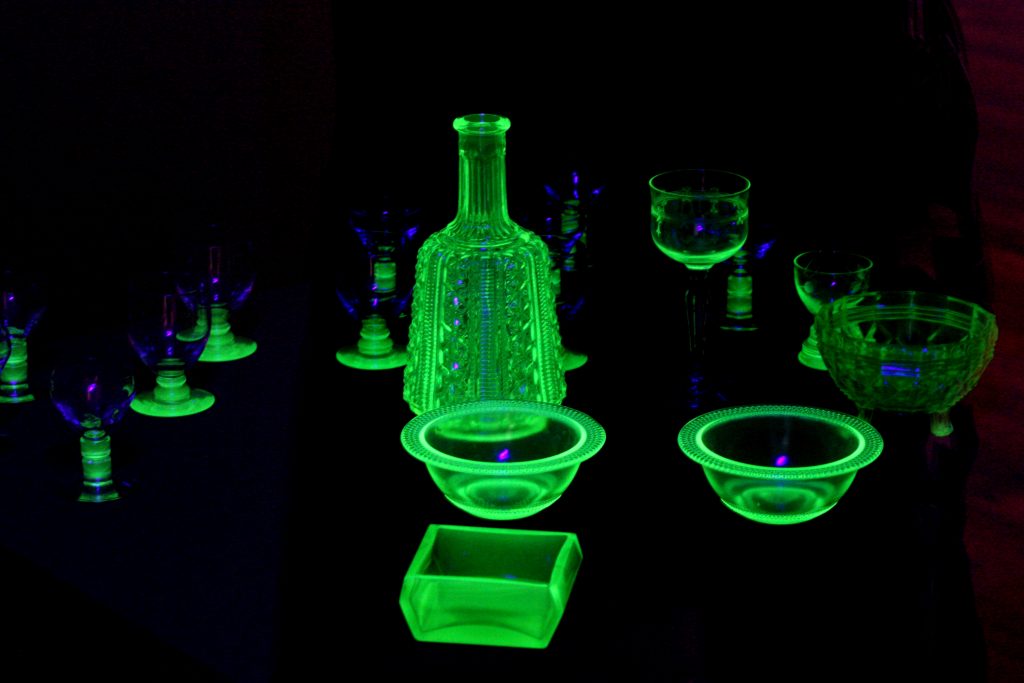
Real nuclear phenomena contributed indirectly. Cherenkov radiation, the blue glow seen in reactor pools, became widely recognised through photographs and documentaries. Even though it’s blue, not green, many people simply folded it into the existing fictional palette of “radioactive glow.” Phosphorescent materials used in early instruments, which sometimes glowed green when exposed to radiation, further blurred the line between scientific reality and artistic shorthand.
Cold War anxieties amplified everything. Artists and illustrators leaned into dramatic visuals to express public fears about nuclear weapons and waste. Over time, these elements merged into the enduring myth of glowing green goo seeping from yellow barrels, a symbol that feels intuitive, even though it has almost nothing to do with how nuclear waste actually looks.
What does nuclear & radioactive waste actually look like?
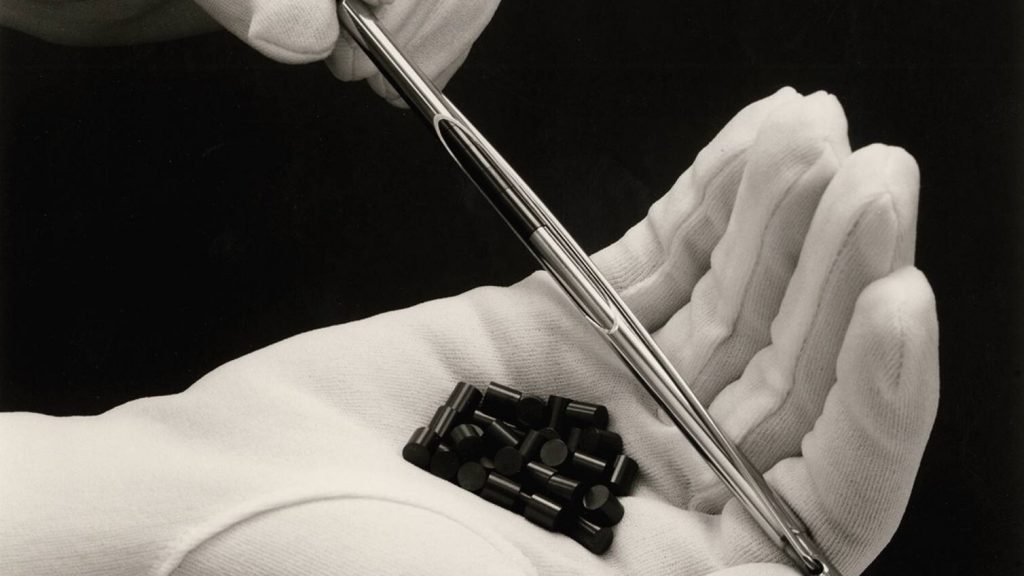
Real nuclear and radioactive waste looks far more ordinary and far less cinematic than the glowing sludge of popular imagination. The most familiar form is spent nuclear fuel, which consists of small, dark ceramic pellets made of uranium dioxide. Each pellet is about the size of a fingertip, dense and matte, with no glow or liquid sheen. These pellets are stacked inside long metal tubes to form fuel rods, and after use in a reactor they remain solid, rigid, and dry. Even high‑level waste never resembles goo; it stays in the same solid form it had when it entered the reactor.
Other categories of radioactive waste look even more mundane. Low‑level waste includes things like gloves, filters, protective clothing, tools, and lab equipment. These items look exactly like their non‑radioactive counterparts because that’s what they are. Their radioactivity comes from contamination, not from any change in appearance.
The containers are equally unglamorous. High‑level waste is stored in massive steel and concrete casks, often several metres tall, with thick walls and no windows or glowing seams. They’re engineered to be boring: stable, sealed, and unremarkable. Low‑level waste is typically packaged in sturdy drums or boxes that look like industrial shipping containers, not props from a cartoon. In reality, nuclear waste is visually dull by design, its danger managed through engineering rather than dramatic appearance.
Explore Further
Continue exploring the myths that have long obscured the real story of nuclear energy.
Does nuclear energy release a lot of pollution?
Is some of the food we eat radioactive?
Is nuclear energy bad for the environment?
Did you know? Explore Nuclear also offers great careers information and learning resources.
Below you can find references to the information and images used on this page.
Content References
- The Truth About Nuclear Waste: Dispelling Common Myths • Ontario Society of Professional Engineers
- What Does Nuclear Waste Actually Look Like: The Reality – ScienceInsights
- What Color Is Nuclear Waste? The Truth Explained – Biology Insights
- Video dispels some of the myths surrounding nuclear waste — ANS / Nuclear Newswire
- Yellow drums and bright neon fuel rods? What our radioactive waste really looks like | Nagra
Image References
- Uranium glass 005 – Juhele_CZ – CC BY-SA 2.0
- Uranium glass (Polke) (34394837730) – Till Westermayer – CC BY-SA 2.0
- Nuclear fuel pellets – United States Department of Energy – Public Domain