
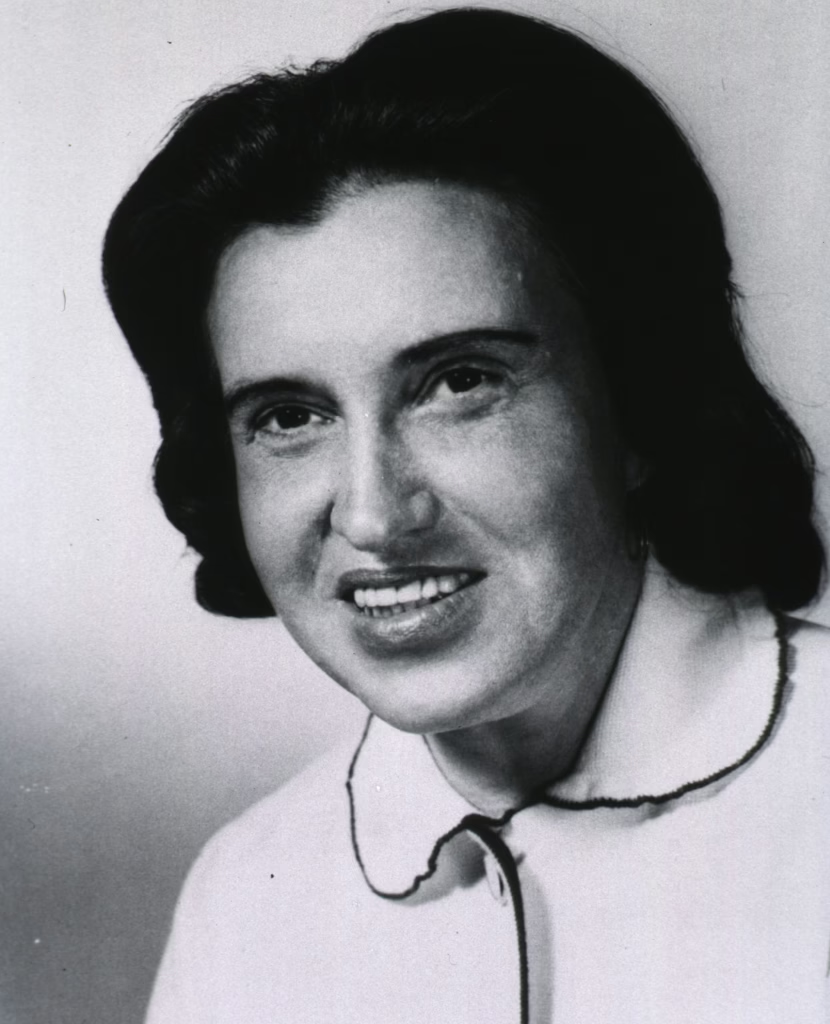
Rosalyn Sussman Yalow's Life
Life and Work
Born in New York City in 1921 to parents of modest means, Rosalyn Sussman Yalow grew up in a home without many books but with a strong belief in education. Her early academic drive carried her to Hunter College, where she discovered a passion for physics at a time when few women were encouraged to enter the field.
After earning her PhD at the University of Illinois, Yalow returned to New York and began working at the Bronx Veterans Administration Hospital. There she formed a long‑standing research partnership with physician Solomon Berson. Together, they developed radioimmunoassay (RIA), a groundbreaking technique that allowed scientists to measure tiny concentrations of hormones and other substances in the blood with unprecedented precision. This innovation revolutionised endocrinology, diagnostics, and medical research worldwide.
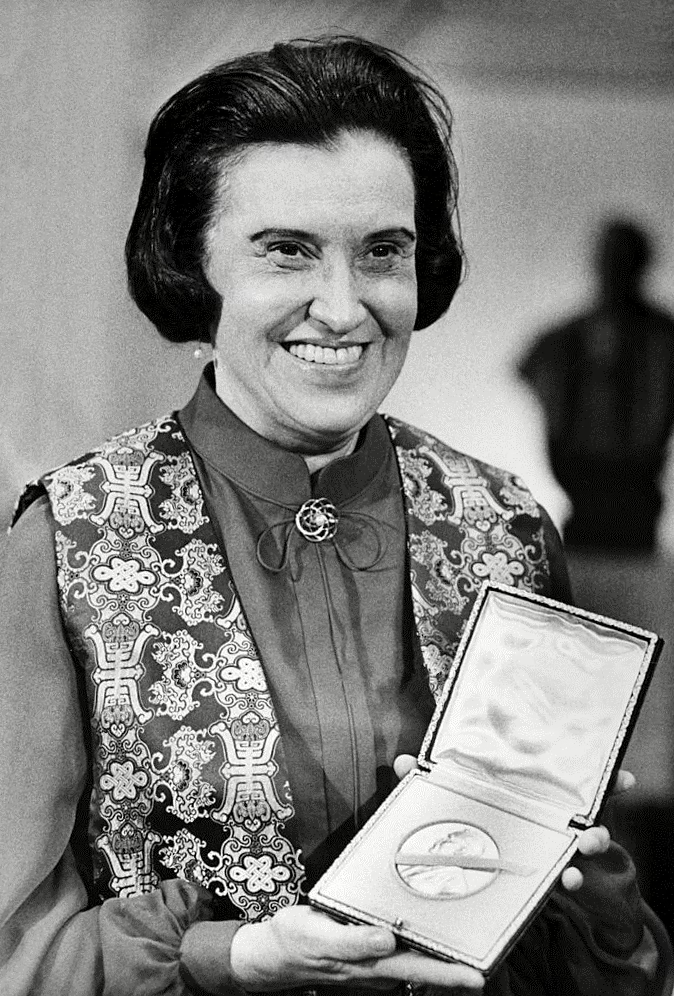
Yalow’s achievements earned her numerous honours, culminating in the 1977 Nobel Prize in Physiology or Medicine, which she shared with Roger Guillemin and Andrew Schally for their complementary work on peptide hormones. Despite her acclaim, she remained deeply committed to her laboratory and to mentoring younger scientists. She continued her research at the Bronx VA until 1991, demonstrating the same tenacity that had defined her since childhood.
She died in New York in 2011 at the age of 89, leaving behind a scientific legacy that continues to influence medicine today.
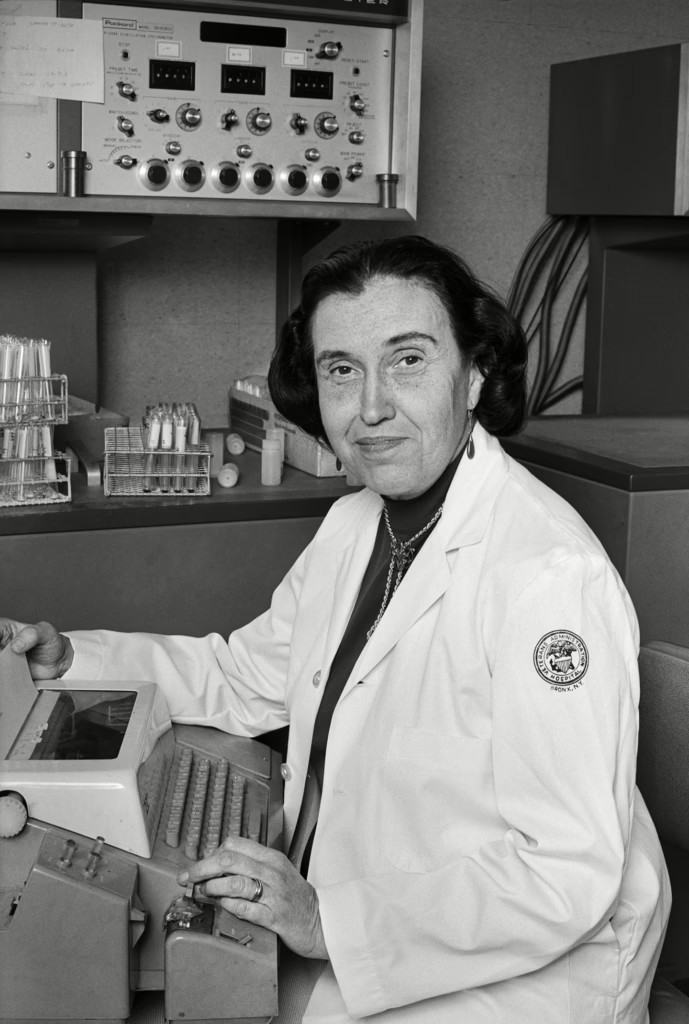
Rosalyn Sussman Yalow's Work
Development of Radioimmunoassay (RIA)
Yalow’s most influential contribution was the co‑development of radioimmunoassay (RIA) with her long‑time collaborator Solomon Berson. RIA is an extraordinarily sensitive technique that uses radioactive isotopes to detect and measure minute concentrations of hormones, enzymes, and other molecules in the blood. Before RIA, many of these substances were effectively “invisible” to researchers because they existed in such tiny amounts.
RIA revolutionised endocrinology by enabling precise measurement of insulin, growth hormone, thyroid hormones, and countless other substances. It also became a cornerstone of diagnostic medicine, influencing fields from fertility treatment to infectious disease testing. The method’s sensitivity was often described as being able to detect a teaspoon of sugar dissolved in a lake.
The introduction of RIA reshaped clinical practice. It allowed doctors to diagnose hormonal disorders more accurately, monitor treatment effectiveness, and understand disease mechanisms in ways previously impossible. In research, RIA opened the door to mapping hormone pathways and studying metabolic diseases such as diabetes with far greater clarity.
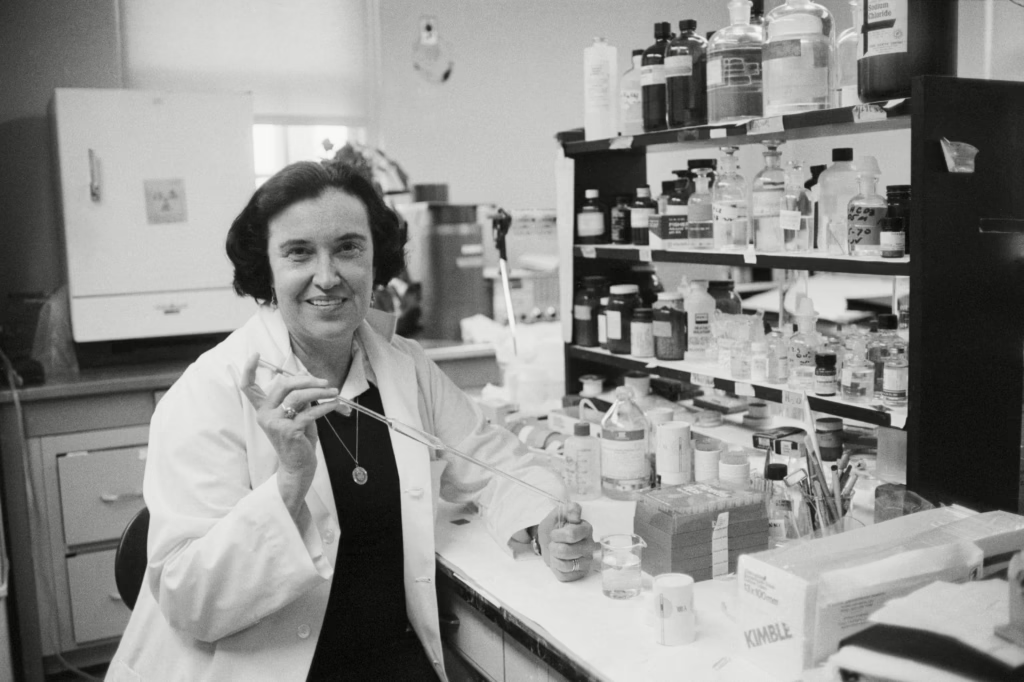
Rosalyn Sussman Yalow's Legacy
Awards and Distinctions
Rosalyn Sussman Yalow received a distinguished collection of national and international awards recognising her groundbreaking work in medical physics and her co‑development of radioimmunoassay (RIA). Her honours include the 1972 Dickson Prize, the 1975 AMA Scientific Achievement Award, the 1976 Albert Lasker Award for Basic Medical Research, and the 1977 Nobel Prize in Physiology or Medicine, which she shared with Roger Guillemin and Andrew Schally for the development of RIA. She later received the 1979 President’s Award for Distinguished Federal Civilian Service and the 1988 National Medal of Science, awarded for her historic contributions to hormone measurement and diagnostic medicine.
Enduring Influence
Beyond her scientific contributions, Yalow is remembered for her persistence, intellectual courage, and commitment to public service. Working for decades at the Bronx VA Hospital, she built a research environment that trained and inspired scientists around the world. Her career continues to serve as a model of interdisciplinary thinking and determination, especially for women pursuing careers in physics and medicine.
Explore Further
Continue learning about the lives of the people that shaped nuclear history.
Leslie Groves – The Race to Build the Atomic Bomb
John Cockcroft – The Man Who Split the Atom
Joseph John Thomson – A Pioneer of the Subatomic Age
Lise Meitner – A Pioneering Physicist and Educator
Did you know? Explore Nuclear also offers great careers information and learning resources.
Below you can find references to the information and images used on this page.
Content References
- ROSALYN YALOW – NobelPrize.org
- Rosalyn S. Yalow | Biography & Radioimmunoassay (RIA) Technique | Britannica
- Rosalyn Sussman Yalow (1921–2011) – PMC
- Rosalyn Sussman Yalow – American Chemical Society
- Rosalyn Sussman Yalow – Wikipedia
- Rosalyn YALOW
- Dr. Rosalyn Yalow: Groundbreaking VA Medical Researcher and Nobel Prize Laureate – VA History
Image References
- Rosalyn S. Yalow – United States National Library of Medicine – Public Domain
- Rosalyn Sussman Yalow ©Lynn Gilbert – Lynn Gilbert – CC BY-SA 4.0
- Rosalyn Yalow – US Information Agency – Public Domain
- Rosalyn Yalow 1977 – Keystone – Public Domain