
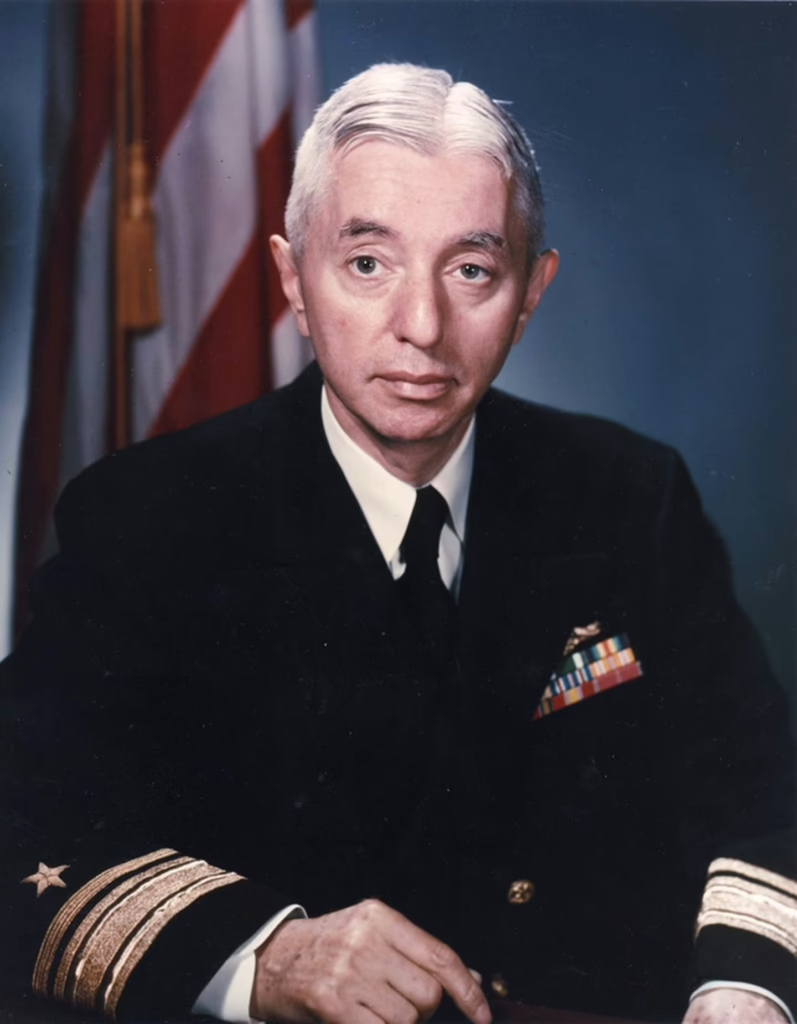
Hyman G. Rickover's Life
Life and Work
Hyman George Rickover was born Chaim Godalia Rickover on January 27, 1900, in Maków Mazowiecki, Poland, then part of the Russian Empire. His Jewish family emigrated to the United States in 1906 to escape persecution, settling first in New York and later in Chicago. Growing up in modest circumstances, Rickover worked from a young age to help support his family. His academic drive led him to secure an appointment to the United States Naval Academy, from which he graduated in 1922.
Rickover’s early naval career included service on surface ships and submarines, where he gained practical engineering experience. During World War II, he served in the Bureau of Ships, overseeing electrical engineering projects. After the war, his career took a decisive turn when he was assigned to explore the potential of nuclear energy for naval propulsion. By 1948, he was leading the Navy’s nuclear propulsion program, a role that would define his legacy.
His most pivotal achievement was the development of the USS Nautilus, the world’s first nuclear-powered submarine, launched in 1954. This innovation revolutionised naval warfare by allowing submarines to remain submerged for extended periods without refuelling. Rickover’s relentless standards and uncompromising leadership style ensured the success of the nuclear propulsion program, which later expanded to aircraft carriers and other vessels. His influence extended beyond the military, as he also promoted the peaceful use of nuclear energy.
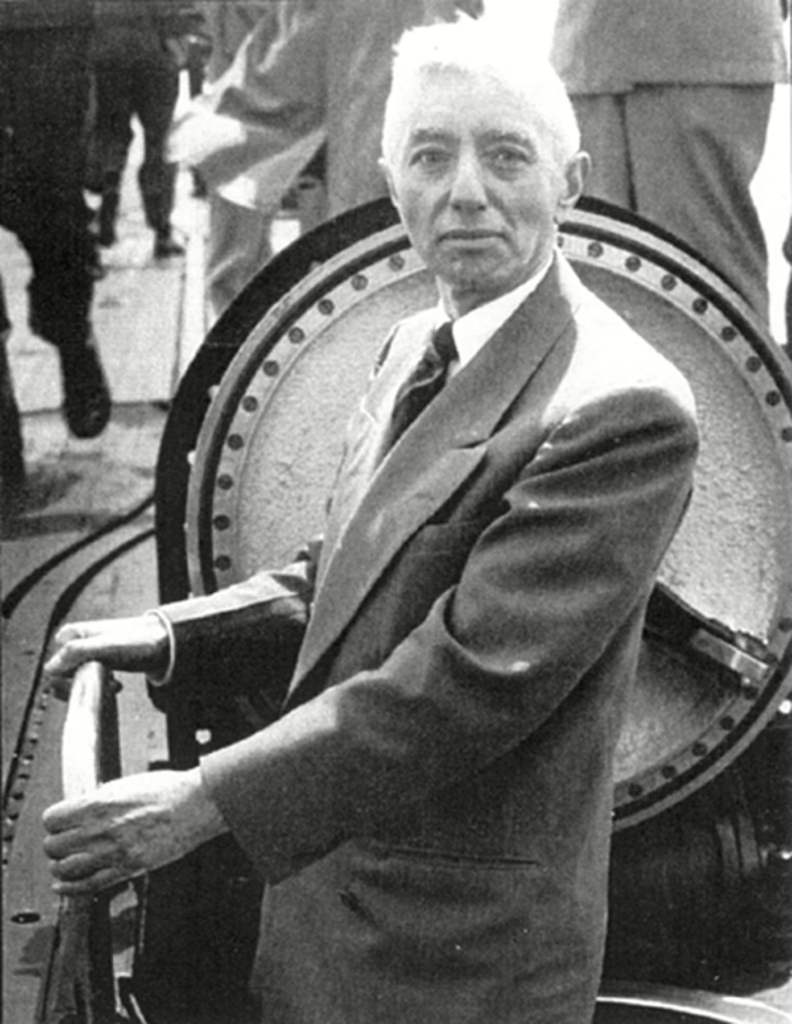
Rickover served in the Navy from 1918 until 1982, making him one of the longest-serving officers in U.S. history. Known for his demanding personality, he insisted on rigorous training, accountability, and excellence from those under his command. His leadership earned him numerous honours, including the Congressional Gold Medal, Presidential Medal of Freedom, and the Enrico Fermi Award.
On a personal level, Rickover married twice and had one son. He passed away on July 8, 1986, in Arlington, Virginia, at the age of 86. His legacy endures in the nuclear-powered fleet he helped create and in the standards of discipline and innovation he instilled in the Navy. Rickover remains a towering figure in military and engineering history, remembered as the uncompromising architect of America’s nuclear navy.
Hyman G. Rickover's Work
Early Naval Engineering Career
Rickover began his career as a naval engineer after graduating from the U.S. Naval Academy in 1922. He specialised in electrical engineering, later earning a master’s degree from Columbia University. During World War II, he worked in the Bureau of Ships, where he oversaw electrical systems and gained a reputation for technical rigor and uncompromising standards.
Development of Nuclear Propulsion
Rickover’s most significant achievement was leading the Naval Reactors program, established in 1948. He spearheaded the design and construction of the USS Nautilus, the world’s first nuclear-powered submarine, launched in 1954. Nuclear propulsion allowed submarines to remain submerged for months, revolutionising naval strategy and warfare. Rickover’s insistence on safety, reliability, and thorough training ensured the program’s success.
Expansion to Surface Ships
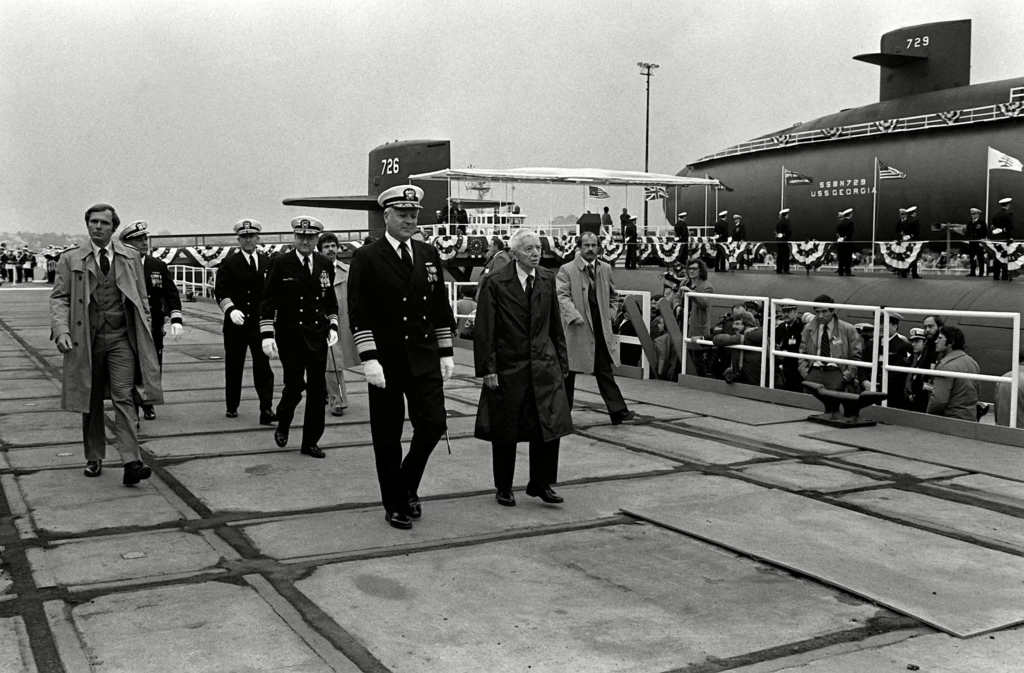
Following the success of nuclear submarines, Rickover extended nuclear propulsion to surface vessels. Aircraft carriers such as the USS Enterprise (1961) demonstrated the scalability of nuclear power for large warships. His work created a fleet capable of global reach without reliance on conventional fuel, reshaping U.S. naval dominance during the Cold War.
Civilian Nuclear Power Contributions
Rickover also influenced civilian nuclear energy. He oversaw the development of the Shippingport Atomic Power Station (1957), the first full-scale nuclear power plant for civilian electricity generation. This project demonstrated the peaceful applications of nuclear technology and laid the foundation for the commercial nuclear industry.
Hyman G. Rickover's Accomplishments
Awards and Honours
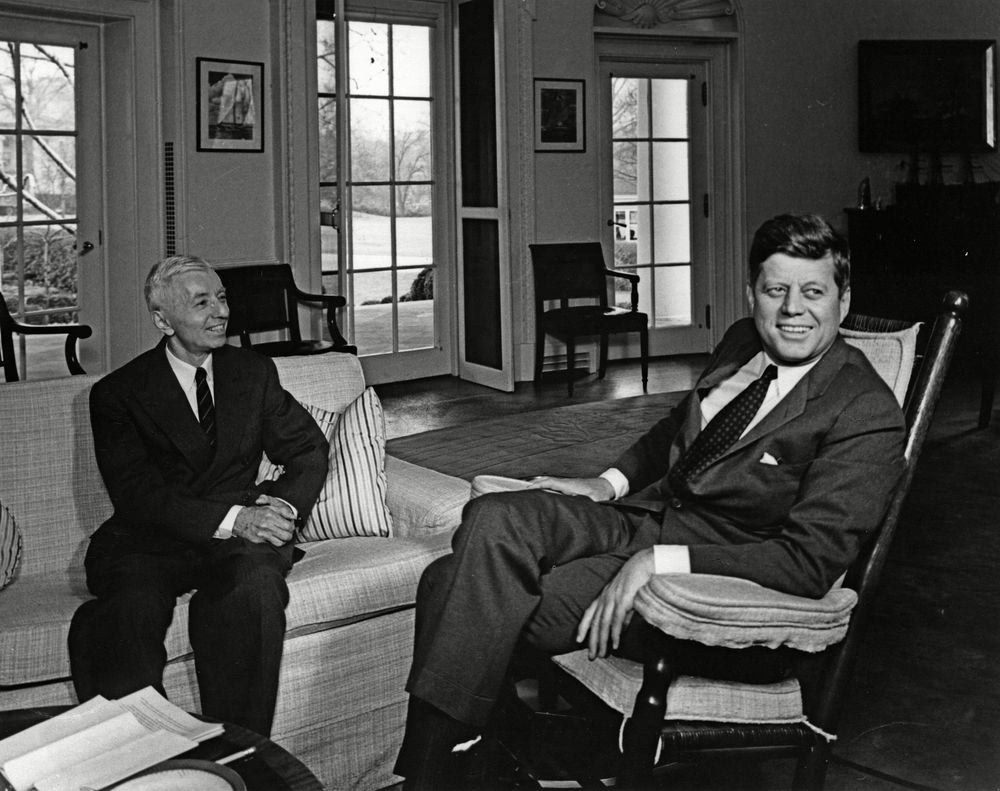
Rickover’s contributions earned him some of the nation’s highest distinctions. He received the Congressional Gold Medal twice, a rare honour recognising his pioneering work in nuclear propulsion. In 1980, he was awarded the Presidential Medal of Freedom, the highest civilian honour in the United States, for his impact on both defence and energy. He also received the Enrico Fermi Award in 1964 for his achievements in nuclear science and engineering. Within the Navy, he was decorated with multiple Distinguished Service Medals and Legions of Merit for his leadership and innovation. Universities across the country awarded him honorary degrees, acknowledging his influence on science, engineering, and leadership.
Legacy
Rickover’s work created a dual-use technology that strengthened U.S. military power and advanced civilian energy. His nuclear fleet remains a cornerstone of U.S. defence, and his principles of engineering discipline continue to influence military and civilian nuclear programs worldwide. His career, spanning 64 years, left an enduring mark on both naval history and technological innovation.
Explore Further
Continue learning about the lives of the people that shaped nuclear history.
Walter Zinn – Building the Foundations of Modern Nuclear Power
John Cockcroft – The Man Who Split the Atom
Marie Curie – A Symbol of Perseverance, Intelligence and Scientific Curiosity
Lise Meitner – A Pioneering Physicist and Educator
Did you know? Explore Nuclear also offers great careers information and learning resources.
Below you can find references to the information and images used on this page.
Content References
- Hyman G. Rickover – Nuclear Museum
- Reindustrializing America: Wisdom from the Father of the Nuclear Navy – Center for Maritime Strategy
- Hyman G. Rickover – Wikipedia
- Admiral Hyman Rickover – My Father Remembered
- Hyman G. Rickover | Nuclear Propulsion, Submarine Development, Naval Engineering | Britannica
- The Rickover Corpus
- Hyman G. Rickover | U.S. Naval Institute
- Rickover, Hyman G.
Image References
- Hyman Rickover 1955 – Unknown author – Public Domain
- Hyman Rickover inspecting USS Nautilus – Unknown author – Public Domain
- Flag officers USS Ohio commissioning – United States Navy – Public Domain
- JFK and Rickover – Abbie Rowe, White House – Public Domain
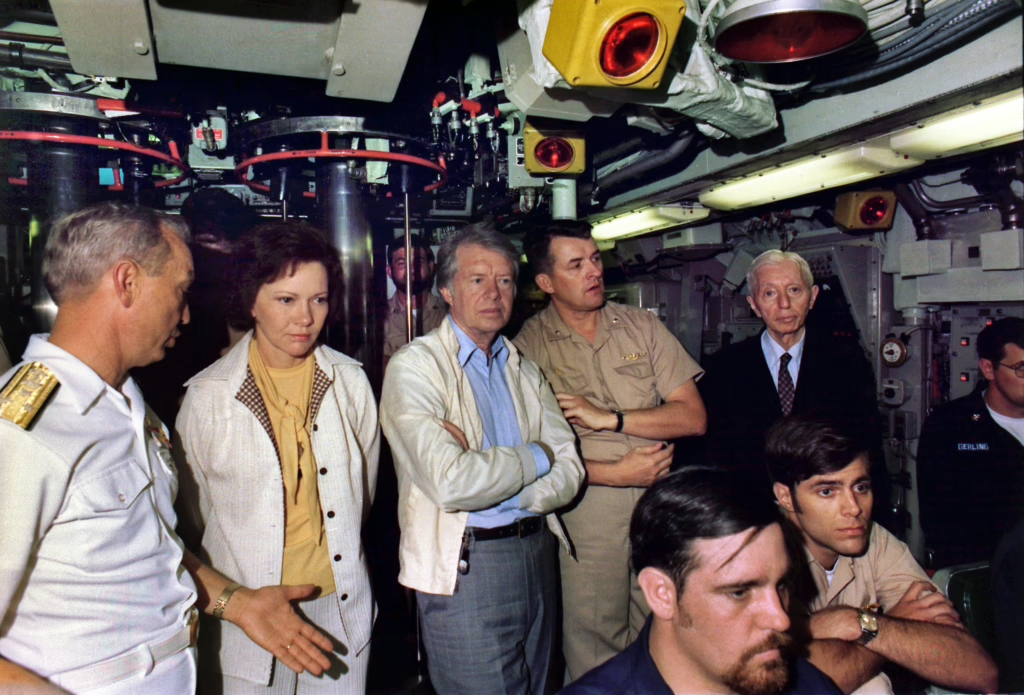
- Rosalynn Carter, Jimmy Carter and Admiral Hyman Rickover aboard the submarine USS Los Angeles – Unknown author – Public Domain