
Table of Contents
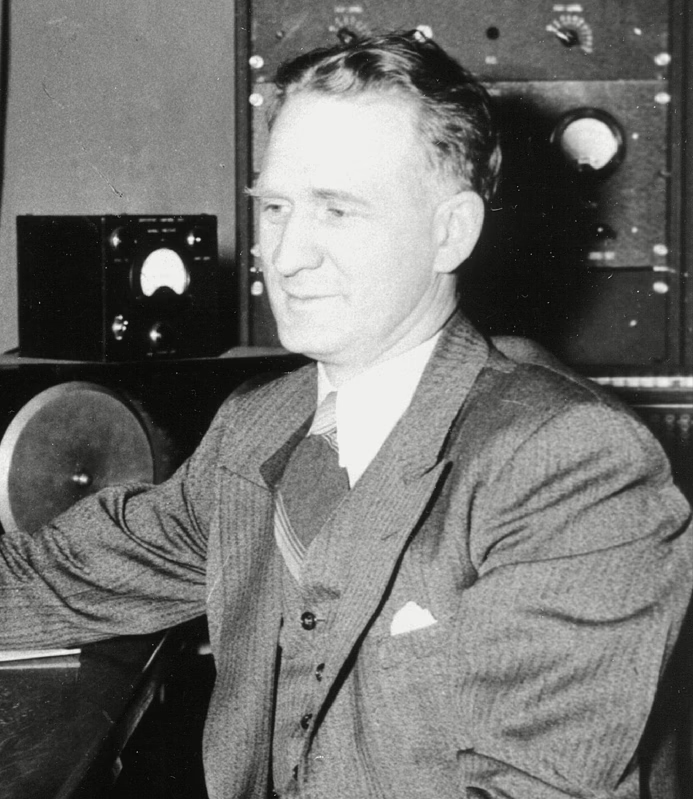
Walter Zinn's Life
Life and Work
Born on December 10, 1906, in Kitchener (then Berlin), Ontario, Walter Henry Zinn studied mathematics and physics at Queen’s University, earning his BA in 1927 and MA in 1930. He later completed a PhD in physics at Columbia University in 1934, where he also conducted early research into nuclear fission alongside figures such as Leo Szilard and Enrico Fermi.
During World War II, Zinn joined the Manhattan Project at the University of Chicago’s Metallurgical Laboratory. Working closely with Enrico Fermi, he played a central role in constructing Chicago Pile‑1, the world’s first self‑sustaining nuclear reactor, which achieved criticality on December 2, 1942. His contributions were instrumental in proving that controlled nuclear chain reactions were possible, laying the groundwork for both wartime and peacetime nuclear technologies.
After the war, Zinn became the first director of Argonne National Laboratory, serving from 1946 to 1956. Under his leadership, Argonne built several pioneering reactors, including the Experimental Breeder Reactor I (EBR‑I), which produced the first usable electricity from nuclear energy. He later served as the first president of the American Nuclear Society in 1955–1956 and eventually moved to Florida, where he founded a consulting firm focused on nuclear engineering.
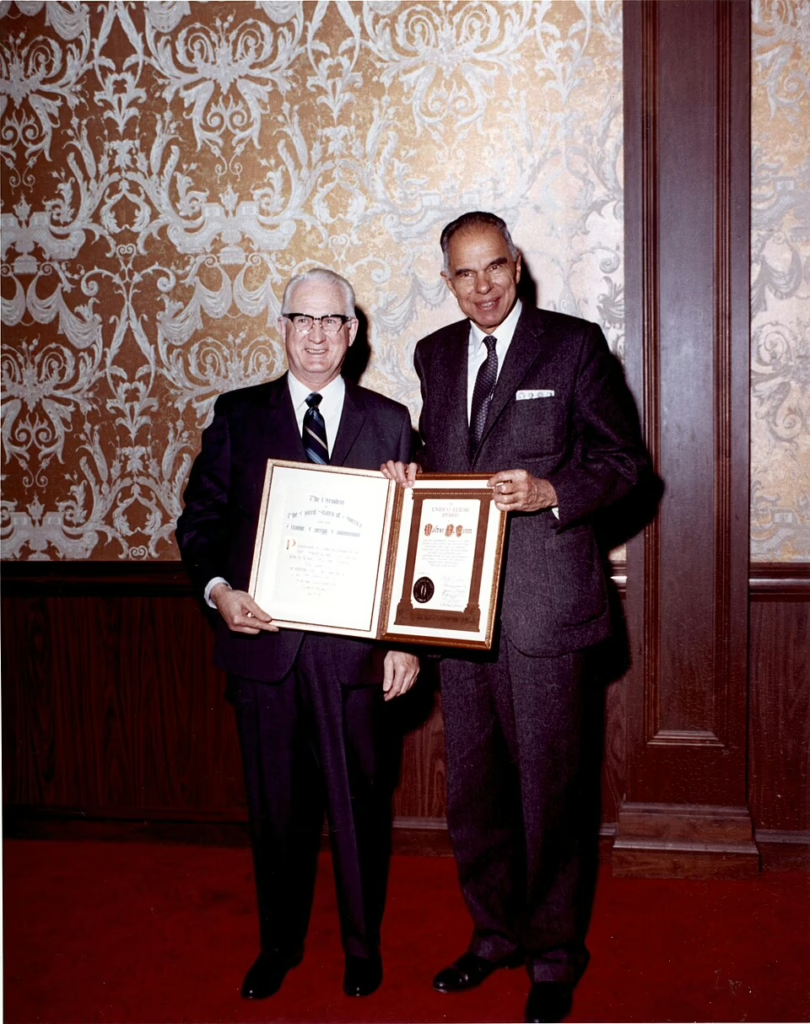
Zinn received numerous honours for his work, including the Atoms for Peace Award and the Enrico Fermi Award. He died on February 14, 2000, in Florida at the age of 93, leaving behind a legacy as one of the foundational figures in nuclear science and reactor design.
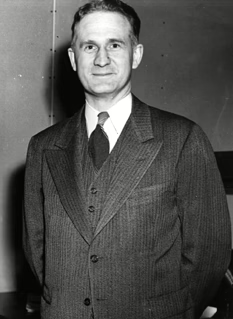
Walter Zinn's Work
Early Scientific Foundations
Walter Henry Zinn’s scientific career began with theoretical and experimental physics, but it quickly converged with the emerging field of nuclear fission in the 1930s. After completing his PhD at Columbia University, he collaborated with leading physicists such as Leo Szilard and Enrico Fermi. His early work focused on neutron behaviour and chain reactions; research that would become essential to the development of controlled nuclear energy.
Role in the Manhattan Project
Zinn became a key figure in the Manhattan Project during World War II. Working at the University of Chicago’s Metallurgical Laboratory, he served as one of Fermi’s closest collaborators. He helped design, construct, and operate Chicago Pile‑1, the world’s first self‑sustaining nuclear reactor, which achieved criticality in 1942. Zinn’s practical engineering skill and deep understanding of reactor physics made him indispensable in translating theoretical ideas into functioning systems.
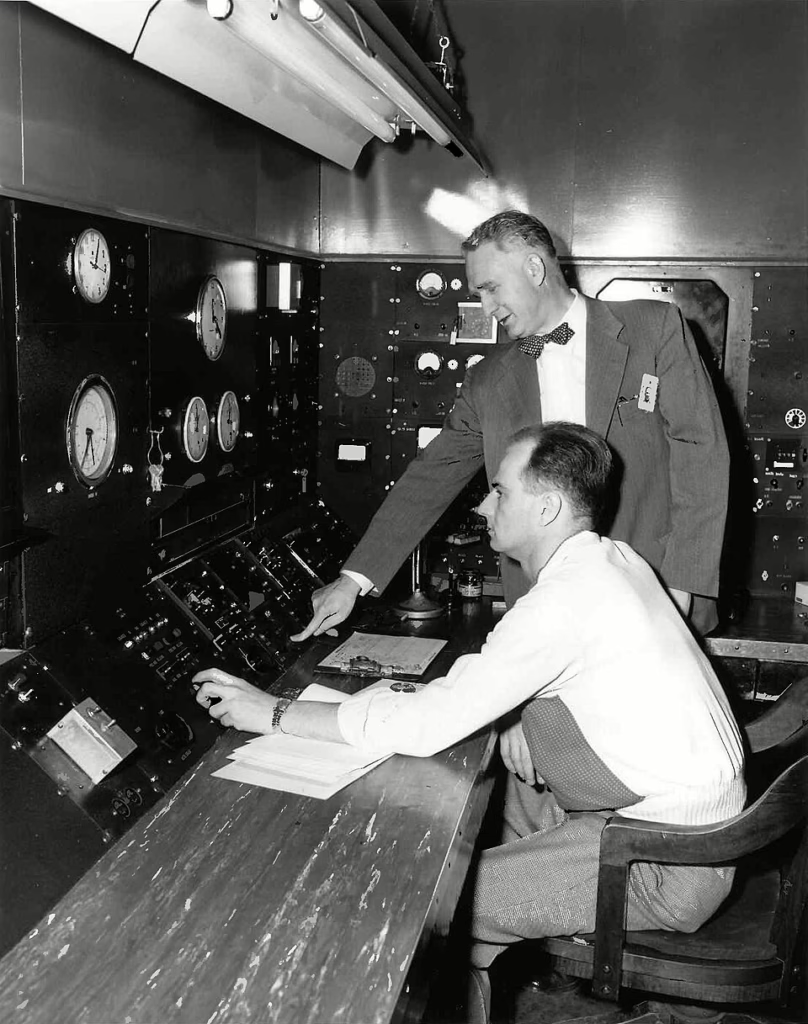
Leadership at Argonne National Laboratory
After the war, Zinn became the first director of Argonne National Laboratory, a position he held for a decade. Under his leadership, Argonne became the central hub for U.S. reactor development. Zinn oversaw the design and construction of several pioneering reactors, including the Experimental Breeder Reactor I (EBR‑I), which produced the first usable electricity from nuclear power in 1951. His work at Argonne helped establish the scientific and engineering foundations for civilian nuclear energy.
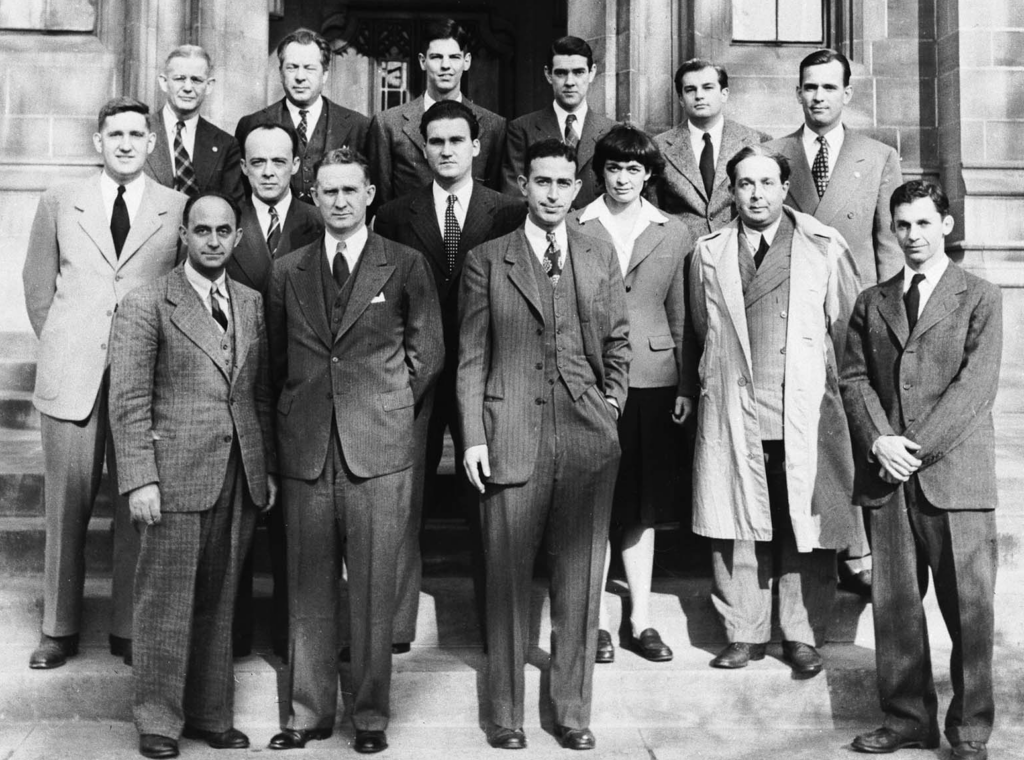
Contributions to Reactor Design and Nuclear Policy
Zinn was a strong advocate for peaceful applications of nuclear technology. He contributed to early reactor safety concepts, fuel‑cycle research, and breeder reactor development. Beyond technical work, he played an influential role in shaping U.S. nuclear policy and international cooperation. As the first president of the American Nuclear Society, he helped professionalise the field and promote responsible nuclear science.
Walter Zinn's Legacy
Awards and Honours
Walter Zinn received some of the most significant recognitions in the field of nuclear science. Among them was the Enrico Fermi Award, one of the highest honours bestowed by the U.S. government for contributions to nuclear energy. He was also awarded the Atoms for Peace Award, which acknowledged his leadership in advancing peaceful applications of nuclear technology. In addition, Zinn served as the first president of the American Nuclear Society, a role that itself reflected the esteem in which he was held by his peers.
Legacy in the Global Nuclear Community
Zinn’s legacy is felt in the institutions he helped build, the technologies he pioneered, and the professional standards he championed. Argonne National Laboratory became a model for multidisciplinary research centres, and many of the reactor concepts developed under his leadership influenced designs worldwide. His advocacy for peaceful nuclear applications helped shape early international cooperation in atomic energy. Today, Zinn is remembered as one of the foundational architects of nuclear power, someone whose work enabled both scientific progress and the global expansion of civilian nuclear energy.
Explore Further
Continue learning about the lives of the people that shaped nuclear history.
Otto Hahn – The Dawn of the Atomic Age
Hans Bethe – From Quantum Mechanics to the Stars
Harold Urey – From Deuterium to the Dawn of Life
Mark Oliphant – The Fusion Pioneer Who Shaped Modern Physics
Did you know? Explore Nuclear also offers great careers information and learning resources.
Below you can find references to the information and images used on this page.
Content References
- Walter Zinn – Nuclear Museum
- Walter Henry Zinn | nuclear physicist, reactor designer, Manhattan Project | Britannica
- Walter Zinn – Wikipedia
- Walter H. Zinn — ANS / About / Governance / Presidents / Walter Zinn
- Walter Henry Zinn, December 10, 1906–February 14, 2000 | By Alvin M. Weinberg | Biographical Memoirs
Image References
- W. H. Zinn at controls of CP-2 – ENERGY.GOV – Public Domain
- Walter Henry Zinn – Unknown Author – Public Domain
- Chicago Pile Team – Los Alamos National Laboratory – Unless otherwise indicated, this information has been authored by an employee or employees of the Los Alamos National Security, LLC (LANS), operator of the Los Alamos National Laboratory under Contract No. DE-AC52-06NA25396 with the U.S. Department of Energy. The U.S. Government has rights to use, reproduce, and distribute this information. The public may copy and use this information without charge, provided that this Notice and any statement of authorship are reproduced on all copies. Neither the Government nor LANS makes any warranty, express or implied, or assumes any liability or responsibility for the use of this information.
- Argonne history At the controls of Chicago Pile-3 – Argonne National Laboratory – CC BY-SA 2.0
- Walter H. Zinn. 1969. L to R- Walter Zinn and Seaborg – ENERGY.GOV – Public Domain