
Table of Contents
Andrei Sakharov's Life
Life and Work
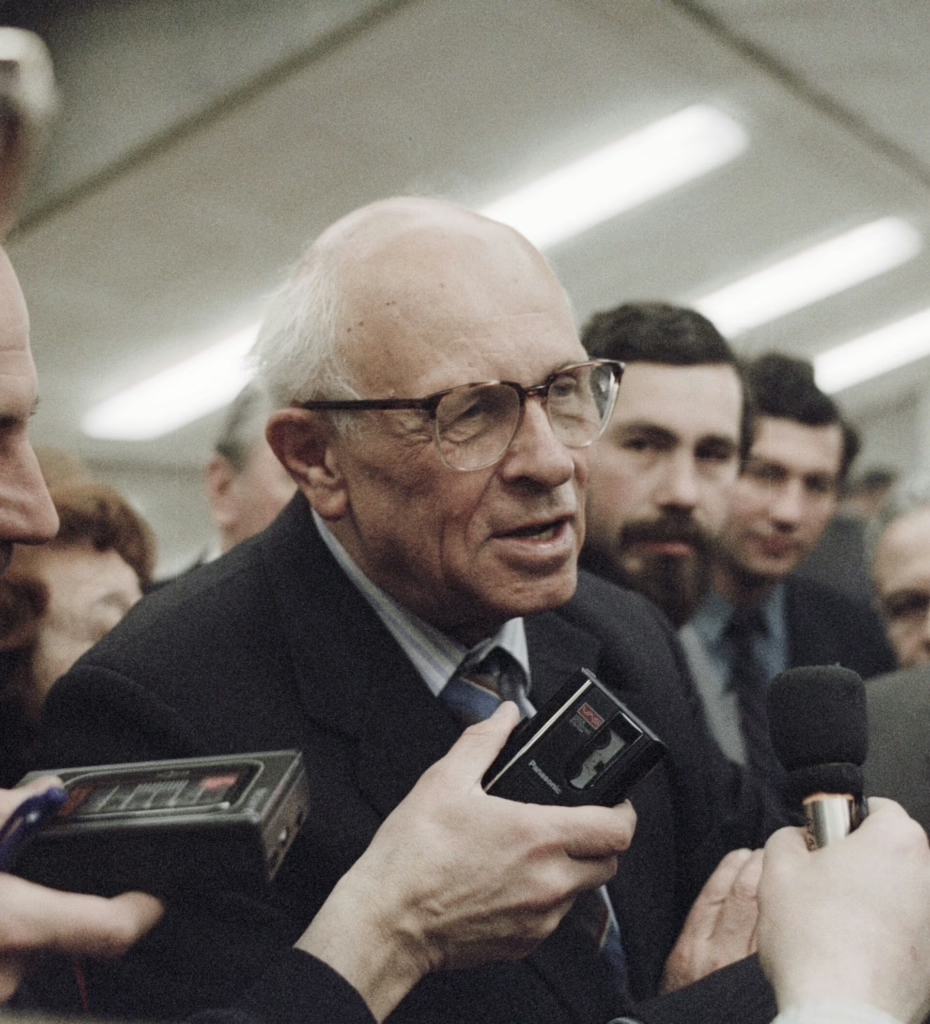
Born in Moscow in 1921, Andrei Sakharov grew up in a family steeped in science and education, strongly influenced by his physicist father. His academic path led him to the Physics Department of Moscow State University, and during World War II he completed his studies while evacuated to Ashkhabad. After the war, he returned to Moscow to pursue a PhD under Igor Tamm, earning his degree in 1947.
Sakharov quickly became central to the Soviet thermonuclear program. In 1948, he joined a research group working on the hydrogen bomb and soon proposed the key idea that made the first Soviet thermonuclear device possible. His scientific achievements earned him immense prestige, including multiple state honours, and he became one of the youngest Academicians in Soviet history. Yet his growing awareness of the destructive power he helped unleash gradually transformed his worldview.
By the late 1960s and 1970s, Sakharov emerged as the Soviet Union’s most prominent dissident. He spoke out against nuclear proliferation, political repression, and human rights abuses, becoming a moral voice both within the USSR and internationally. His activism led to severe state retaliation, including internal exile, but also global recognition, most notably the Nobel Peace Prize in 1975. His later years saw him serve as a parliamentarian, where his integrity and refusal to engage in populism made him a respected figure across society.
Sakharov died in Moscow in 1989, leaving behind a legacy that bridged scientific brilliance and unwavering moral courage. His life remains a testament to the power of conscience in the face of authoritarianism.
Andrei Sakharov's Work
Scientific Contributions
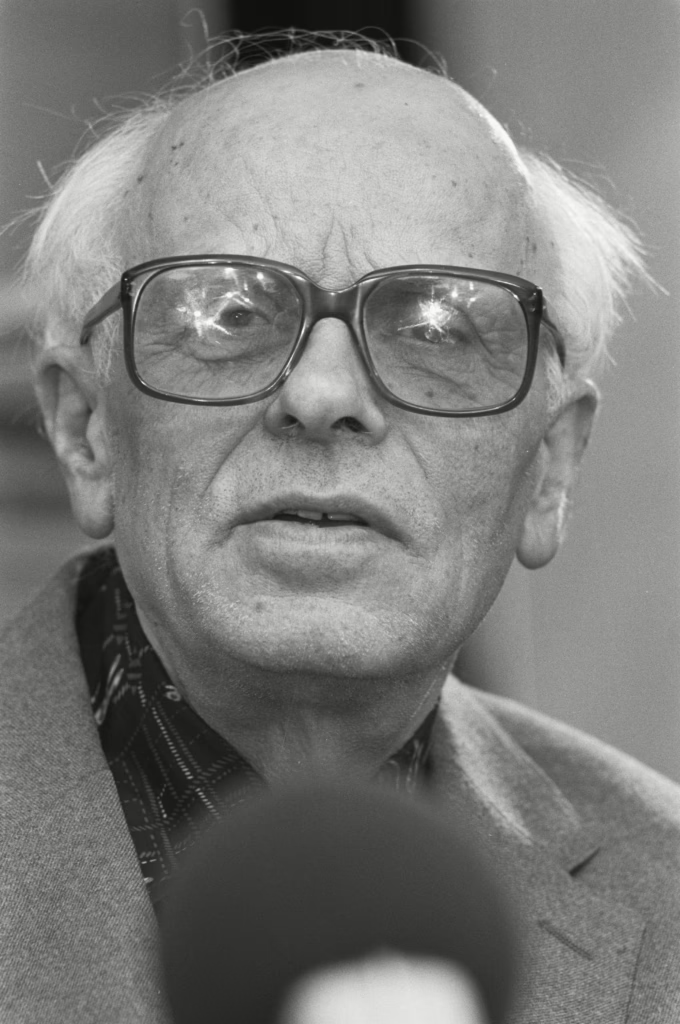
Andrei Sakharov began his career as a theoretical physicist and quickly became one of the leading scientific minds in the Soviet Union. His most significant early work was on the development of the Soviet hydrogen bomb in the late 1940s and early 1950s. He proposed key design concepts, most famously the “Sakharov’s Third Idea”, that made the Soviet thermonuclear program viable. This work earned him immense prestige and rapid promotion within the Soviet scientific establishment.
Beyond weapons research, Sakharov made important contributions to particle physics and cosmology. His 1967 paper on baryon asymmetry proposed mechanisms explaining why the universe contains more matter than antimatter, an idea that remains influential in modern cosmology.
Advocacy Against Nuclear Proliferation
Sakharov’s scientific work exposed him to the catastrophic potential of nuclear weapons, and by the late 1950s he began to speak out. He played a crucial role in pushing the Soviet leadership toward the 1963 Partial Test Ban Treaty, which prohibited atmospheric nuclear tests. His writings warned of radioactive fallout, global instability, and the moral responsibility of scientists.
His 1968 essay Reflections on Progress, Peaceful Coexistence, and Intellectual Freedom marked a turning point. It criticised the arms race and called for political openness. Circulated as ‘samizdat’ and published abroad, it made him a global figure, and a target of state repression.
Human Rights and Political Activism
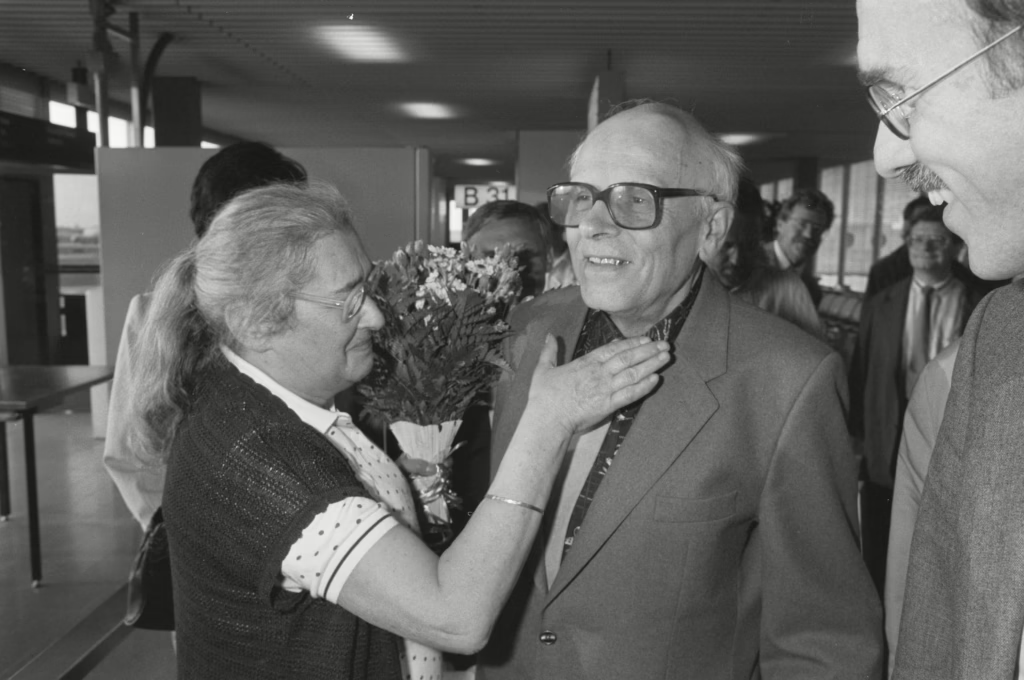
From the late 1960s onward, Sakharov became the Soviet Union’s most prominent dissident. He defended political prisoners, supported democratic reforms, and co‑founded the Moscow Human Rights Committee. His activism broadened from nuclear issues to universal human rights, freedom of conscience, and the rule of law.
The Soviet government stripped him of honours, banned him from research, and eventually exiled him internally to the closed city of Gorky in 1980. Even under surveillance and isolation, he continued to write appeals and statements that circulated internationally.
His efforts were recognised with the 1975 Nobel Peace Prize, awarded for his “fearless personal commitment” to human rights.
Later Political Work
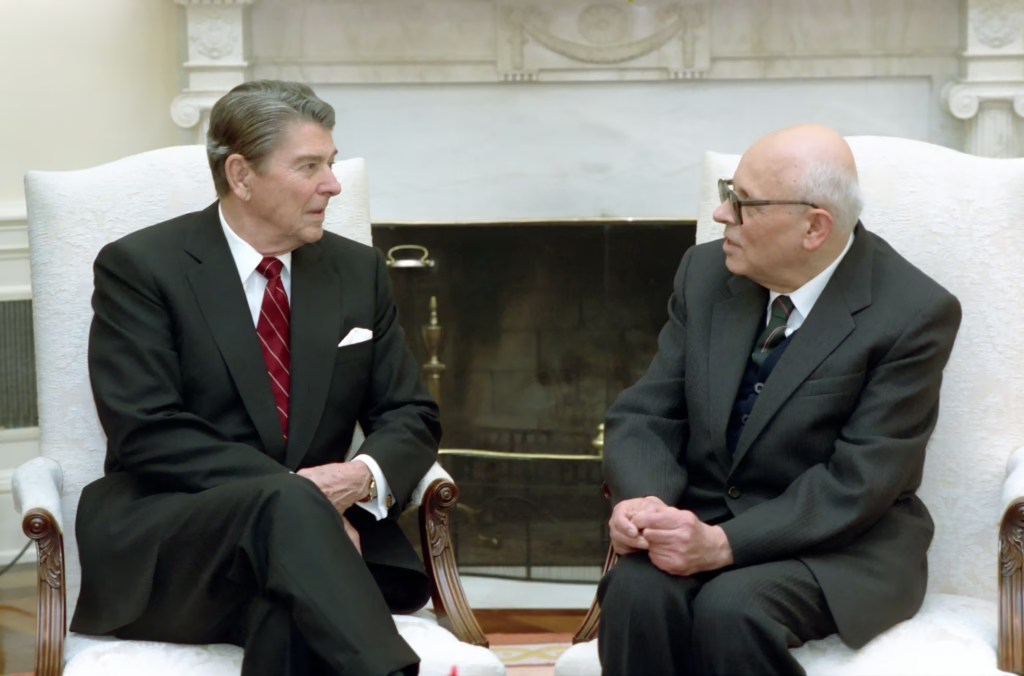
Sakharov returned to Moscow in 1986 during Gorbachev’s reforms. He was elected to the Congress of People’s Deputies in 1989, where he advocated for constitutional reform, multiparty democracy, and limits on executive power. His proposals were often ahead of their time, and he remained a principled, independent voice until his death later that year.
Andrei Sakharov's Legacy
Awards and Honours
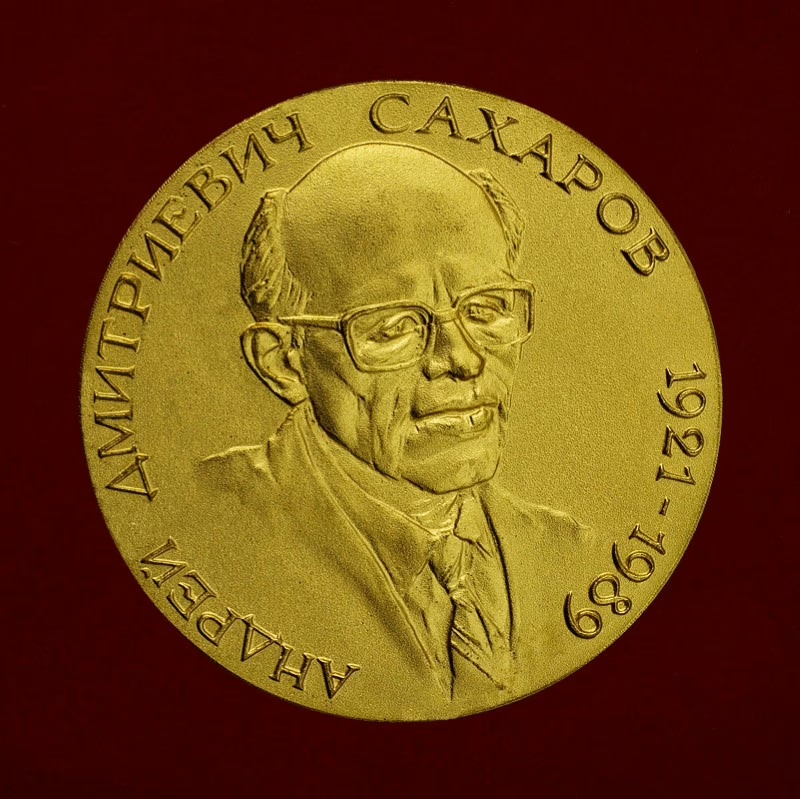
Andrei Sakharov received global recognition for both his scientific achievements and his moral leadership. His early career as a physicist earned him some of the Soviet Union’s highest distinctions, including election to the USSR Academy of Sciences at an unusually young age. Although many of his state honours were later stripped due to his political dissent, his scientific reputation remained internationally respected.
His most significant international honour was the 1975 Nobel Peace Prize, awarded for his “fearless personal commitment” to human rights, freedom of thought, and opposition to the abuse of power. Because the Soviet government barred him from travelling, his wife Yelena Bonner accepted the prize on his behalf. Over the years, he also received numerous honorary degrees and awards from universities, scientific bodies, and human rights organisations around the world, reflecting his dual identity as both a scientist and a defender of civil liberties.
Global Influence and Legacy
Sakharov’s legacy extends far beyond his scientific contributions. He is remembered as one of the most influential moral voices of the late 20th century; a figure who bridged the worlds of science, politics, and ethics. His writings on nuclear responsibility, political openness, and human rights helped shape international discourse during the Cold War and inspired dissidents across Eastern Europe.
In Russia and abroad, institutions, prizes, and public spaces bear his name. The European Parliament’s Sakharov Prize for Freedom of Thought, established in 1988, stands as one of the most prominent human rights awards in the world and reflects his enduring symbolic power. His ideas about constitutional reform, democratic accountability, and the ethical responsibilities of scientists continue to be studied and debated.
Enduring Moral Symbol
Sakharov is widely regarded as a model of intellectual courage; someone who used his scientific authority to challenge authoritarianism and advocate for universal rights. His life demonstrates how a scientist can become a moral force, and how personal conscience can reshape public life. His legacy remains a touchstone for activists, scholars, and policymakers who grapple with the intersection of science, ethics, and political freedom.
Explore Further
Continue learning about the lives of the people that shaped nuclear history.
William Penney – Building the UK’s Nuclear Deterrent
George de Hevesy – The Founder of Nuclear Medicine
Harold Urey – From Deuterium to the Dawn of Life
Ellen Gleditsch – Norway’s Pioneer of Radiochemistry
Did you know? Explore Nuclear also offers great careers information and learning resources.
Below you can find references to the information and images used on this page.
Content References
Image References
- RIAN archive 25981 Academician Sakharov – Vladimir Fedorenko – CC BY-SA 3.0
- Aankomsten, mensenrechten, uitreikingen, eredoctoraten, portretten, Bestanddeelnr 934-4708 – Rob Croes for Anefo – CC0 1.0
- BonnerSacharov1989 – Rob C. Croes (ANEFO) – CC0 1.0
- President Ronald Reagan meeting with Soviet dissident Andrei Sakharov in the Oval Office – Reagan White House Photographs – Public Domain
- Medal RAS Sakharov – Re2000 – CC BY-SA 4.0