
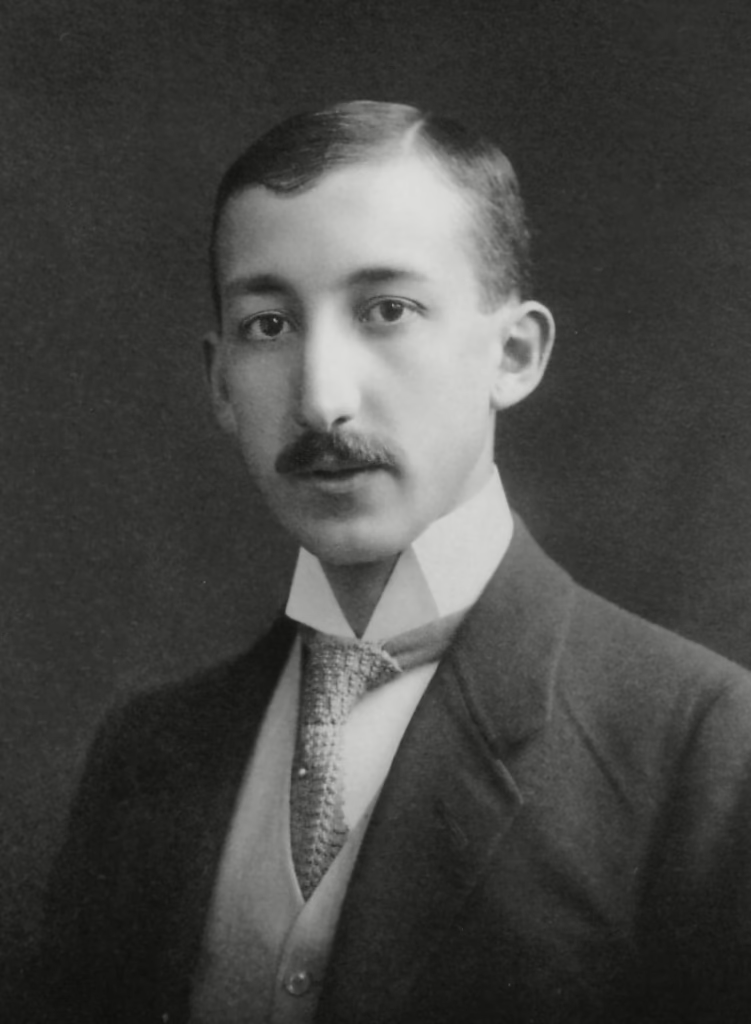
George de Hevesy's Life
Life and Work
George de Hevesy was born on August 1, 1885, in Budapest, into an aristocratic Hungarian family. He received a strong early education and went on to study at the University of Budapest, the Technische Universität Berlin, and later earned his doctorate at the University of Freiburg in 1908. His early career included work in physical chemistry in Switzerland and collaborations with leading scientists such as Fritz Haber and Ernest Rutherford, experiences that shaped his future research direction.
In 1913, he and Frederic Paneth conducted the first radioactive tracer experiment, laying the foundation for the use of isotopes to study chemical and biological processes. Over the following decades, he pioneered isotope tracer techniques that transformed chemistry and medicine, ultimately earning him the 1943 Nobel Prize in Chemistry. He also co‑discovered the element hafnium in 1922 with Dirk Coster, further cementing his place in scientific history.
Hevesy’s life intersected with major historical events. During the Nazi occupation of Denmark, he famously dissolved gold Nobel Prize medals belonging to colleagues to prevent their confiscation; the gold was later recovered and the medals recast after the war. His career took him across Europe, including positions in Copenhagen, Manchester, Zürich, and Freiburg, where he continued to advance radioanalytical chemistry.
He died on July 5, 1966, in Freiburg, leaving behind a legacy as a pioneering chemist whose innovations reshaped scientific understanding of chemical processes in living systems. His contributions continue to influence modern chemistry, medicine, and geochemistry.
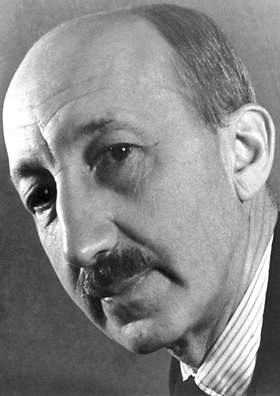
George de Hevesy's Work
Pioneering Radioactive Tracer Techniques
George de Hevesy’s most influential contribution to science was the development of radioactive tracer methods, a breakthrough that transformed chemistry, biology, and later medicine. In 1913, while working with Frederic Paneth, he carried out the first radioactive‑tracer experiment, demonstrating that radioactive isotopes could be used to follow chemical processes in real time. This innovation allowed scientists to study metabolic pathways, nutrient absorption, and chemical reactions inside living organisms, work that earned him the 1943 Nobel Prize in Chemistry.
Discovery of Hafnium
In 1922, de Hevesy and physicist Dirk Coster identified the element hafnium, confirming predictions based on the periodic table and Niels Bohr’s atomic model. The discovery was made in Copenhagen using X‑ray spectroscopy and filled a long‑standing gap in the periodic table. Hafnium became important in nuclear science and materials research.
Foundations of Nuclear Medicine
De Hevesy’s tracer techniques laid the groundwork for modern nuclear medicine. By enabling the tracking of substances inside living organisms, his work made it possible to study physiological processes without invasive procedures. This approach eventually evolved into diagnostic tools such as PET scans and radiopharmaceuticals. His early experiments demonstrated, for the first time, how biological processes could be observed dynamically rather than through post‑mortem analysis.
Research in Radioactivity and Collaboration with Leading Scientists
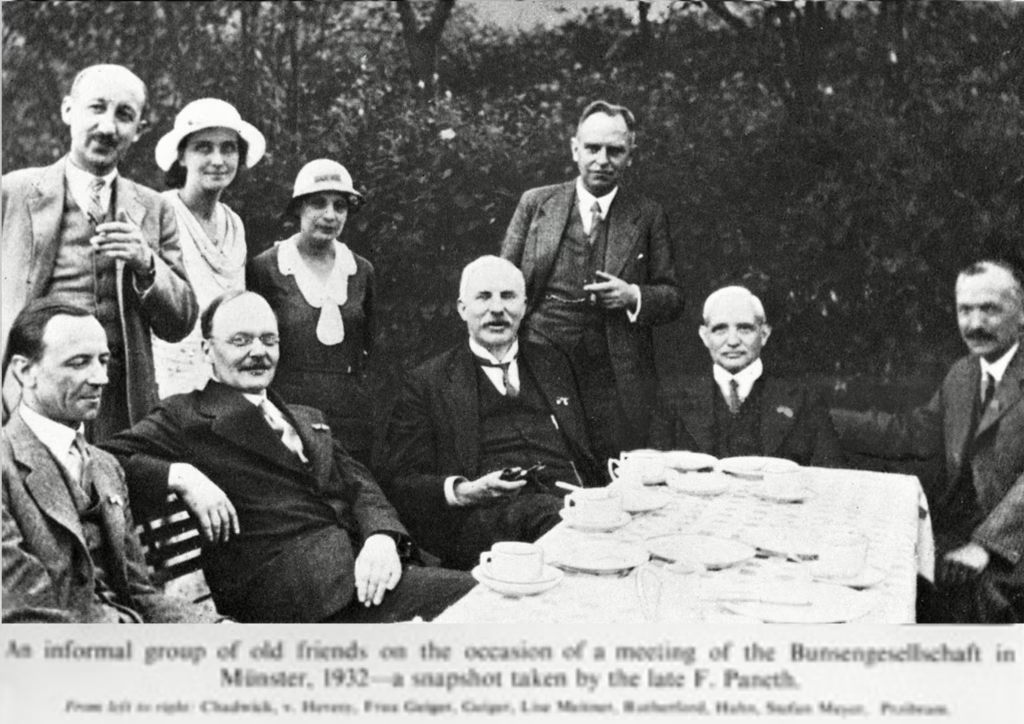
Throughout his career, de Hevesy worked with major figures such as Fritz Haber and Ernest Rutherford, gaining expertise in radioactivity measurements and physical chemistry. His time in Manchester under Rutherford was especially formative, exposing him to cutting‑edge research that shaped his later innovations.
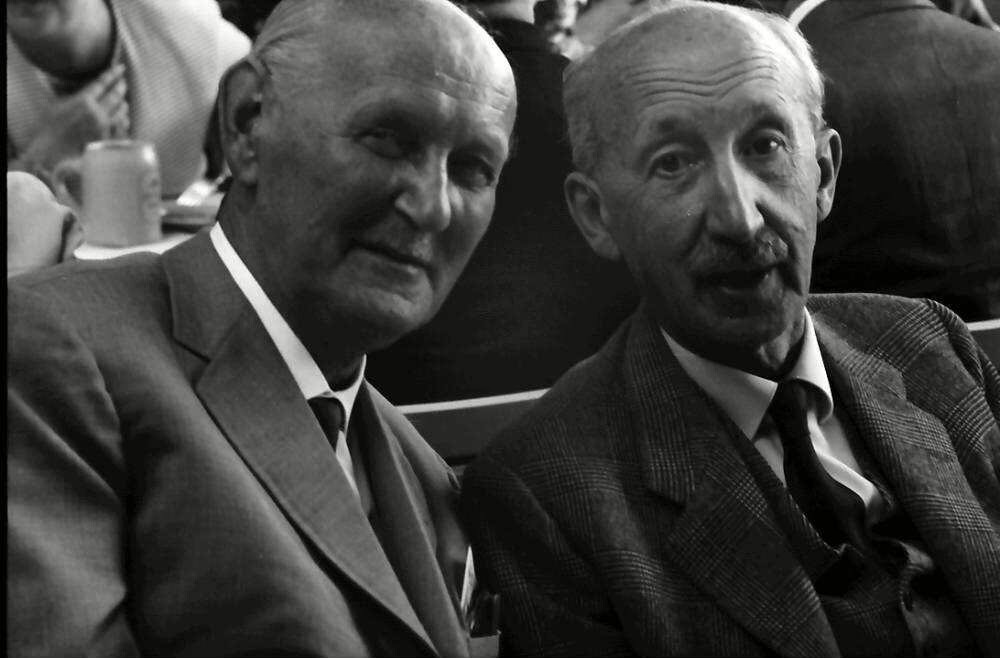
George de Hevesy's Legacy
Awards and Honours
George de Hevesy received some of the most prestigious scientific awards of the 20th century. His most notable recognition was the 1943 Nobel Prize in Chemistry, awarded for pioneering the use of isotopes as tracers in chemical processes.
He continued to be honoured throughout his career, receiving the Copley Medal in 1949, the Faraday Lectureship Prize in 1950, the Atoms for Peace Award in 1958, and the Niels Bohr International Gold Medal in 1961. These awards reflected both his scientific brilliance and his influence across multiple fields, from chemistry to nuclear science.
Legacy in Nuclear Medicine
De Hevesy is widely regarded as one of the founders of nuclear medicine, thanks to his development of radioactive tracer techniques. The impact of his contributions is commemorated annually through the George Charles de Hevesy Nuclear Medicine Pioneer Award, established in 1960. This award honours individuals who make outstanding contributions to nuclear medicine, underscoring the enduring relevance of his innovations.
Explore Further
Continue learning about the lives of the people that shaped nuclear history.
J. Robert Oppenheimer – Father of the Atomic Bomb
Leslie Groves – The Race to Build the Atomic Bomb
William Penney – Building the UK’s Nuclear Deterrent
Qian Sanqiang – Architect of China’s Nuclear Dawn
Did you know? Explore Nuclear also offers great careers information and learning resources.
Below you can find references to the information and images used on this page.
Content References
- George de Hevesy – Biographical – NobelPrize.org
- George De Hevesy, 1885-1966 | Biographical Memoirs of Fellows of the Royal Society | The Royal Society
- George de Hevesy, father of nuclear medicine – Advanced Science News
- George de Hevesy – Nuclear Museum
- George de Hevesy – Wikipedia
- George de Hevesy – Biography, Facts and Pictures
- Georg Charles von Hevesy | Nobel Prize, Radioactivity, Isotopes | Britannica
Image References
- George de Hevesy – Unknown author – Public Domain
- Hevesy – Nobel Foundation – Public Domain
- Bunsentagung 1932 Münster – Friedrich Paneth – Public Domain
- 12. Tagung 1962 Physik; Bayrisches Frühstück Gerhard Domagk, Karl Georg v. Hevesy – Willy Pragher – CC BY 3.0 DE
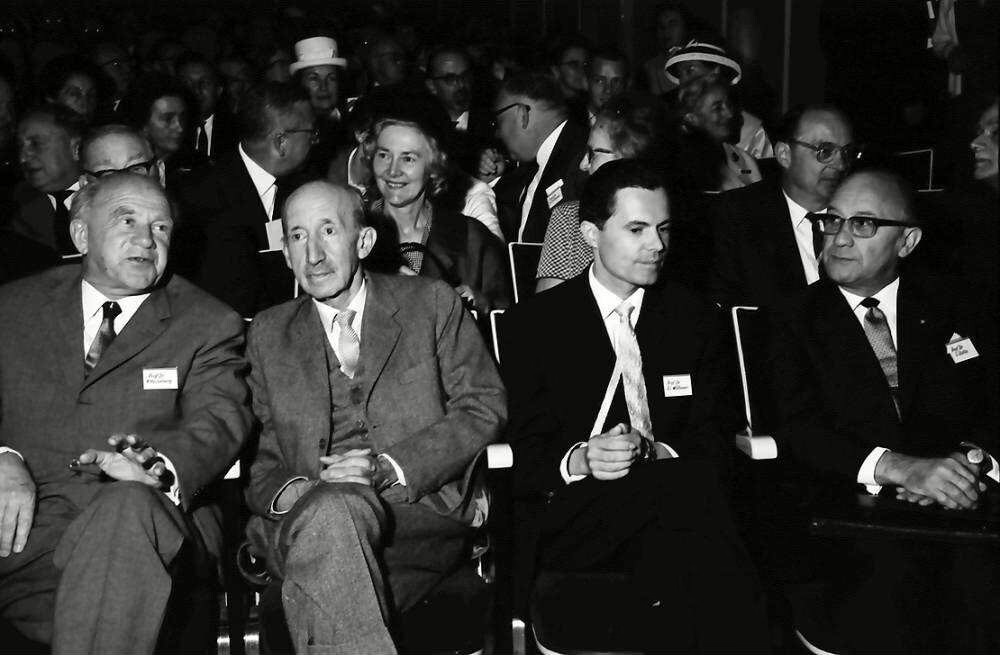
- 15. Tagung 1965 Physiker Werner Heisenberg, Karl Georg v. Hevesy, Rudolf L. Mößbauer – Willy Pragher – CC BY 3.0 DE