
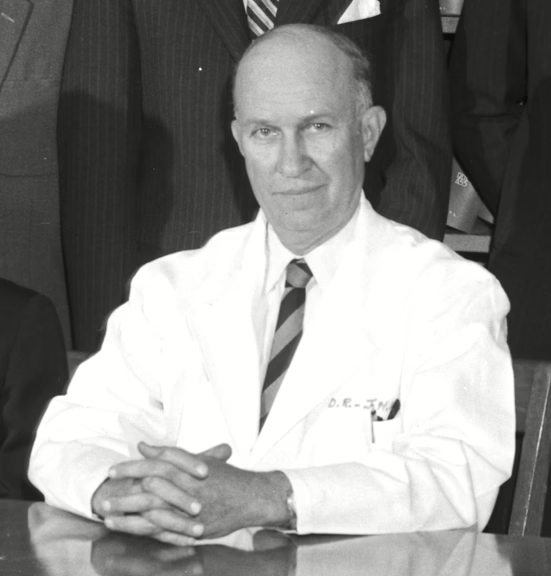
John H. Lawrence's Life
Life and Work
John Hundale Lawrence was born on 7 January 1904 in Canton, South Dakota, to parents of Norwegian immigrant heritage. He studied at the University of South Dakota before earning his M.D. from Harvard Medical School, where he trained under renowned neurosurgeon Harvey Cushing.
After medical school, Lawrence taught at Yale University, focusing on the pituitary gland’s response to radiation. In 1935, he joined his brother Ernest at the University of California, Berkeley, where he began studying the biochemical and medical effects of radioactive materials produced by the cyclotron. His research included work with high‑energy neutrons, radioactive isotopes, and the development of tracer molecules to study metabolism and treat disease. These efforts laid the foundation for nuclear medicine as a discipline.
Throughout his career, Lawrence became widely recognised for his contributions, ultimately receiving the Enrico Fermi Award in 1983. He spent most of his professional life at Berkeley’s Donner Laboratory, continuing to advance medical applications of radiation. He died on 7 September 1991 in Berkeley, California, leaving behind a legacy as one of the founders of nuclear medicine.
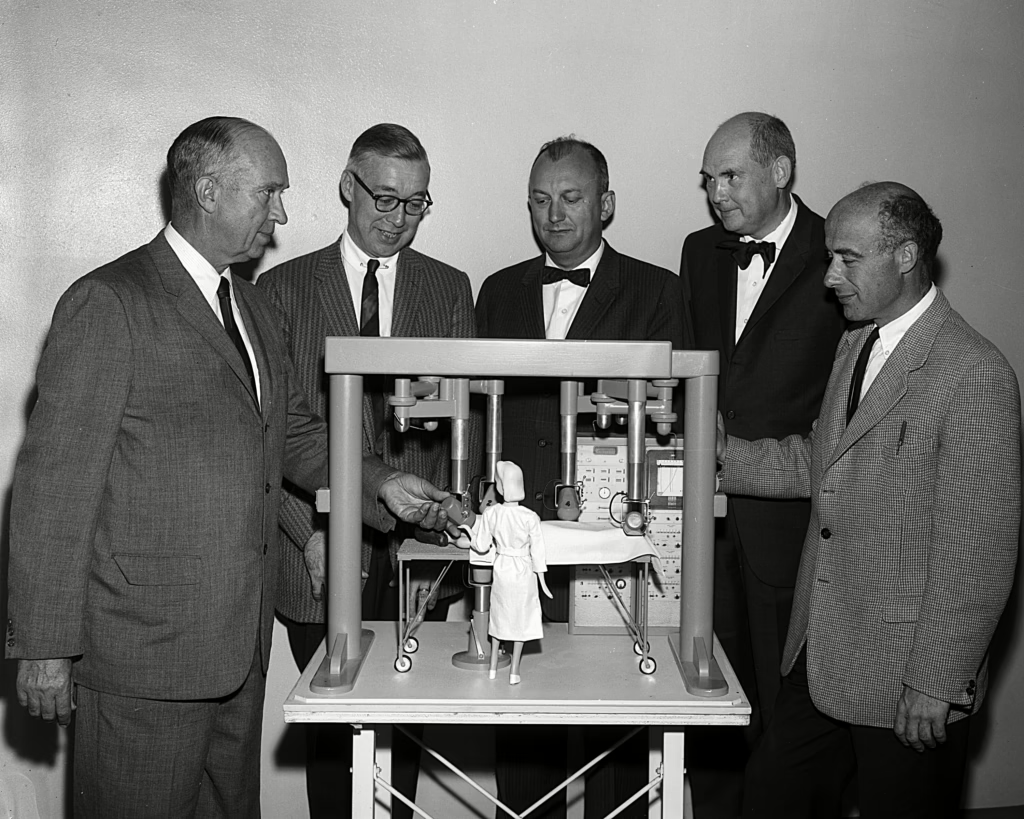
John H. Lawrence's Work
Pioneering Nuclear Medicine
When Lawrence joined his brother Ernest at the University of California, Berkeley in 1935, he gained access to the world’s first cyclotrons; machines capable of producing artificial radioactive isotopes. He quickly recognised their medical potential. Lawrence became one of the first scientists to use radioactive tracers to study metabolism and organ function, helping to establish the core methods of nuclear medicine.
He also explored the therapeutic use of radiation, investigating how neutrons and isotopes such as phosphorus‑32 could be used to treat conditions including leukaemia and polycythaemia. His work demonstrated that carefully controlled radiation could be both diagnostic and therapeutic, a revolutionary idea at the time.
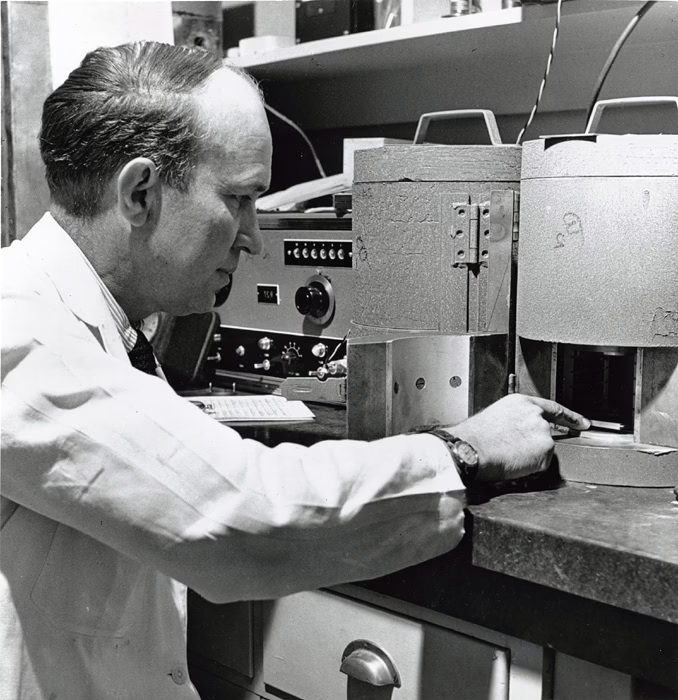
Leadership at the Donner Laboratory
Lawrence became the founding director of the Donner Laboratory at Berkeley, which became a global center for research on radiation biology and medical physics. Under his leadership, the lab advanced studies on radioactive tracers, neutron therapy, and the physiological effects of high‑energy particles. His interdisciplinary approach brought together physicists, biologists, and clinicians long before such collaboration became common.
Contributions to Human Physiology and Space Medicine
Beyond cancer therapy and tracer studies, Lawrence conducted influential research on human physiology under extreme conditions. His work on electrolyte balance, bone metabolism, and the effects of radiation exposure contributed to early thinking about the medical challenges of space travel. These studies helped shape the emerging field of space medicine in the mid‑20th century.
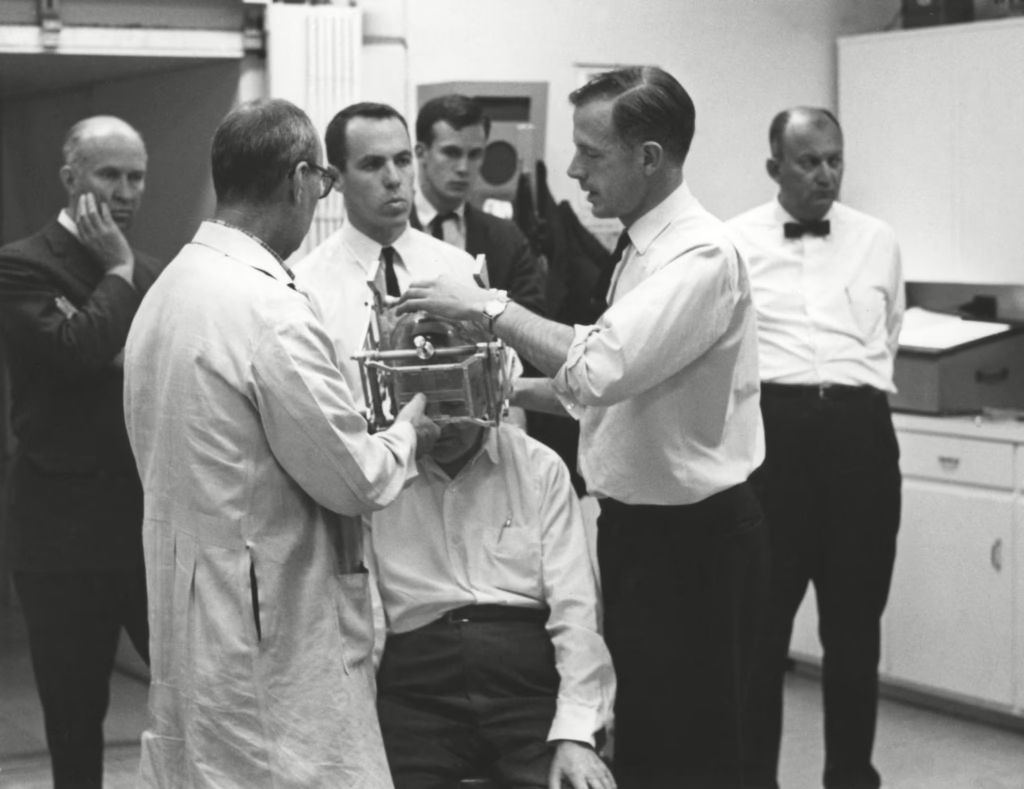
John H. Lawrence's Legacy
Major Awards and Honours
John H. Lawrence received wide recognition for his contributions to nuclear medicine. The most prestigious of these was the Enrico Fermi Award, presented to him in 1983 for his pioneering work in applying nuclear physics to medical diagnosis and therapy. Throughout his career, he was also elected to several scientific academies and received honorary degrees acknowledging his leadership in radiation biology and medical physics. These honours reflected the scientific community’s deep respect for his role in shaping an entirely new medical discipline.
Legacy in Research and Clinical Practice
Lawrence is widely regarded as one of the founders of nuclear medicine, and his legacy is visible in both research laboratories and hospitals around the world. The diagnostic scans and targeted radiotherapies used today trace their origins to the methods he helped develop. His work also influenced space medicine, radiation safety, and the study of human physiology under extreme conditions. Beyond his scientific achievements, Lawrence left a legacy of collaboration, mentorship, and innovation, helping to build a field that continues to evolve from the foundations he laid.
Explore Further
Continue learning about the lives of the people that shaped nuclear history.
Joseph John Thomson – A Pioneer of the Subatomic Age
Harold Urey – From Deuterium to the Dawn of Life
Leslie Groves – The Race to Build the Atomic Bomb
Qian Sanqiang – Architect of China’s Nuclear Dawn
Did you know? Explore Nuclear also offers great careers information and learning resources.
Below you can find references to the information and images used on this page.
Content References
Image References
- John H. Lawrence, 1960 – Donald Cooksey, Lawrence Berkeley National Laboratory – Public Domain
- Donner Lab administrative heads with model. J.H. Lawrence, James Born, Cornelius Tobias, Hardin Jones, John Gofman, 1962 – Donald Cooksey, Lawrence Berkeley National Laboratory – Public Domain
- John H. Lawrence – Unknown author – CC BY-SA 4.0
- Group of medical researchers standing around First Parkinson’s disease patient, John Lawrence (far left in rear) and Cornelius Tobias (right) – Department of Energy. Lawrence Berkeley National Laboratory. Public Affairs Department. Strategic Resources Office. Photography Services. – Public Domain
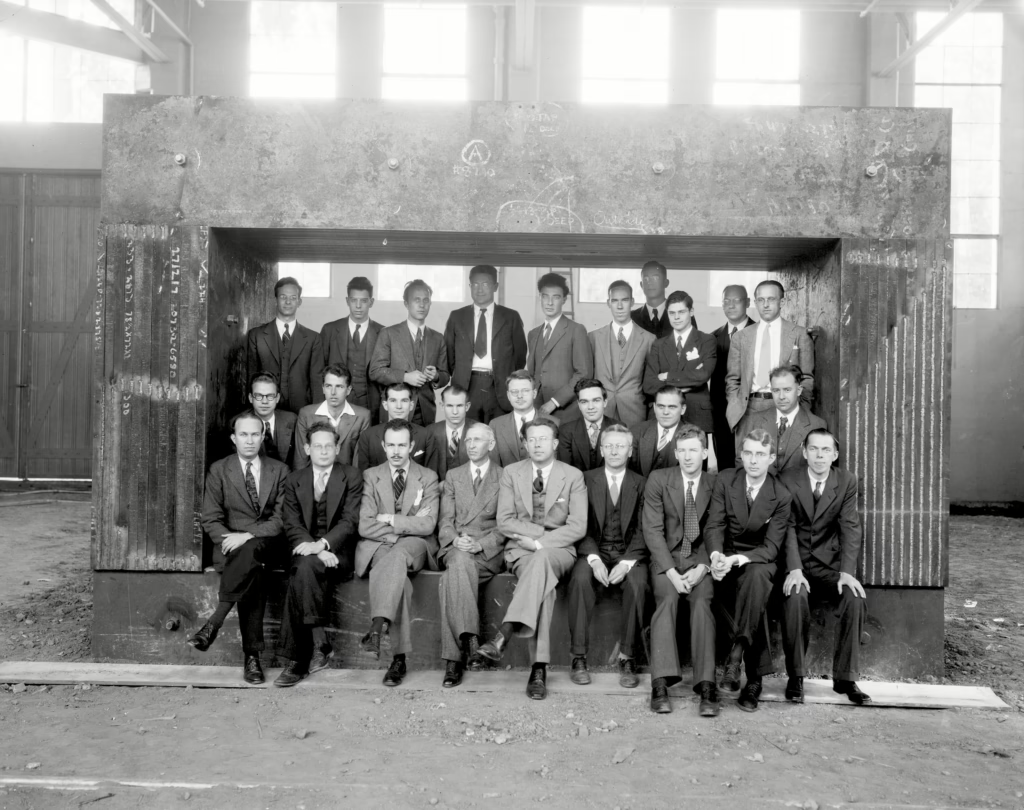
- Early Radiation Laboratory staff framed by the magnet for the 60-inch cyclotron in 1938 – Donald Cooksey, Lawrence Berkeley National Laboratory – Public Domain