
History of Breeder Reactor Development
Breeder reactors represent a significant innovation in nuclear technology, designed to generate more fissile material than they consume. Their development has been driven by the desire to maximize energy output from limited nuclear fuel resources, particularly uranium and thorium.
Origins and Early Concepts (1940s–1950s)
The concept of breeder reactors emerged during the early days of nuclear research in the 1940s. Scientists realised that certain nuclear reactions could convert fertile isotopes like uranium-238 or thorium-232 into fissile isotopes such as plutonium-239 or uranium-233.
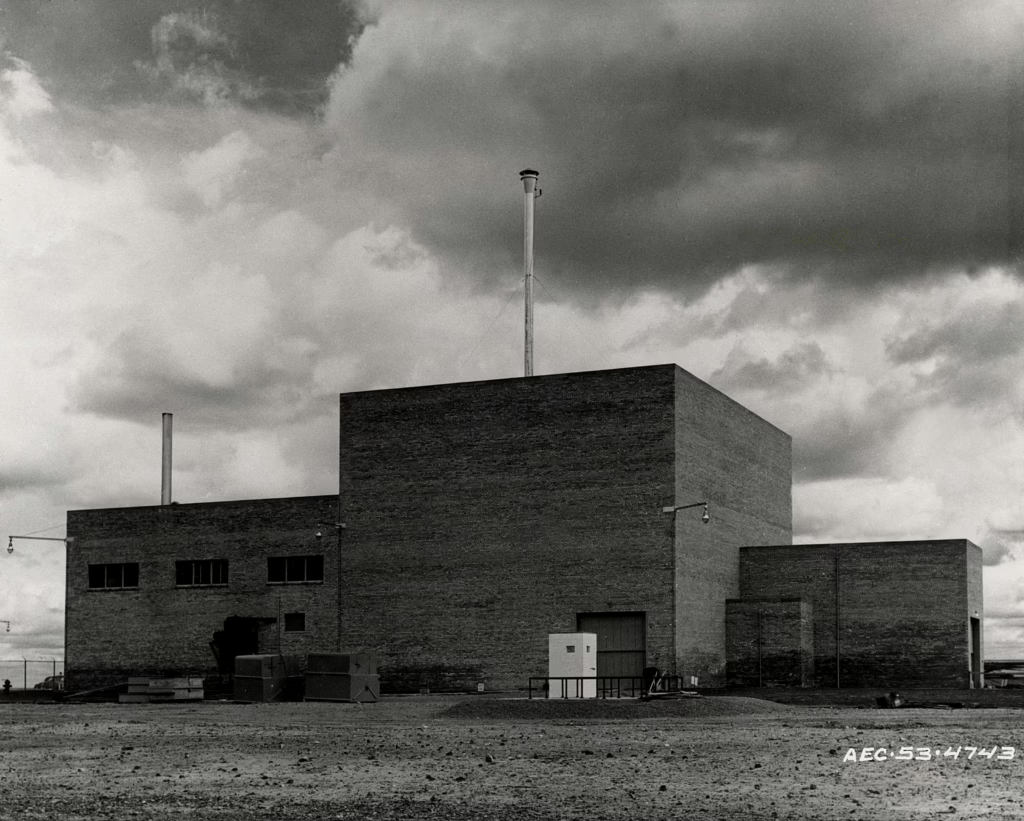
The first experimental breeder reactor was the Experimental Breeder Reactor I (EBR-I), built in Idaho, USA. It achieved its first successful operation in 1951 and was the first reactor to produce usable electricity from nuclear energy. EBR-I demonstrated the feasibility of breeding plutonium from uranium-238.
Expansion and Technological Development (1960s–1970s)
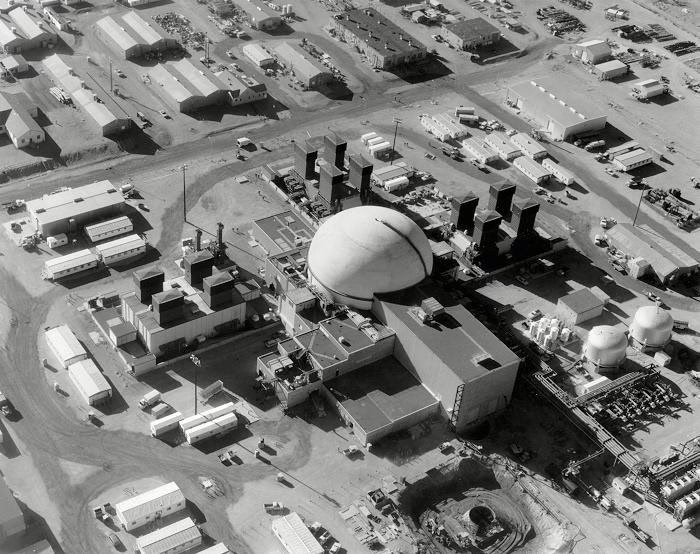
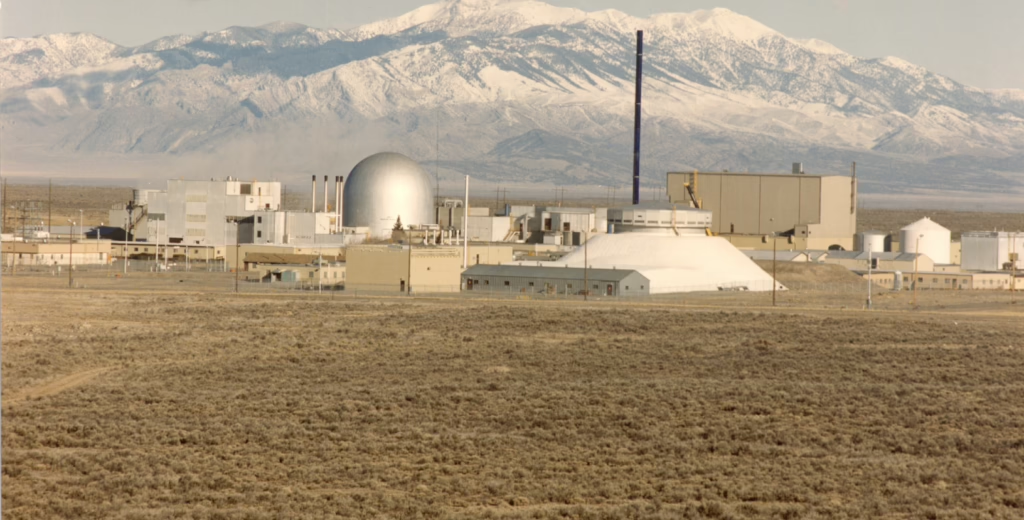
During the 1960s and 1970s, breeder reactor technology advanced significantly. The Fast Flux Test Facility (FFTF) and EBR-II in the United States, along with France’s Phénix and Superphénix, and Russia’s BN-series reactors, were key milestones.
These reactors used liquid metal coolants like sodium or lead-bismuth to enable fast neutron reactions, which are more efficient for breeding. The goal was to create a closed fuel cycle, where spent fuel could be reprocessed and reused, reducing waste and increasing sustainability.
Global Interest and Challenges (1980s–1990s)
By the 1980s, breeder reactors were seen as a potential solution to long-term energy needs. However, several challenges emerged:
- Economic viability – Breeder reactors were more expensive to build and operate than conventional reactors.
- Safety concerns – The use of liquid sodium posed fire risks, and fast reactors had complex safety profiles.
- Proliferation risks – Breeding plutonium raised concerns about nuclear weapons proliferation.
These issues led to the cancellation or scaling back of several breeder programs, particularly in the United States and Western Europe.
Continued Development in Asia (2000s–Present)
While Western interest waned, countries like Russia, India, and China continued to invest in breeder technology.
- Russia operates the BN-600 and BN-800 reactors and is developing the BN-1200.
- India has pursued thorium-based breeders as part of its three-stage nuclear program, with the Prototype Fast Breeder Reactor (PFBR) nearing completion.
- China is developing fast reactors as part of its long-term energy strategy, including the China Experimental Fast Reactor (CEFR).
These nations view breeder reactors as essential for energy security and sustainability.
How Breeder Reactors work
Breeder reactors are a specialised type of nuclear reactor designed not only to generate energy but also to produce more fissile material than they consume. This unique capability makes them a promising solution for extending nuclear fuel resources and reducing radioactive waste.
Basic Principles of Nuclear Fission
All nuclear reactors operate on the principle of nuclear fission, where heavy atomic nuclei (like uranium-235 or plutonium-239) split into smaller fragments, releasing energy. This energy is used to heat water, produce steam, and drive turbines to generate electricity.
In conventional reactors, only a small fraction of the fuel is used, while the majority (uranium-238) remains unutilised. Breeder reactors aim to convert this unused material into usable fuel.
Breeding Fissile Material
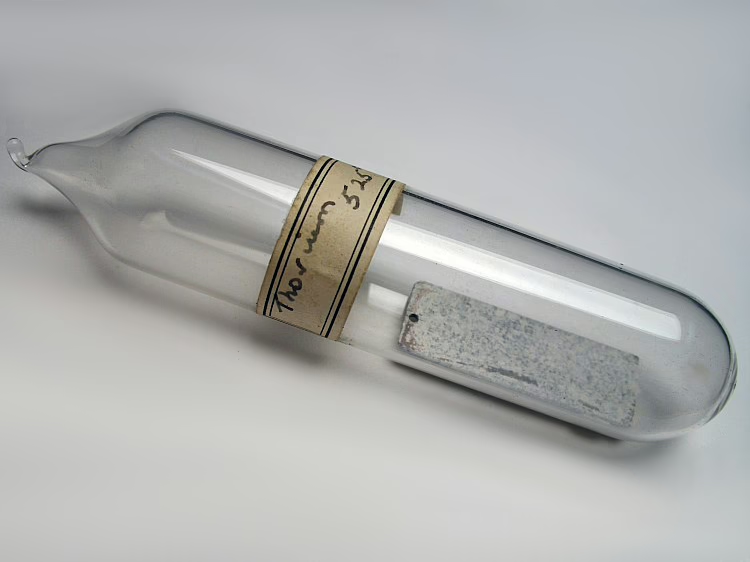
Breeder reactors use fertile isotopes; materials that are not fissile themselves but can be converted into fissile isotopes through neutron absorption. The two most common fertile materials are Uranium-238, which can be converted into plutonium-239 and Thorium-232, which can be converted into uranium-233.
When a fertile isotope absorbs a neutron, it undergoes a series of nuclear transformations, eventually becoming a fissile isotope capable of sustaining a chain reaction.
Fast vs. Thermal Breeder Reactors
There are two main types of breeder reactors, distinguished by the energy of the neutrons they use:
Fast Breeder Reactors (FBRs)
- Use fast neutrons (high-energy)
- Require liquid metal coolants like sodium or lead to avoid slowing down neutrons
- More efficient at breeding plutonium-239 from uranium-238
- Examples: Russia’s BN-series, France’s Phénix and Superphénix
Thermal Breeder Reactors
- Use thermal (slow) neutrons
- Typically use thorium-232 to breed uranium-233
- Require a moderator (like water or graphite) to slow down neutrons
- Less common, but part of India’s thorium-based nuclear strategy
Fuel Cycle and Reprocessing
A key feature of breeder reactors is their integration into a closed fuel cycle. After fuel is used in the reactor, it contains newly bred fissile material. This spent fuel is chemically reprocessed to extract the usable isotopes, which are then fabricated into new fuel. This cycle reduces the need for fresh uranium mining and minimises long-lived radioactive waste.
Notable Breeder Reactors
EBR-I (USA, 1951) - Experimental Breeder Reactor I
Located in Idaho, EBR-I was the world’s first breeder reactor and the first to produce usable electricity from nuclear energy. It successfully demonstrated the concept of breeding plutonium-239 from uranium-238. On December 20, 1951, it powered four light bulbs, marking a historic moment in nuclear technology. Though small and experimental, EBR-I laid the foundation for future breeder reactor designs.

Phénix (France, 1973–2009) - Fast Breeder Reactor
Phénix was a sodium-cooled fast breeder reactor located in Marcoule, France. It operated for over three decades and served as a prototype for larger reactors like Superphénix. Phénix was used for electricity generation, fuel testing, and transmutation experiments. Its long operational life provided valuable data on fast reactor behavior and fuel recycling.
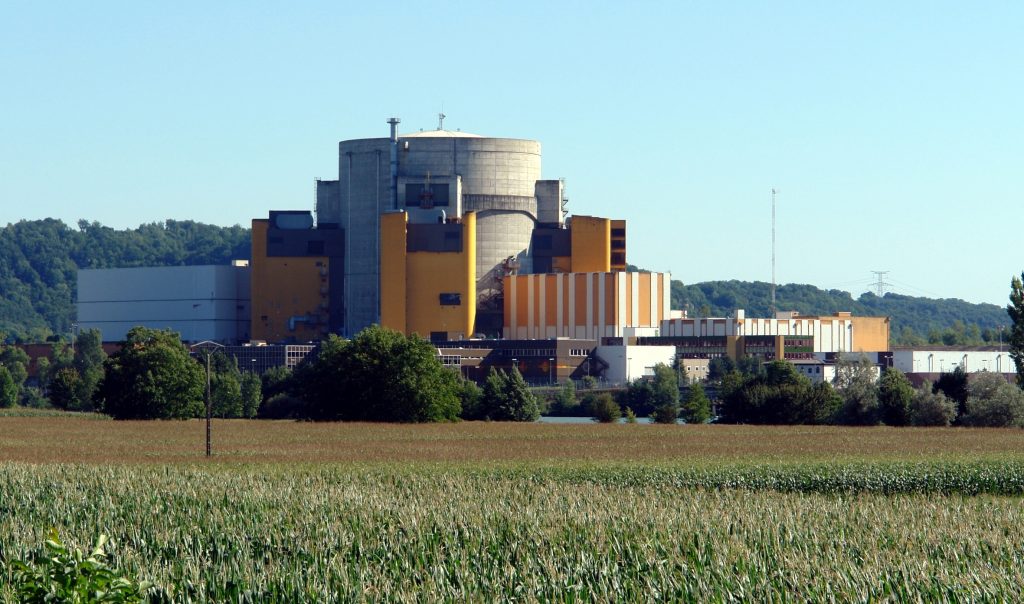
Superphénix (France, 1986–1997) - Commercial-Scale Fast Breeder Reactor
Superphénix was one of the largest breeder reactors ever built, with a capacity of 1,200 MWe. Despite its ambitious goals, it faced technical issues, political opposition, and economic challenges. It was eventually shut down in 1997. Superphénix remains a symbol of both the potential and the complexity of commercial breeder reactor deployment.
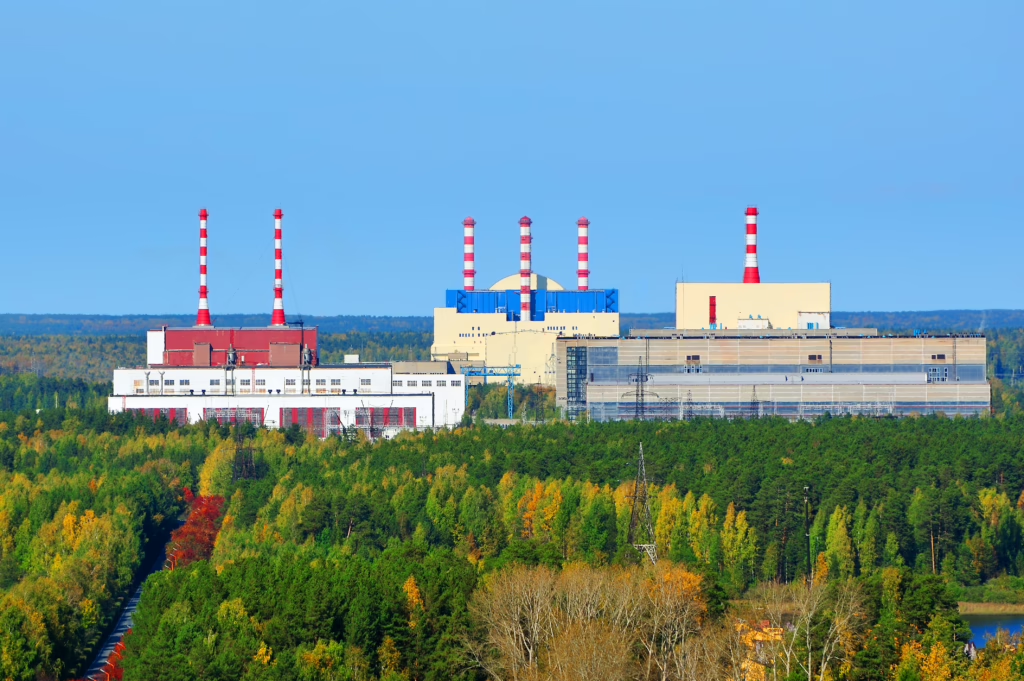
BN-600 and BN-800 (Russia, 1980–Present) - Operational Fast Breeder Reactors
Russia has been a global leader in breeder reactor technology. The BN-600, operational since 1980, and the newer BN-800, launched in 2016, are sodium-cooled fast reactors located at the Beloyarsk Nuclear Power Station. These reactors have been used for electricity generation and fuel cycle research, including mixed oxide (MOX) fuel testing. Russia is also developing the BN-1200, a next-generation fast reactor.
PFBR (India, Under Commissioning) - Prototype Fast Breeder Reactor
India’s Prototype Fast Breeder Reactor (PFBR) is part of its strategic three-stage nuclear program, which aims to utilise thorium. Located in Kalpakkam, the PFBR is a 500 MWe sodium-cooled reactor designed to breed plutonium-239 from uranium-238. Though delayed, it represents India’s commitment to long-term energy sustainability through breeder technology.
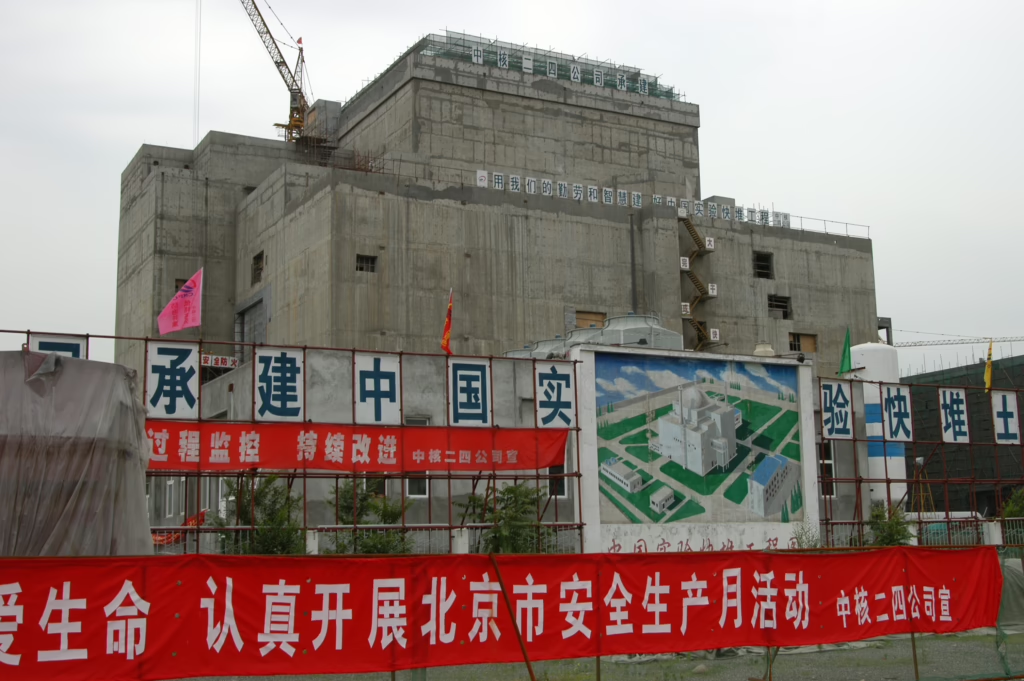
CEFR (China, 2010–Present) - China Experimental Fast Reactor
The China Experimental Fast Reactor (CEFR) is a 65 MW sodium-cooled fast reactor located near Beijing. It serves as a testbed for fast reactor technology and fuel cycle development. CEFR is part of China’s broader plan to deploy commercial fast reactors and integrate them into a closed fuel cycle for sustainable nuclear energy.
Pros & Cons of Breeder Reactors
Advantages
Efficient Use of Nuclear Fuel – Breeder reactors can utilise fertile isotopes like uranium-238 and thorium-232, which are far more abundant than fissile materials such as uranium-235. By converting these into usable fuel (plutonium-239 or uranium-233), breeder reactors dramatically increase the efficiency of nuclear fuel usage.
Reduced Nuclear Waste – Conventional reactors leave behind large amounts of long-lived radioactive waste. Breeder reactors, especially when part of a closed fuel cycle, can recycle spent fuel and reduce the volume and toxicity of nuclear waste. This helps mitigate environmental and storage concerns.
Energy Sustainability – With the ability to extend the life of nuclear fuel supplies by hundreds or even thousands of years, breeder reactors offer a path toward long-term energy sustainability. This is particularly important as global energy demand continues to rise.
Support for Thorium-Based Energy – Some breeder designs, especially thermal breeders, can use thorium—a more abundant and widely distributed element than uranium. Thorium reactors are considered safer and produce less plutonium, making them attractive for future energy strategies.
Challenges
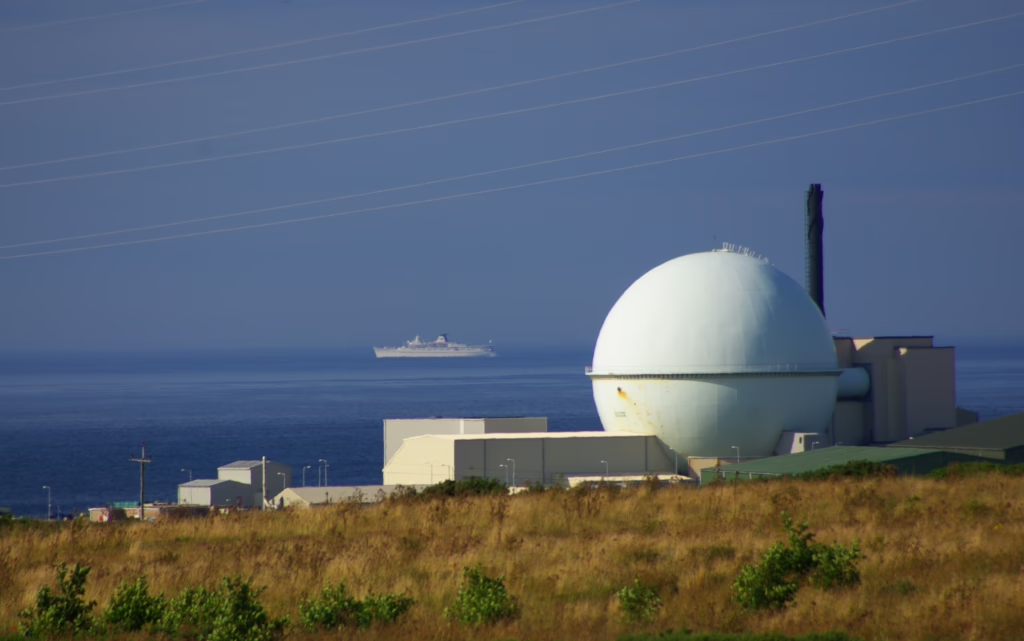
High Cost and Complexity – Breeder reactors are technologically complex and expensive to build and operate. Their advanced cooling systems (often using liquid metals like sodium) and fuel reprocessing infrastructure require significant investment and expertise.
Safety Risks – Fast breeder reactors operate with high-energy neutrons and often use reactive coolants like liquid sodium, which can ignite on contact with air or water. These factors introduce additional safety challenges compared to conventional reactors.
Nuclear Proliferation Concerns – Breeder reactors produce plutonium, which can be used in nuclear weapons. This raises concerns about proliferation, especially in regions with limited safeguards or unstable political environments. Strict international oversight is essential.
Limited Commercial Deployment – Despite decades of research, breeder reactors have seen limited commercial success. Many projects have been delayed, scaled back, or shut down due to economic, political, or technical issues. This has slowed their adoption and development.
Applications and Future Prospects
Applications of Breeder Reactors
Electricity Generation – The most direct application of breeder reactors is in power production. By efficiently using fertile materials like uranium-238 and thorium-232, breeder reactors can generate electricity while extending the life of nuclear fuel supplies. Countries like Russia and India have integrated breeder reactors into their national energy strategies to meet growing demand.
Fuel Recycling and Waste Reduction – Breeder reactors play a central role in closed fuel cycles, where spent nuclear fuel is reprocessed to extract usable isotopes. This reduces the volume and toxicity of nuclear waste, making long-term storage safer and more manageable. It also minimizes the need for fresh uranium mining, contributing to environmental conservation.
Support for Thorium-Based Energy Systems – Thermal breeder reactors can convert thorium-232 into uranium-233, offering a pathway to thorium-based nuclear energy. Thorium is more abundant than uranium and produces less long-lived radioactive waste. India, in particular, has focused on thorium breeders as part of its three-stage nuclear program.
Isotope Production for Industry and Medicine – Breeder reactors can be used to produce radioisotopes for medical imaging, cancer treatment, and industrial applications. Their high neutron flux makes them suitable for generating isotopes that are difficult to produce in conventional reactors.
Scientific Research and Materials Testing – Fast breeder reactors provide a unique environment for materials testing under high neutron flux and radiation conditions. This is valuable for developing advanced reactor components, studying nuclear reactions, and supporting fusion research.
Future Prospects
Advanced Reactor Designs – Next-generation breeder reactors are being designed with improved safety features, modular construction, and automated control systems. Concepts like small modular fast reactors (SMFRs) and lead-cooled fast reactors (LFRs) aim to reduce costs and enhance scalability.
Global Energy Sustainability – As fossil fuels decline and renewable sources face intermittency challenges, breeder reactors offer a stable and long-term energy solution. Their ability to stretch nuclear fuel resources for centuries makes them a key component of future low-carbon energy portfolios.
International Collaboration and Innovation – Countries like Russia, China, and India are leading breeder reactor development, while others are exploring partnerships and research initiatives. International collaboration could accelerate innovation, improve safety standards, and address proliferation concerns.
Integration with Renewable Energy Systems – In the future, breeder reactors could complement renewable energy grids by providing reliable baseload power. Their ability to operate continuously and efficiently makes them ideal for balancing intermittent sources like solar and wind.
Public Acceptance and Policy Support – The future of breeder reactors also depends on public perception, regulatory frameworks, and policy incentives. Transparent communication, robust safety measures, and international oversight will be essential to gain public trust and political support.
Explore Further
Choose from the articles below to continue learning about nuclear.
Nuclear vs Other Energy Sources
The fascinating history of the UK Nuclear Sector
Fukushima – The World’s Worst Nuclear Accident Since Chernobyl
This page is part of one of our ‘Journeys through Nuclear‘. Continue your journey using the selection below.
Boiling Water Reactor
The second most common reactor type boils its coolant directly, turning it into steam.
Magnox Reactor
Gas-cooled Magnox reactors were the UK’s first generation reactor fleet.
Coming Soon →
Advanced Gas-Cooled Reactor
Advanced Gas-Cooled Reactors, or AGRs, are the UK’s second generation reactor fleet.
Advanced Modular Reactor
Advanced Modular Reactors, or AMRs, are Generation IV reactors – the future of nuclear.
Did you know? Explore Nuclear also offers great careers information and learning resources.
Below you can find references to the information and images used on this page.
Content References
- Breeder reactor – Wikipedia
- Breeder reactor – Energy Education
- Breeder reactor | Description, History, & Types | Britannica
- How do fast breeder reactors differ from regular nuclear power plants? | Scientific American
- Breeder Reactor: A Comprehensive Overview
- Breeder Reactors: A Nuclear Fuel Cycle Game Changer
Image References
- Dounreay and passing ship – Paul Wordingham – CC BY 2.0
- Dounreay from Sandside Bay – Paul Wordingham – CC BY 2.0
- Monju, fast breeder reactor, Japan 2007 – IAEA Imagebank – CC BY-SA 2.0
- Argonne-West – Argonne National Laboratory – CC BY-NC-SA 2.0
- The Experimental Breeder Reactor-II – Argonne National Laboratory – CC BY-NC-SA 2.0
- Thorium – W. Oelen – CC BY-SA 3.0
- Experimental breeder reactor 1 – ENERGY.GOV – Public Domain
- Белоярская АЭС 2019 год – Александра Золотова – CC BY-SA 4.0
- CRBRP-site – US Dept. of Energy – Public Domain
- General View EBR-2 – ENERGY.GOV – Public Domain
- Superphénix et Malville – Yann – GNU V1.2
- Monju 04790003 – IAEA Imagebank – CC BY-SA 2.0
- FFTF Hanford – Unknown Author – Public Domain
- CEFR – Petr Pavlicek/IAEA – CC BY-SA 2.0
- Superphenix reactor east – Yann – GNU V1.2
- Superphénix 4 – Yann – GNU V1.2
