
Alvin M. Weinberg's Life
Life and Work
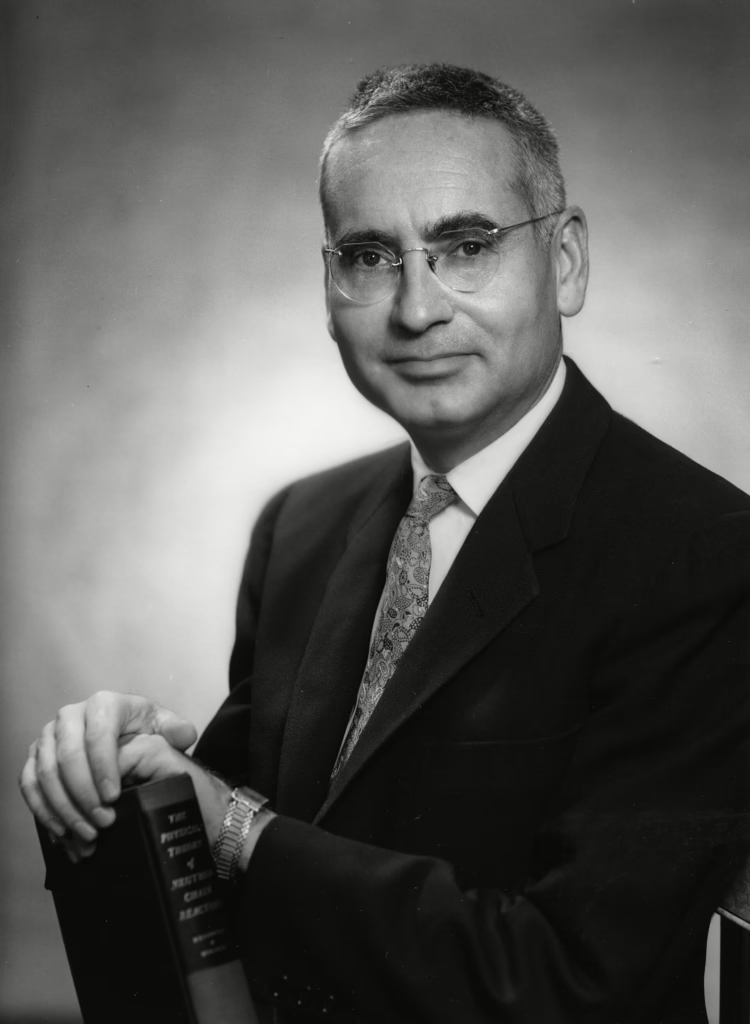
Born in Chicago in 1915, Alvin Martin Weinberg pursued mathematical biophysics at the University of Chicago, earning his doctorate in 1939. His academic path quickly intersected with world‑changing events when he joined the university’s Metallurgical Laboratory in 1941, becoming part of the team that developed Chicago Pile‑1, the first reactor to support a self‑sustaining nuclear chain reaction.
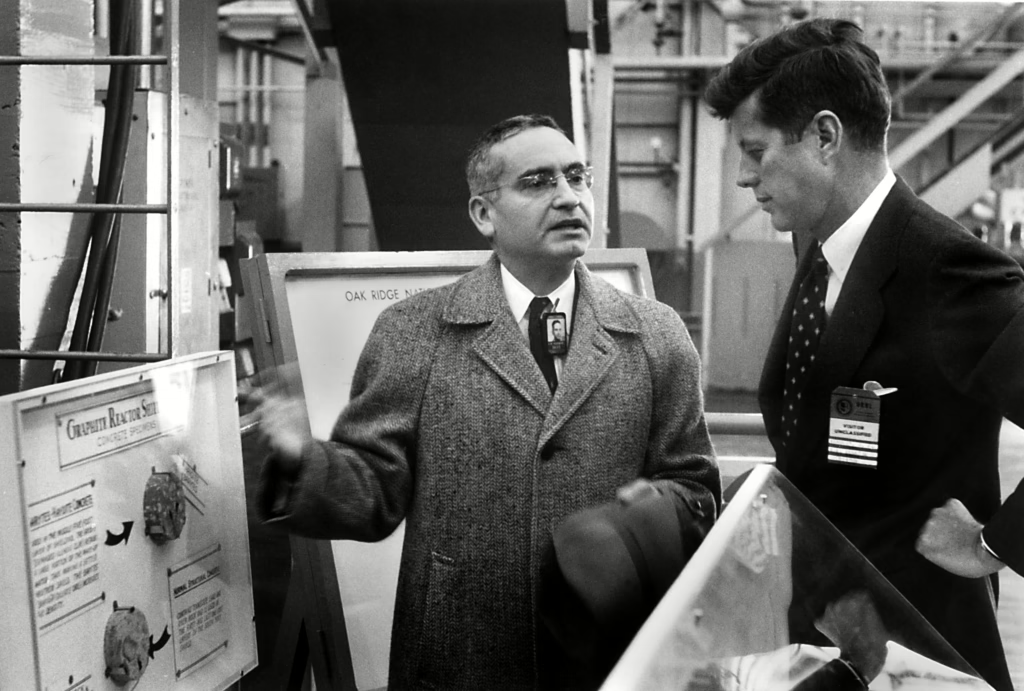
During and after the Manhattan Project, Weinberg became a central figure at Oak Ridge, Tennessee. He helped design the X‑10 Graphite Reactor and rose through leadership roles, becoming Director of the Physics Division in 1945, Research Director in 1948, and ultimately Director of Oak Ridge National Laboratory in 1955. His influence extended beyond research: he advised on the development of the pressurised water reactor concept that would power the U.S. nuclear navy and later commercial nuclear plants.
Weinberg was not only a scientist but also a thinker deeply concerned with the relationship between technology and society. He championed the idea of the “technological fix,” arguing that scientific innovation could address major societal challenges, while also acknowledging the limits of purely scientific solutions. His career earned him major honours, including the Atoms for Peace Award and the Enrico Fermi Award.
He remained at Oak Ridge for the rest of his life, continuing to shape energy policy and nuclear research until his death in 2006.
Alvin M. Weinberg's Work
Early Contributions to Nuclear Science
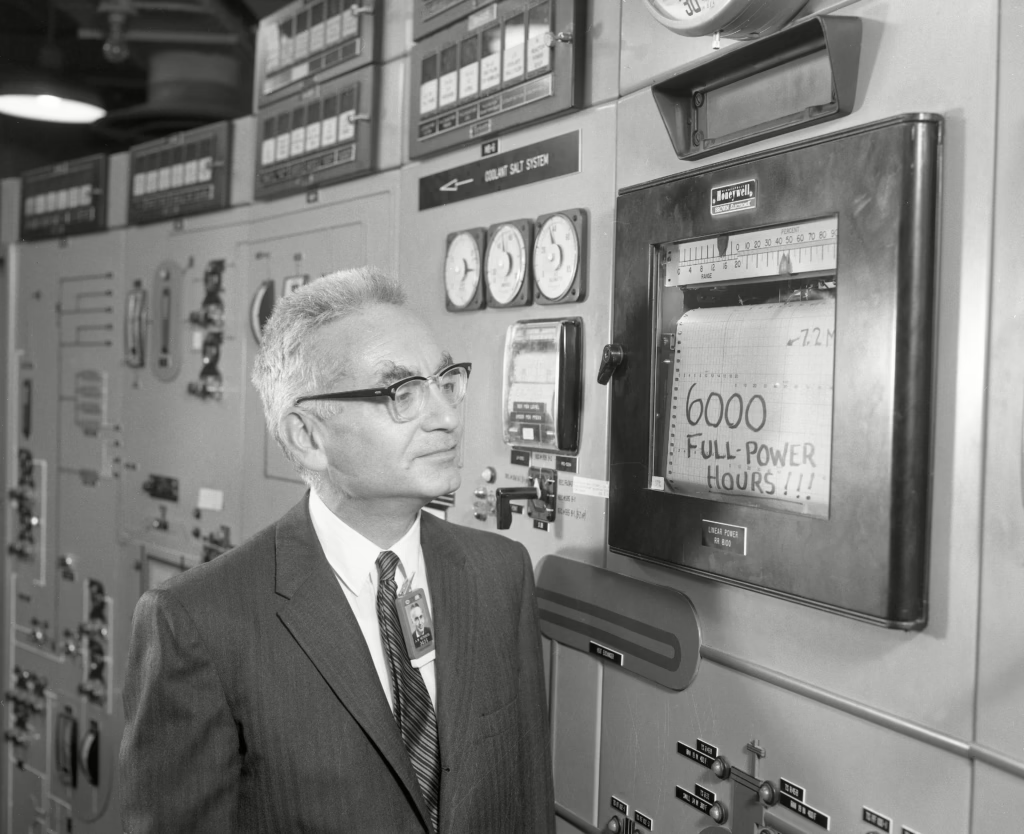
Alvin M. Weinberg emerged as a key figure in the formative years of nuclear research. He worked alongside pioneers such as Enrico Fermi and contributed to the development of Chicago Pile‑1, the first self‑sustaining nuclear reactor. He also helped design the X‑10 Graphite Reactor at Oak Ridge, one of the earliest reactors built for continuous operation.
Leadership at Oak Ridge National Laboratory
Weinberg’s influence expanded significantly when he moved into leadership roles at Oak Ridge. He became Director of the Physics Division in 1945, Research Director in 1948, and ultimately Director of Oak Ridge National Laboratory (ORNL) in 1955. Under his guidance, ORNL became a major centre for nuclear research, exploring reactor design, materials science, and energy systems. His administrative leadership helped shape the direction of U.S. nuclear research during the Cold War.
Reactor Innovation and Nuclear Policy
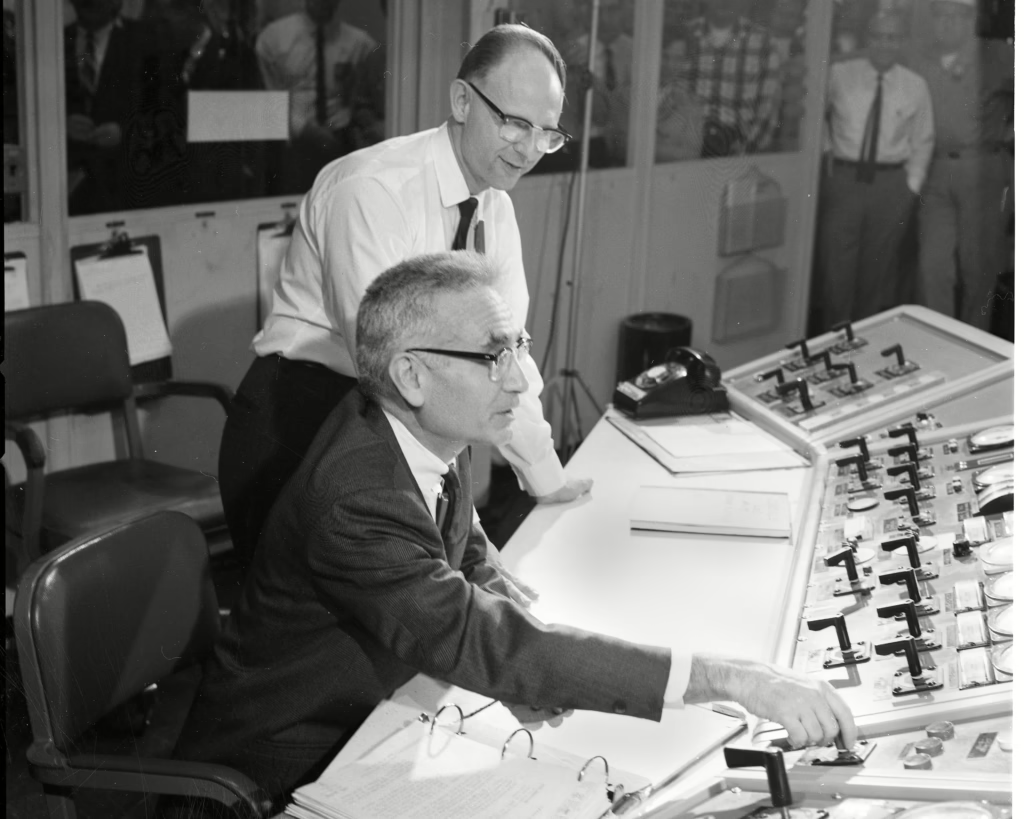
Weinberg was deeply involved in the theoretical and practical development of nuclear reactors. He collaborated with Eugene Wigner on ‘The Physical Theory of Neutron Chain Reactors’, a foundational text in reactor physics. He also contributed to the conceptual development of the pressurised water reactor, which later became the dominant design for naval and commercial nuclear power. His later work championed alternative reactor concepts, including the molten salt reactor, which he believed offered safety and sustainability advantages.
Alvin M. Weinberg's Legacy
Awards and Honours
Alvin M. Weinberg received several of the most prestigious recognitions in nuclear science. In 1960, he was awarded both the Ernest Orlando Lawrence Award and the Atoms for Peace Award, acknowledging his pioneering contributions to nuclear reactor theory and his broader impact on peaceful nuclear technology. Two decades later, he received the Enrico Fermi Award (1980), one of the highest honours bestowed by the U.S. government for lifetime achievement in energy science.
Influence on Nuclear Science and Policy
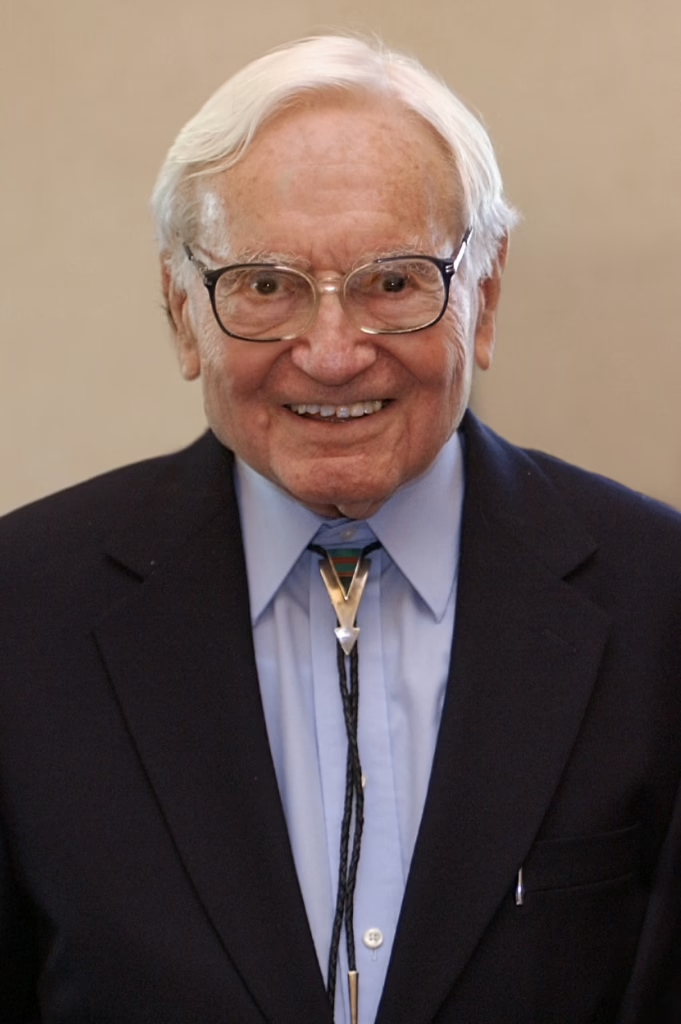
Weinberg’s influence extended far beyond his technical achievements. As a central figure at Oak Ridge National Laboratory, he shaped the direction of U.S. nuclear research during and after the Manhattan Project. His leadership helped establish ORNL as a major scientific institution, and he later founded the Institute for Energy Analysis, which broadened the laboratory’s role in energy policy and environmental research.
Legacy in the Scientific Community
Weinberg’s legacy is reflected not only in his scientific work but also in the institutions and ideas he left behind. His advocacy for responsible technological development, captured in his concept of the “technological fix”, continues to shape discussions about the role of science in society. His name lives on through the Alvin M. Weinberg Medal, awarded by the American Nuclear Society to individuals who demonstrate exceptional leadership in nuclear science and illuminate the human dimensions of the field.
Explore Further
Continue learning about the lives of the people that shaped nuclear history.
Albert Einstein – A Journey Through Space and Time
Pierre Curie – Unlocking the Secrets of Magnetism and Matter
Eugene Wigner – A Life Shaped by Symmetry and Science
Leona Woods – The Lone Woman of Chicago Pile-1
Did you know? Explore Nuclear also offers great careers information and learning resources.
Below you can find references to the information and images used on this page.
Content References
- Alvin M. Weinberg — ANS / About / Governance / Presidents / Alvin Weinberg
- Alvin M. Weinberg – National Academy of Sciences
- Alvin M. Weinberg – Nuclear Museum
- nationalacademies.org/read/12473/chapter/56
- Alvin M. Weinberg – Wikipedia
- NAE Website – Dr. Alvin M. Weinberg
- Alvin M. Weinberg, 91, Dies; Advocated Nuclear Power – The New York Times
Image References
- 1949: Alvin Weinberg – Oak Ridge National Laboratory – CC BY 2.0
- 6000 power hours – Oak Ridge National Laboratory – CC BY 2.0
- Senator Kennedy listens to Dr. Weinberg – Nuclear Regulatory Commission – CC BY 2.0
- MSRE 1965 – Oak Ridge National Laboratory – CC BY 2.0
- Alvin Weinberg Nuclear Physicist Director ORNL – Oak Ridge Office of Environmental Management – Public Domain