
Table of Contents
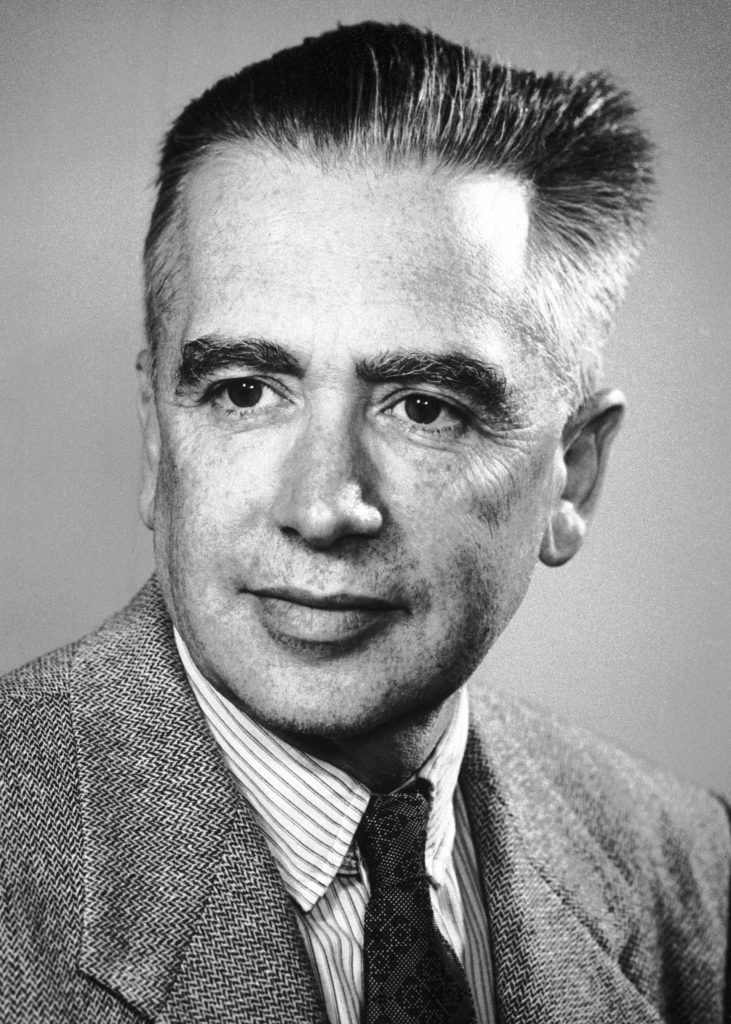
Emilio Segrè's Life
Life and Work
Emilio Segrè was born in Tivoli, Italy, in 1905 into a well‑to‑do Jewish family. He initially studied engineering at the University of Rome but soon shifted to physics, completing his doctorate in 1928 under Enrico Fermi, becoming Fermi’s first doctoral student. During the late 1920s and early 1930s, he worked closely with Fermi and the group of young physicists known as the Via Panisperna boys, contributing to the rapid development of Italian nuclear physics.
In the early 1930s, Segrè held research fellowships in Hamburg and Amsterdam, working with Otto Stern and Pieter Zeeman, both leading figures in experimental physics. He returned to Rome as an assistant professor, but the rise of fascism and antisemitic laws in Italy forced him to leave the country in 1938. He moved to the United States, joining the University of California, Berkeley, where he helped discover the elements technetium (1937) and astatine (1940).
During World War II, Segrè worked at Los Alamos as part of the Manhattan Project, contributing to the development of the first nuclear weapons. After the war, he returned to Berkeley, where he continued his research and teaching. In 1955, working with Owen Chamberlain, he co‑discovered the antiproton, a fundamental antiparticle with the same mass as the proton but opposite charge. This achievement earned them the Nobel Prize in Physics in 1959.
Segrè remained an influential figure in physics throughout his career, publishing scientific papers, historical works, and memoirs. He held academic positions in both the United States and Italy, including a return to the University of Rome in the 1970s. He died in Lafayette, California, in 1989 at the age of 84.
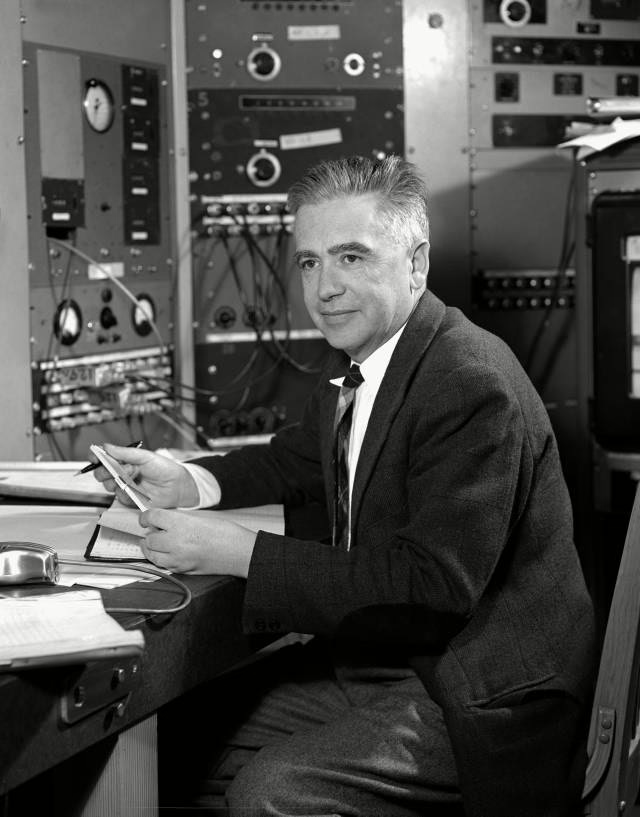
Emilio Segrè's Work
Early Contributions to Nuclear Physics
Emilio Segrè began his scientific career in Rome as part of the pioneering group of young physicists led by Enrico Fermi. Working within the Via Panisperna laboratory, he contributed to the early development of nuclear physics in Italy, a period marked by rapid advances in understanding neutron behaviour and radioactive processes. His training under Fermi shaped his experimental approach and positioned him at the forefront of the emerging field.
Discovery of New Elements
One of Segrè’s most significant early achievements was the discovery of technetium in 1937, the first artificially produced element, created after he examined molybdenum foil that had been irradiated in a cyclotron at Berkeley. Later, in 1940, he played a key role in the discovery of astatine, another previously unknown element produced through nuclear reactions. These discoveries expanded the periodic table and demonstrated the power of particle accelerators in creating new matter.
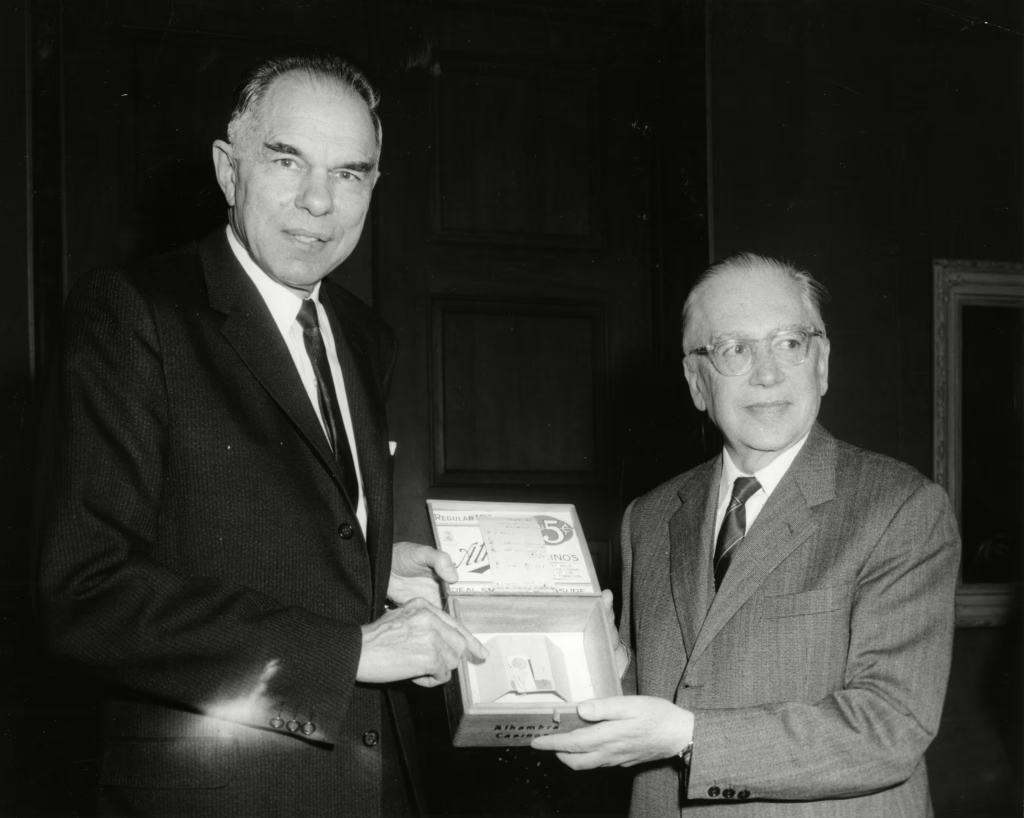
Work on the Manhattan Project
During World War II, Segrè joined the Los Alamos Laboratory, where he contributed to the Manhattan Project’s efforts to develop the first nuclear weapons. His work focused on nuclear measurements and the behaviour of fissionable materials, essential to the design and testing of the atomic bomb. This period marked a shift from academic research to applied wartime physics, though he later reflected critically on the moral implications.
Discovery of the Antiproton
Segrè’s most celebrated scientific accomplishment came in 1955 at the University of California, Berkeley, where he and Owen Chamberlain led the experiment that confirmed the existence of the antiproton; the antiparticle of the proton, possessing the same mass but opposite charge. This discovery provided crucial evidence for the symmetry of matter and antimatter and validated key predictions of quantum field theory. For this work, Segrè and Chamberlain were awarded the 1959 Nobel Prize in Physics.
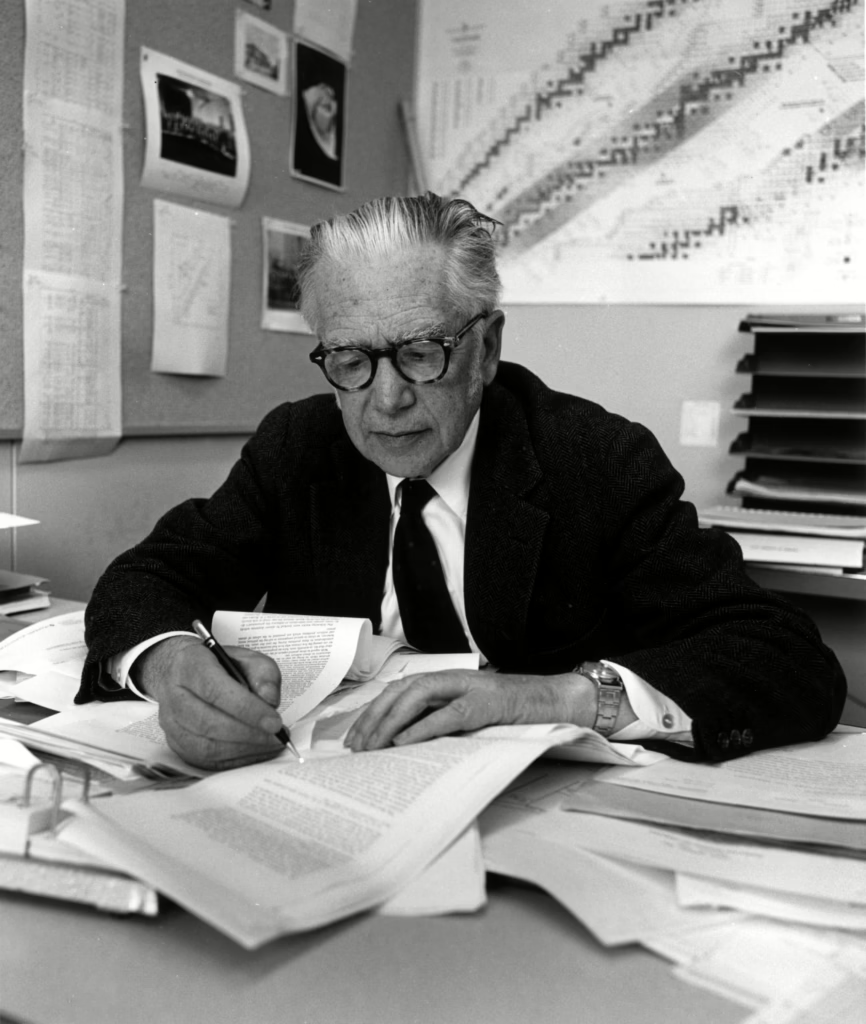
Emilio Segrè's Accomplishments
Awards and Honours
Emilio Segrè received several prestigious awards in recognition of his contributions to nuclear and particle physics. His most significant honour was the 1959 Nobel Prize in Physics, shared with Owen Chamberlain, for the discovery of the antiproton.
Before receiving the Nobel Prize, Segrè was awarded the Richtmyer Memorial Award in 1957, given for outstanding contributions to physics education and research. Throughout his career, he also received numerous honorary degrees and institutional recognitions, many of which are preserved in archival collections such as the Emilio Segrè Collection at the National Museum of American History, which includes diplomas, awards, and documents from his scientific work.
Legacy
Emilio Segrè’s legacy extends beyond his experimental discoveries. He became an important historian of science, writing influential books and memoirs that documented the development of nuclear physics and the personalities who shaped it. His writings remain widely cited for their insight into both the scientific and human dimensions of physics in the 20th century.
Segrè is also remembered as a bridge between European and American physics, having contributed significantly to both scientific communities.
Explore Further
Continue learning about the lives of the people that shaped nuclear history.
Marie Curie – A Symbol of Perseverance, Intelligence and Scientific Curiosity
Leslie Groves – The Race to Build the Atomic Bomb
Werner Heisenberg – The Man Behind the Uncertainty
Frédéric Joliot-Curie – A Life of Science and Conscience
Did you know? Explore Nuclear also offers great careers information and learning resources.
Below you can find references to the information and images used on this page.
Content References
Image References
- Segre – Nobel Foundation – Public Domain
- Emilio Segre – Photolab – Public Domain
- Seaborg Segre first sample of plutonium-239 – American Institute of Physics (AIP) – Free to use
- Emilio Serge working on proofs of book on Enrico Fermi – ENERGY.GOV – Public Domain
- 12. Tagung 1962 Physik – Willy Pragher – CC BY 4.0