
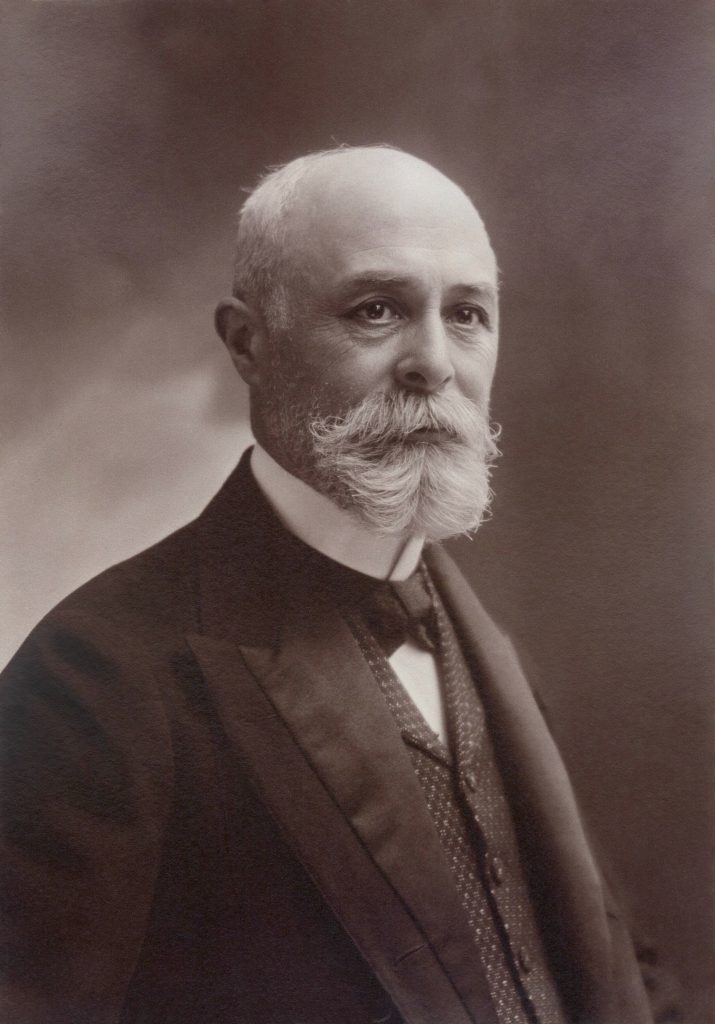
Henri Becquerel's Life
Life and Work
Henri Becquerel was a French physicist born on December 15, 1852, in Paris, into a family of distinguished scientists. His grandfather and father were both physicists, and this legacy deeply influenced his academic path. Becquerel studied engineering at the École Polytechnique and later earned a doctorate in science, eventually becoming a professor at the Muséum national d’histoire naturelle and École Polytechnique.
His early research focused on optics, particularly the interaction of light with crystals and the phenomenon of phosphorescence. However, his most ground-breaking work came in 1896 when he discovered natural radioactivity. Inspired by Wilhelm Röntgen’s discovery of X-rays, Becquerel investigated whether phosphorescent materials emitted similar rays. He found that uranium salts emitted penetrating radiation without any external energy source, revealing a previously unknown property of matter.
This discovery laid the foundation for the field of nuclear physics and was further developed by Marie and Pierre Curie, who expanded on his findings. In recognition of their collective contributions, Becquerel shared the 1903 Nobel Prize in Physics with the Curies. His work not only revolutionised physics but also had profound implications for medicine and energy.
Henri Becquerel died on August 25, 1908, in Le Croisic, France. His legacy endures in the scientific community, and the SI unit of radioactivity, the becquerel (Bq), is named in his honour.
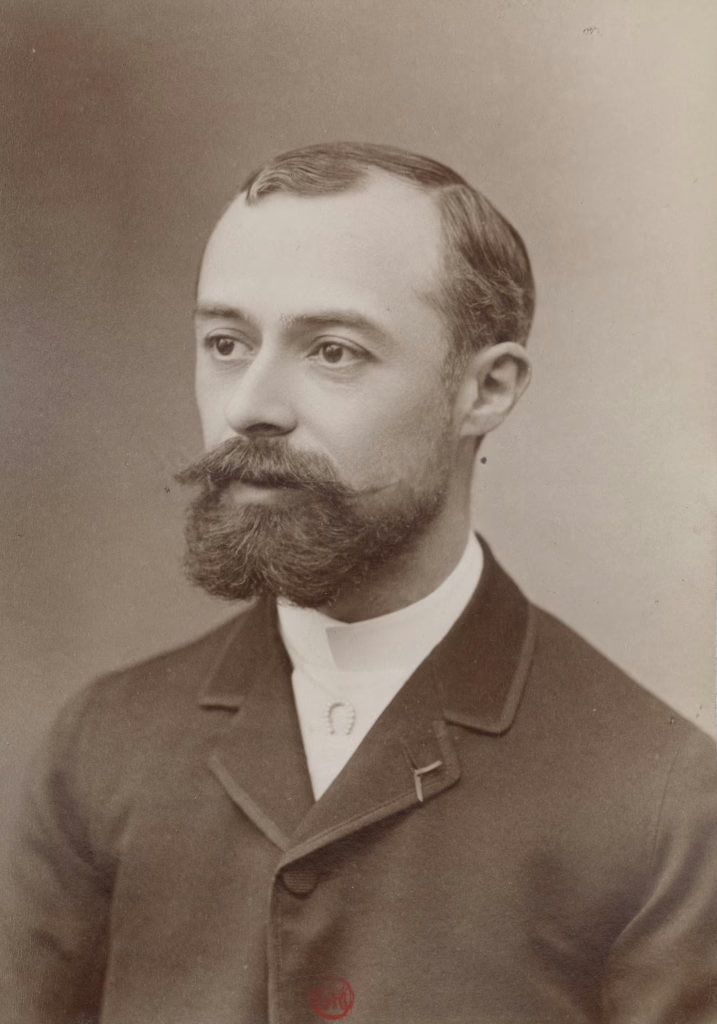
Henri Becquerel's Scientific Contributions
Early Research in Optics and Magnetism
Henri Becquerel began his scientific career studying the interaction of light with matter. He focused on phenomena such as phosphorescence, where certain materials emit light after exposure to sunlight. He also investigated the absorption of light in crystals and the relationship between light and magnetic fields. These studies built on the work of his father and grandfather, both of whom were physicists, and helped establish Becquerel as a respected researcher in physical sciences.
Discovery of Radioactivity
Becquerel’s most ground-breaking contribution came in 1896 when he discovered natural radioactivity. Inspired by Wilhelm Röntgen’s discovery of X-rays, Becquerel explored whether phosphorescent materials could emit similar rays. While experimenting with uranium salts and photographic plates, he found that uranium emitted penetrating radiation even without exposure to sunlight. This spontaneous emission of energy from the atom was a previously unknown phenomenon, which he termed radioactivity.

Impact on Atomic Theory
The discovery of radioactivity challenged the prevailing notion of atoms as indivisible units. Becquerel’s findings suggested that atoms could spontaneously release energy, implying an internal structure. This revelation laid the foundation for modern atomic theory and influenced subsequent research by scientists such as Marie and Pierre Curie, Ernest Rutherford, and Niels Bohr. It also opened the door to the development of nuclear physics and quantum mechanics.
Henri Becquerel's Accomplishments
Awards and Honours
Henri Becquerel received several prestigious accolades in recognition of his discovery of radioactivity. Most notably, he was awarded the Nobel Prize in Physics in 1903, which he shared with Marie and Pierre Curie. This honour acknowledged his role in uncovering spontaneous radioactivity, a phenomenon that revolutionised atomic science. He also received the Rumford Medal from the Royal Society in 1900 for his work on radiation, and the Barnard Medal for Meritorious Service to Science in 1905. Additionally, he was named an Officer of the Legion of Honour, one of France’s highest civilian distinctions, and was elected a Foreign Member of the Royal Society shortly before his death.
Legacy and Impact
Henri Becquerel’s legacy is deeply embedded in the history of science. His discovery of radioactivity not only transformed physics but also had far-reaching implications in medicine, energy, and industry. The becquerel (Bq), the SI unit for measuring radioactivity, was named in his honour, ensuring his contributions remain central to scientific discourse. His work paved the way for the development of nuclear energy, radiological imaging, and cancer treatments through radiotherapy. Becquerel is remembered as a visionary scientist whose curiosity and rigor unlocked one of nature’s most powerful forces.
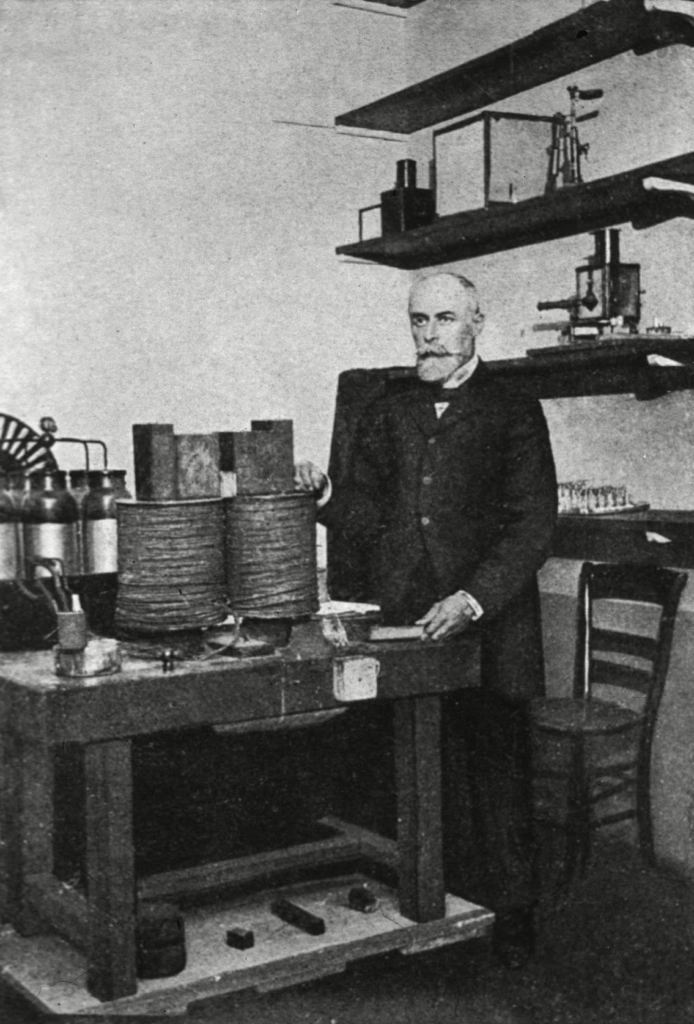
Explore Further
Continue learning about the lives of the people that shaped nuclear history.
Irène Joliot-Curie – A Legacy of Science and Service
Rudolf Peierls – The Physicist Who Made the Atomic Bomb Possible
John Cockcroft – The Man Who Split the Atom
Niels Bohr – Architect of the Quantum World
Did you know? Explore Nuclear also offers great careers information and learning resources.
Below you can find references to the information and images used on this page.
Content References
- Henri Becquerel – Facts – NobelPrize.org
- What Did Henri Becquerel Contribute to Atomic Theory?
- Henri Becquerel – Biography, Facts and Pictures
- Henri Becquerel – Nuclear Museum
- Henri Becquerel – Wikipedia
- Henri Becquerel | French Physicist & Radioactivity Pioneer | Britannica
- Henri Becquerel – New World Encyclopedia
Image References
- Henri Becquerel – Paul Nadar – Public Domain
- Henri Becquerel – Paul Nadar – Public Domain
- Becquerel plate – Henri Becquerel – Public domain
- Becquerel in the lab – Unknown author – Public Domain