
Rudolf Peierls' Life
Life and Work
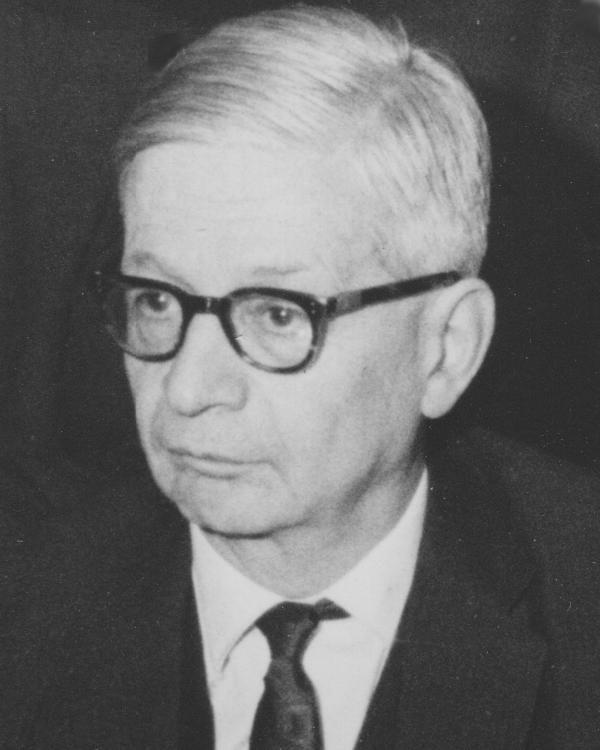
Rudolf Ernst Peierls (1907–1995) was a German-born theoretical physicist whose work helped shape modern solid‑state physics and the development of nuclear weapons. Born in Berlin to an assimilated Jewish family, he showed an early interest in science and engineering. He studied physics at several leading German universities, learning under some of the most influential figures of the era, including Arnold Sommerfeld, Werner Heisenberg, Wolfgang Pauli, and Niels Bohr. The rise of Nazism in the early 1930s forced Peierls, like many Jewish scientists, to leave Germany. He moved first to Zurich and then to Britain, where he eventually built his career and became a British citizen in 1940.
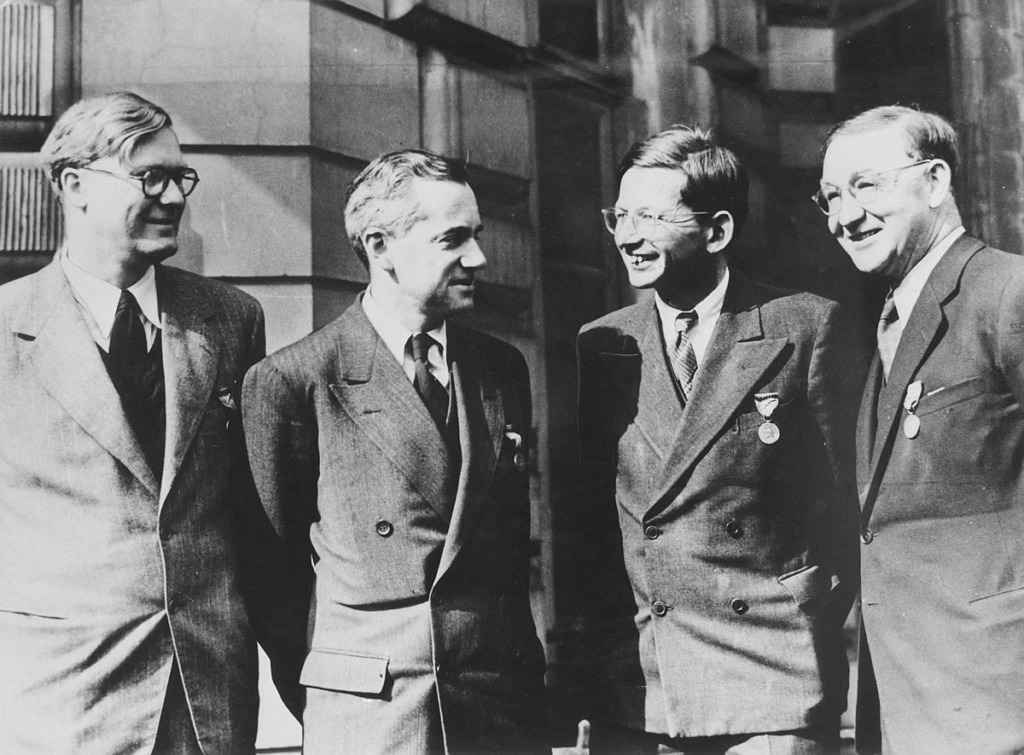
Peierls made major contributions to quantum theory and solid‑state physics, including work on electronic band structure, lattice vibrations, and what later became known as the Peierls transition. However, he is perhaps best known for his role in the early development of nuclear weapons. In 1940, together with Otto Frisch, he wrote the Frisch–Peierls memorandum, the first technical document to show that an atomic bomb was feasible using only a small amount of uranium‑235. This memorandum directly influenced the creation of the British Tube Alloys project and later the American Manhattan Project. During the war, Peierls worked at Los Alamos, where he led the implosion theory group responsible for the design of the plutonium bomb.
After the war, Peierls returned to Britain and became a central figure in post‑war physics. He held a long and influential professorship at the University of Birmingham before moving to Oxford in 1963, where he continued research and mentoring younger physicists. His scientific achievements earned him numerous honours, including the Royal Medal, the Lorentz Medal, the Max Planck Medal, and a knighthood in 1968. Beyond research, he was active in debates on nuclear policy and arms control, drawing on his wartime experience to advocate for responsible scientific engagement.
Peierls remained scientifically active well into his later years and continued writing on both physics and the history of science. He died in Oxford in 1995 at the age of 88, leaving behind a legacy as one of the most influential theoretical physicists of the 20th century and a key figure in the international community of scientists displaced by the political upheavals of the 1930s.
Rudolf Peierls' Work
Foundations in Quantum and Solid‑State Physics
Rudolf Peierls made some of his earliest and most influential contributions in quantum theory and the emerging field of solid‑state physics. His work helped explain how electrons behave in crystals, how materials conduct heat and electricity, and how magnetic fields affect metals. He developed concepts such as the Peierls transition, the Peierls argument, and the Peierls–Nabarro potential, all of which remain central to condensed‑matter physics. His research also advanced understanding of lattice vibrations, electronic band structure, and transport theory, including the interpretation of the de Haas–van Alphen effect in metals.
Nuclear Physics and the Birth of the Atomic Bomb
Peierls’ most historically significant work came during the Second World War. In 1940, together with Otto Frisch, he wrote the Frisch–Peierls memorandum, the first technical document to show that an atomic bomb could be built using only a small amount of uranium‑235. This insight transformed nuclear weapons research and directly led to the British Tube Alloys programme and later the American Manhattan Project. At Los Alamos, Peierls led the implosion theory group, contributing to the design of the plutonium bomb.
Post‑war Scientific Leadership
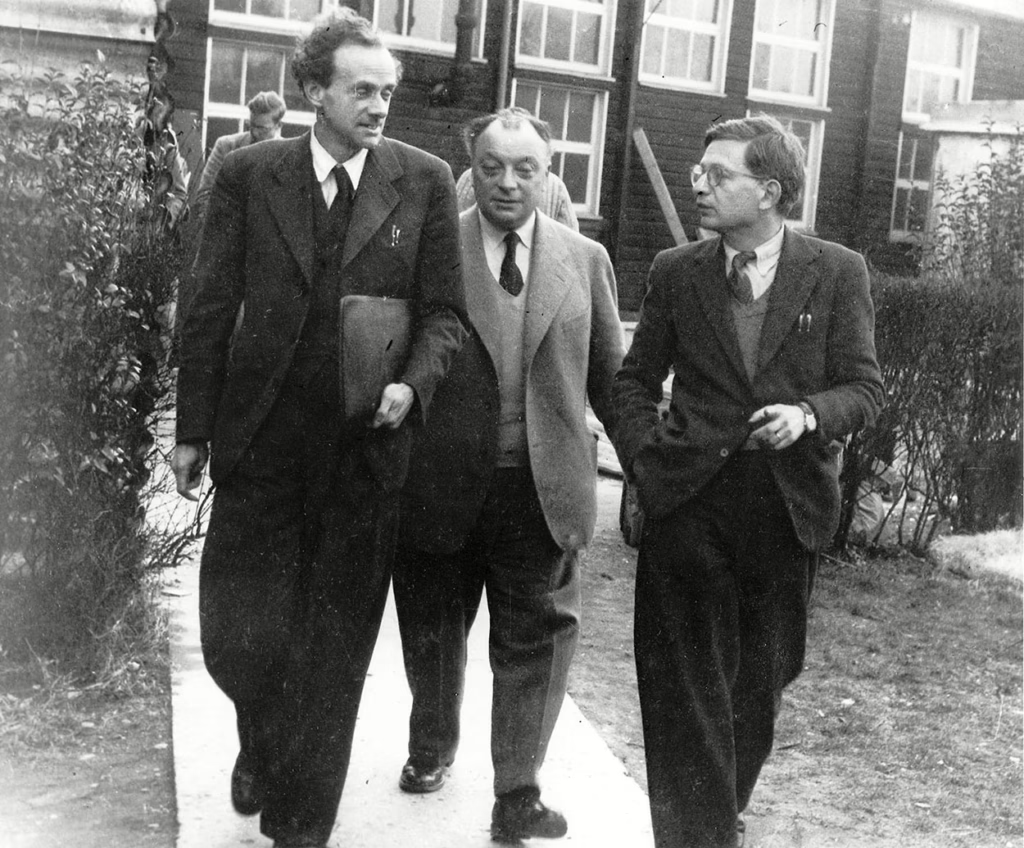
After the war, Peierls became a central figure in British theoretical physics. He continued to publish widely on solid‑state physics, quantum field theory, and statistical mechanics, and he mentored a generation of physicists who shaped post‑war research. His work extended to topics such as charge‑density waves, the Landau–Peierls instability, and inequalities in statistical physics (e.g., the Peierls–Bogoliubov inequality). His influence was amplified through his teaching roles at Birmingham and later Oxford, as well as through his collected scientific papers, which span a wide range of topics in 20th‑century physics.
Rudolf Peierls' Accomplishments
Awards and Honours
Rudolf Peierls received a long list of prestigious awards that reflected both the breadth and the impact of his scientific work. Early recognition came in 1946, when he was appointed a Commander of the Order of the British Empire (CBE) and awarded the Medal of Freedom, acknowledging his crucial wartime contributions to the British and American atomic bomb projects. His scientific achievements were further recognised with the Royal Medal in 1959, one of the Royal Society’s highest honours, followed by the Lorentz Medal in 1962, awarded for outstanding contributions to theoretical physics.
Peierls continued to receive major accolades throughout the 1960s and beyond. He was awarded the Max Planck Medal in 1963, the highest honour of the German Physical Society, and was knighted in 1968, becoming Sir Rudolf Peierls in recognition of his services to science. Later in his career, he received the Enrico Fermi Award in 1980, the Matteucci Medal in 1982, and the Copley Medal in 1986, the Royal Society’s oldest and most prestigious scientific award. These honours collectively reflect his status as one of the most influential theoretical physicists of the 20th century.
Legacy
Beyond his research, Peierls played a major role in shaping post‑war British physics. He built influential research groups at the University of Birmingham and later at Oxford, mentoring generations of physicists who went on to become leaders in their fields. His books, including ‘Quantum Theory of Solids and Surprises in Theoretical Physics’, became widely used references and helped define the teaching of theoretical physics for decades.
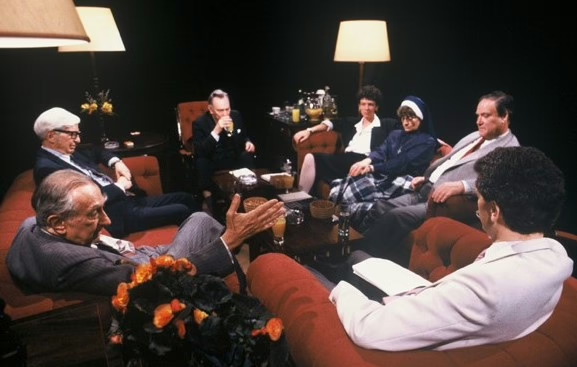
Peierls also left a legacy of public engagement and scientific responsibility. Drawing on his wartime experience, he became an important voice in debates on nuclear weapons, arms control, and the ethical responsibilities of scientists. His autobiography, ‘Bird of Passage’, further cemented his reputation as both a scientist and a thoughtful commentator on the role of science in society.
Explore Further
Continue learning about the lives of the people that shaped nuclear history.
Maria Goeppert Mayer – The Forgotten Genius of Nuclear Physics
Glenn T. Seaborg – The Man Who Rewrote the Periodic Table
Joseph John Thomson – A Pioneer of the Subatomic Age
J. Robert Oppenheimer – Father of the Atomic Bomb
Did you know? Explore Nuclear also offers great careers information and learning resources.
Below you can find references to the information and images used on this page.
Content References
- Rudolf Peierls – Nuclear Museum
- Rudolf Ernst Peierls. 5 June 1907 — 19 September 1995 | Biographical Memoirs of Fellows of the Royal Society | The Royal Society
- Rudolf Peierls – Wikipedia
- Rudolf Peierls (1907 – 1995) – Biography – MacTutor History of Mathematics
- Sir Rudolf Ernst Peierls | British Nuclear Physicist & WWII Codebreaker | Britannica
Image References
- Peierls,Rudolf 1966 Göttingen – GFHund – CC BY 3.0
- William Penney, Otto Frisch, Rudolf Peierls and John Cockroft – Los Alamos National Laboratory – Unless otherwise indicated, this information has been authored by an employee or employees of the Los Alamos National Security, LLC (LANS), operator of the Los Alamos National Laboratory under Contract No. DE-AC52-06NA25396 with the U.S. Department of Energy. The U.S. Government has rights to use, reproduce, and distribute this information. The public may copy and use this information without charge, provided that this Notice and any statement of authorship are reproduced on all copies. Neither the Government nor LANS makes any warranty, express or implied, or assumes any liability or responsibility for the use of this information.
- The physicists Paul Dirac, Wolfgang Pauli and Rudolf Peierls, c 1953 – Science Museum London – CC BY-SA 2.0
- After Dark 3 July 1987 – AnOpenMedium – GNU V1.2
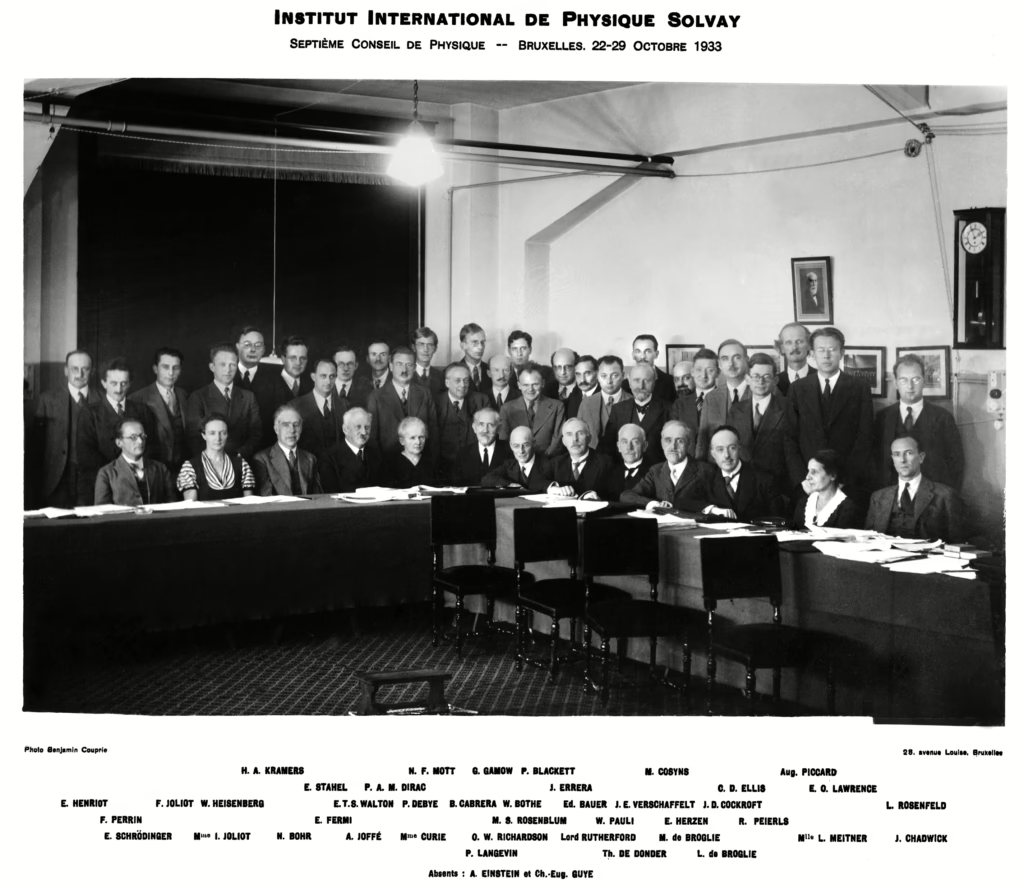
- Solvay1933Large – Benjamin Couprie – Public Domain