
Table of Contents
Willard Libby's Life
Life and Work
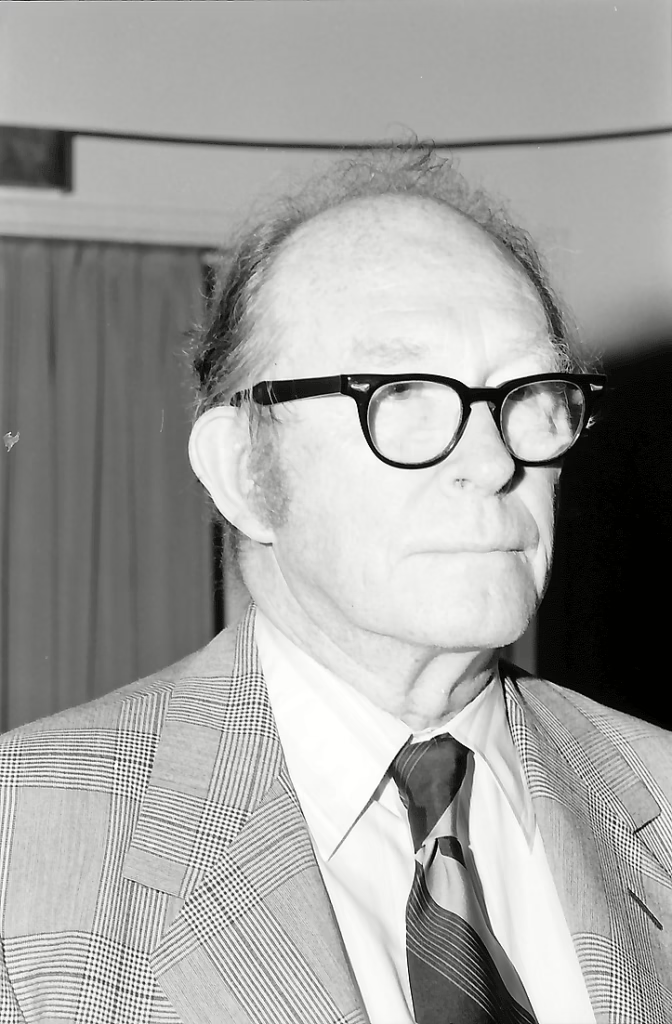
Willard Frank Libby was an American physical chemist born on December 17, 1908, in Grand Valley, Colorado. He grew up near Sebastopol, California, and went on to study at the University of California, Berkeley, where he earned both his B.Sc. (1931) and Ph.D. (1933). After completing his doctorate, he joined Berkeley’s chemistry faculty, rising from instructor to associate professor over the next decade.
During World War II, Libby’s academic career was interrupted when he joined the Manhattan Project at Columbia University, contributing to research crucial to the development of nuclear technology. His earlier work had already included advances in radioactive isotope detection and gaseous diffusion methods for uranium enrichment; techniques that played a role in wartime nuclear efforts.
After the war, Libby continued his scientific career at the University of Chicago, where he made his most famous contribution: the development of radiocarbon dating. This ground-breaking method, based on measuring the decay of carbon‑14 in organic materials, revolutionised archaeology, geology, and numerous other fields by providing a reliable way to determine the age of ancient objects. For this achievement, he received the Nobel Prize in Chemistry in 1960, along with several other major scientific awards.
Libby later served on the U.S. Atomic Energy Commission, advocating for peaceful applications of nuclear science. He spent his final academic years at the University of California, Los Angeles. Willard Libby died on September 8, 1980, in Los Angeles, leaving behind a legacy as one of the most influential chemists of the 20th century.
Willard Libby's Work
Radiocarbon Dating (Carbon‑14 Method)
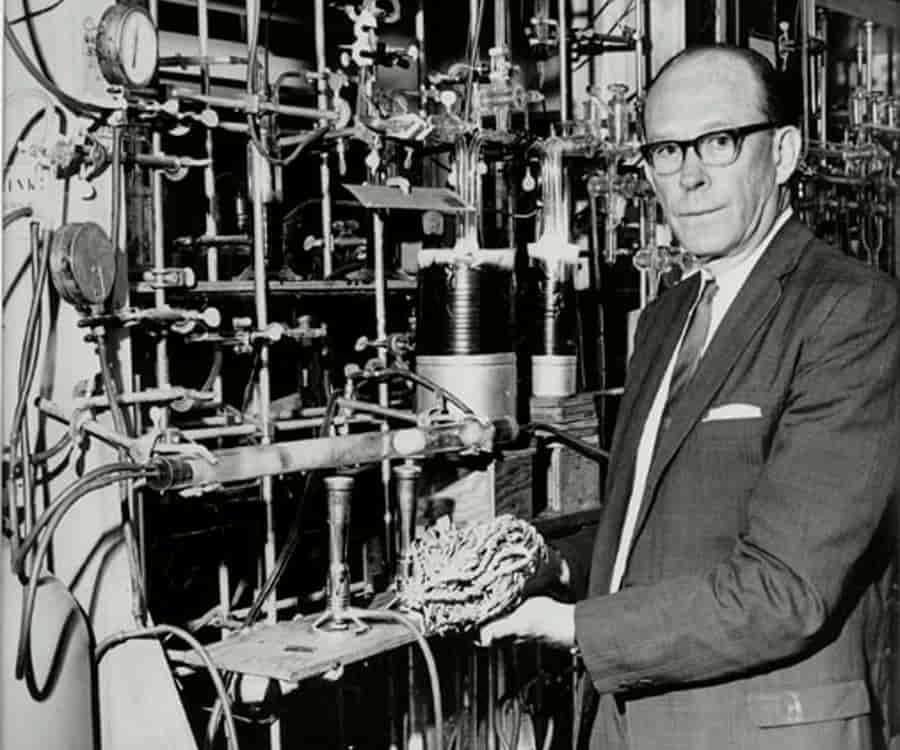
Willard Libby’s most influential contribution was the development of radiocarbon dating, a technique that transformed archaeology, geology, and environmental science. By demonstrating that living organisms absorb carbon‑14 and that this isotope decays at a predictable rate after death, he created a reliable method for determining the age of once‑living materials. His experiments in the late 1940s validated the method’s accuracy, allowing scientists to date artifacts and fossils up to tens of thousands of years old. This achievement earned him the 1960 Nobel Prize in Chemistry and remains one of the most important scientific innovations of the 20th century.
Research on Radioactive Isotopes
Before and after his radiocarbon work, Libby conducted extensive research on radioactive isotopes and their behaviour in the environment. He studied natural and artificial radioactivity, the movement of isotopes through the atmosphere, and the detection of extremely low‑level radiation. His expertise in these areas helped shape early nuclear science and provided foundational knowledge for environmental monitoring and nuclear safety.
Contributions to the Manhattan Project
During World War II, Libby joined the Manhattan Project, where he worked on the separation of uranium isotopes using gaseous diffusion. His work supported the development of nuclear weapons, although his later career focused heavily on peaceful applications of nuclear science. The technical skills he developed during this period strengthened his later research in isotope chemistry.
Public Service and Nuclear Policy
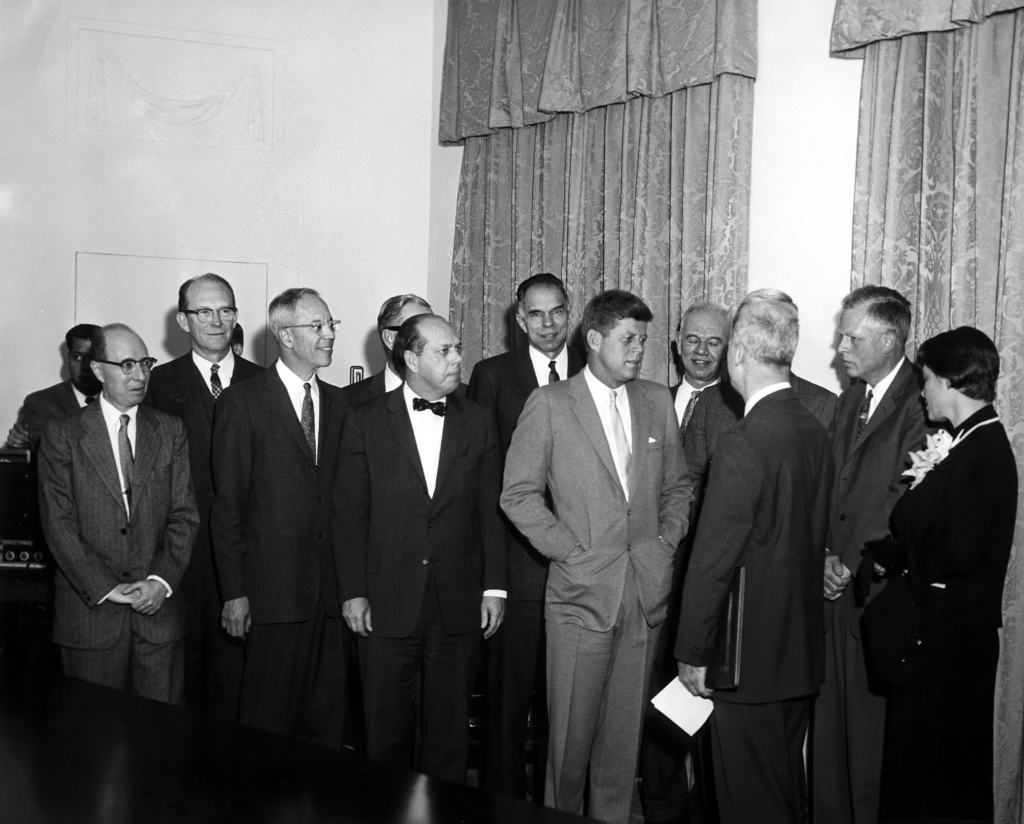
In the 1950s, Libby served on the U.S. Atomic Energy Commission. In this role, he advocated for nuclear power, promoted radiation safety standards, and supported scientific research into peaceful uses of atomic energy. His public service helped shape early nuclear policy during a period of rapid technological and political change.
Academic Leadership and Later Research
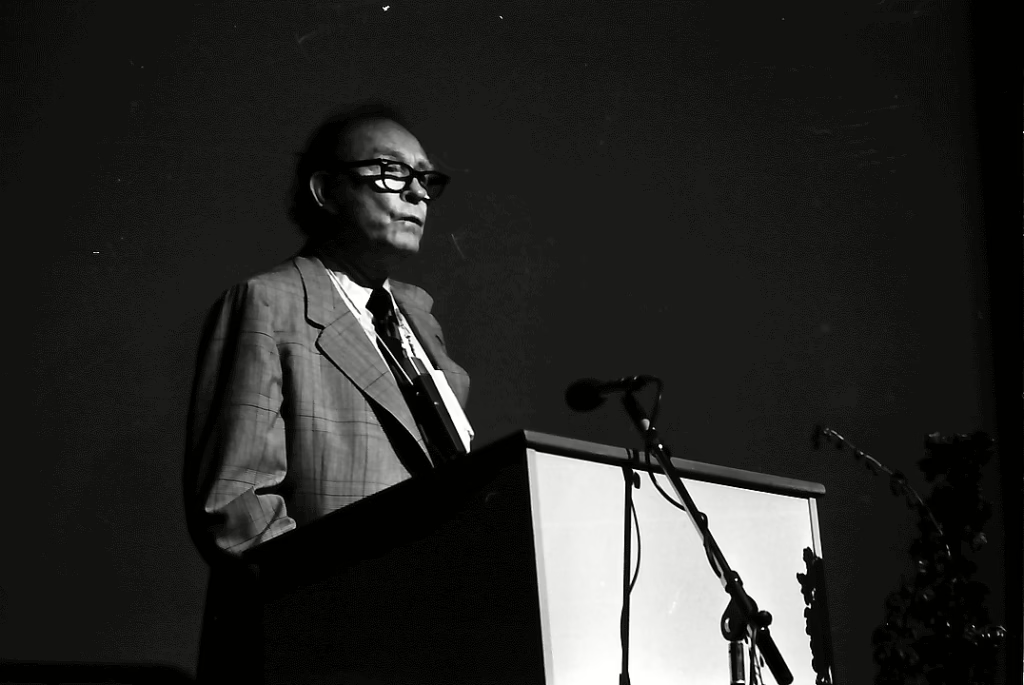
Libby held major academic positions at the University of Chicago and later at UCLA, where he continued research into environmental chemistry, atmospheric processes, and isotope behaviour. He also helped establish research programs and mentored a generation of scientists who expanded on his work.
Willard Libby's Legacy
Major Awards and Honours
Willard Libby received a series of prestigious scientific awards in recognition of his pivotal work on radiocarbon dating. His honours include the Elliott Cresson Medal (1957), the Willard Gibbs Award (1958), the Joseph Priestley Award (1959), and the Albert Einstein Award (1959). His most celebrated achievement came in 1960, when he was awarded the Nobel Prize in Chemistry for developing the carbon‑14 dating method, a technique that revolutionised multiple scientific fields. He later received the Arthur L. Day Medal (1961) for further contributions to geochemistry.
Legacy in Archaeology and Beyond
Libby’s legacy is especially profound in archaeology, where radiocarbon dating opened new avenues for understanding ancient cultures and historical development. Following his death in 1980, leading scientific journals and newspapers published tributes acknowledging the transformative impact of his work. His method continues to underpin modern archaeological research, and his influence extends to environmental monitoring, climate studies, and nuclear science. His contributions remain foundational, and he is widely regarded as one of the most important chemists of the 20th century.
Explore Further
Continue learning about the lives of the people that shaped nuclear history.
Albert Einstein – A Journey Through Space and Time
Homi J. Bhabha – Father of the Indian Nuclear Programme
Joseph John Thomson – A Pioneer of the Subatomic Age
Leo Szilard – The Man Who Warned the World
Did you know? Explore Nuclear also offers great careers information and learning resources.
Below you can find references to the information and images used on this page.
Content References
- Willard F. Libby – Biographical – NobelPrize.org
- Willard Frank Libby | Nobel Prize-Winning Chemist | Britannica
- Research Profile – Willard Libby | Lindau Mediatheque
- Willard Libby – Wikipedia
- Chemist Willlard F. Libby discovered a special method for dating deaths | scienceillustrated.com
- Willard Frank Libby – Biography, Facts and Pictures
- Radiocarbon Dating – American Chemical Society
- Willard F. Libby | History | Research Starters | EBSCO Research