
Leona Woods's Life
Life and Work
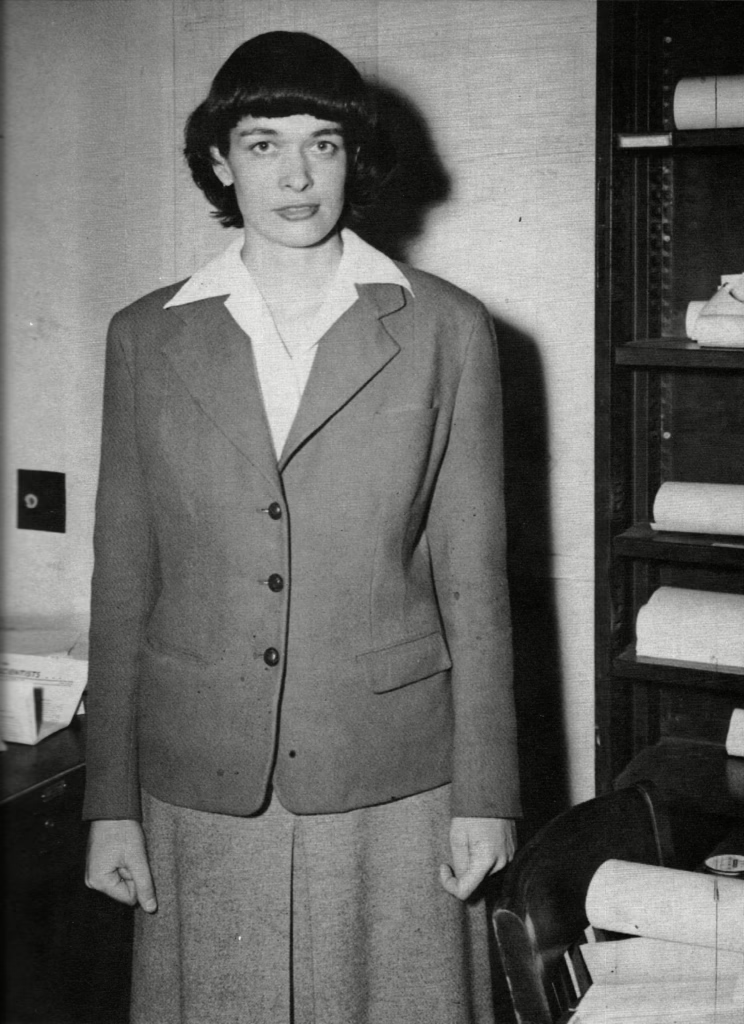
Born on August 9, 1919, in La Grange, Illinois, Leona Woods showed early academic promise, graduating high school at 14 and earning a BS in Chemistry from the University of Chicago by age 18. She pursued graduate studies in physics and became involved in the Manhattan Project while still a PhD student. Her entry into the project was serendipitous—she recognised graphite blocks being shaped for an atomic pile and was invited to join the top-secret effort.
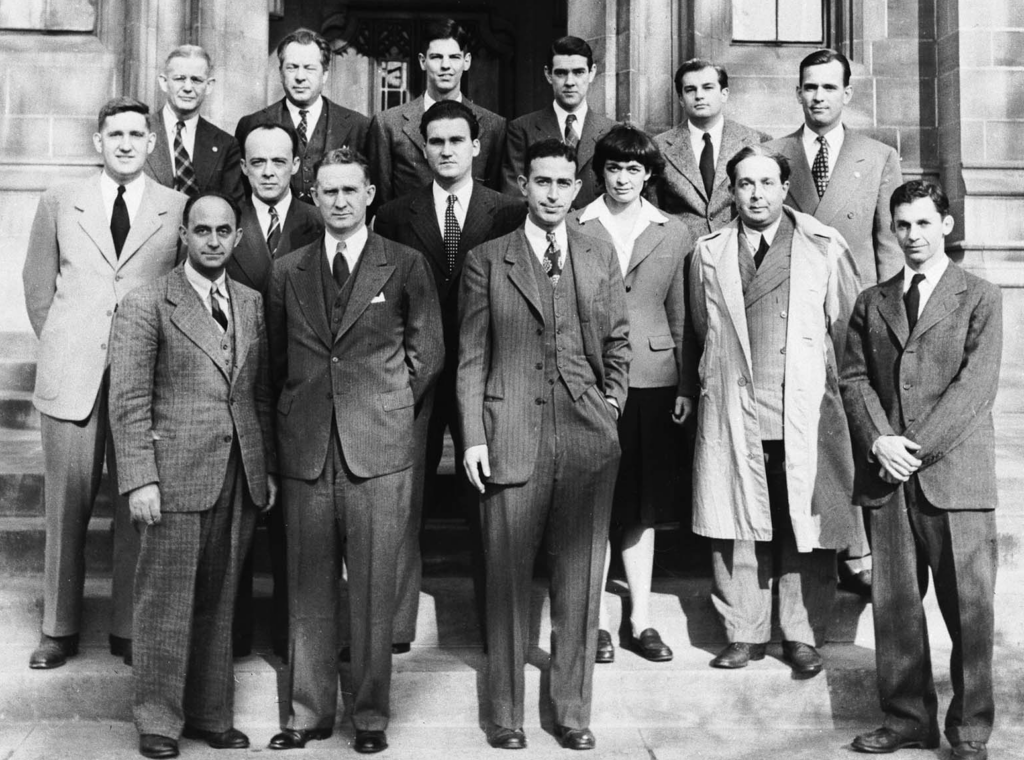
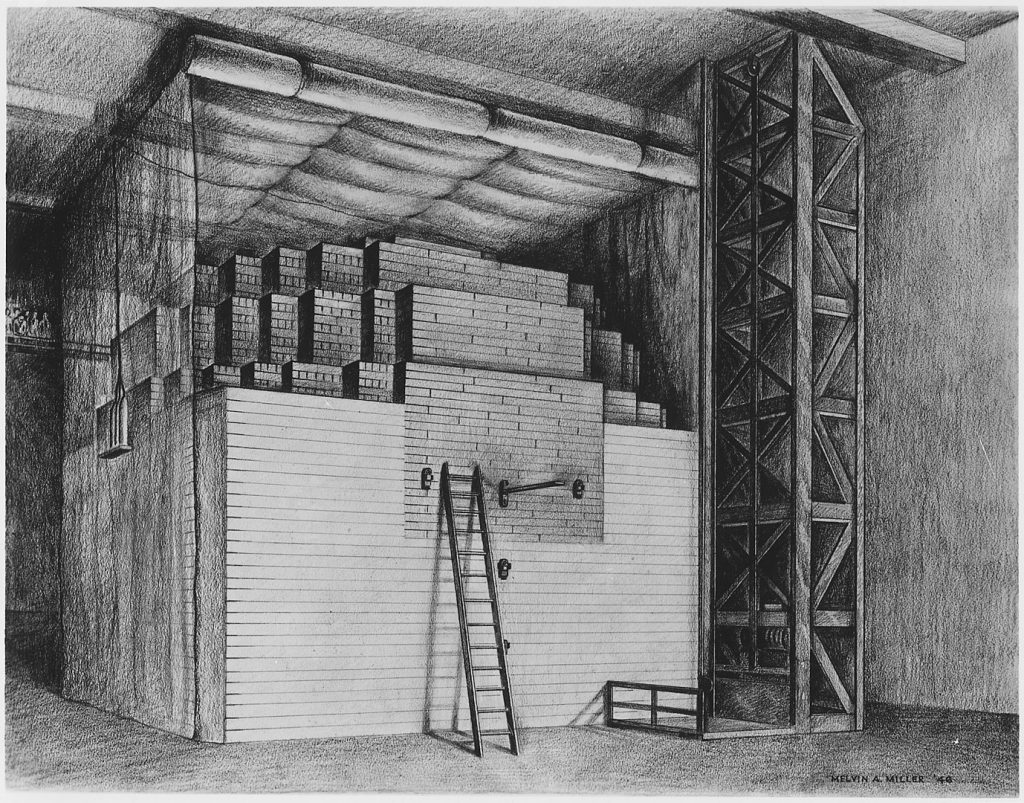
At just 23, Woods was the youngest and only woman on the team that built Chicago Pile-1, the world’s first nuclear reactor, under the leadership of Enrico Fermi. Her work was instrumental in monitoring neutron flux and radiation levels during the reactor’s operation. Despite the intense secrecy and pressure, she continued working even while pregnant, concealing it to avoid being removed from the project.
After the success of CP-1, Woods contributed to the development of nuclear reactors at Hanford, Washington, which produced plutonium for the atomic bomb dropped on Nagasaki. Her post-war career included research in cosmic rays, environmental science, and climate modelling. She held academic positions and published extensively, later marrying fellow scientist Willard Libby, a Nobel laureate in chemistry.
Leona Woods died on November 10, 1986, in Santa Monica, California. Her legacy endures as a trailblazer for women in physics and a key figure in one of the most consequential scientific endeavours of the 20th century.
Leona Woods's Scientific Contributions
Manhattan Project and Chicago Pile-1
Leona Woods was a critical member of the Manhattan Project, the U.S. government’s top-secret initiative to develop nuclear weapons during World War II. At just 23 years old, she joined Enrico Fermi’s team at the University of Chicago and became the only woman on the team that built Chicago Pile-1, the world’s first nuclear reactor. Her expertise in vacuum technology and radiation detection was vital. She helped design and install boron trifluoride neutron detectors that monitored the reactor’s behaviour during its historic first controlled chain reaction on December 2, 1942.
Work at Hanford and Plutonium Production
Following the success of CP-1, Woods moved to the Hanford Site in Washington, where she contributed to the design and operation of large-scale nuclear reactors used to produce plutonium. This plutonium was later used in the atomic bomb dropped on Nagasaki. Her work involved solving complex engineering and physics problems related to reactor cooling, neutron flux, and radiation shielding, all of which are critical for safe and efficient reactor operation.
Post-war Research in Physics and Cosmology
After World War II, Woods shifted her focus to fundamental physics and cosmology. She conducted research on cosmic rays and particle physics, contributing to the understanding of high-energy particles from space. Her work helped lay the groundwork for future studies in astrophysics and nuclear interactions.
Environmental Science and Climate Modeling
Later in her career, Woods applied her scientific skills to environmental and climate science. She worked on atmospheric modelling and studied the effects of nuclear energy and radiation on the environment. Her interdisciplinary approach bridged physics with ecological concerns, making her one of the early scientists to explore the intersection of energy and environmental impact.
Leona Woods's Accomplishments
Awards and Distinctions
Leona Woods did not receive many formal awards during her lifetime, largely due to the classified nature of her work on the Manhattan Project. However, her contributions have been recognised posthumously. One of the most significant tributes is the Leona Woods Distinguished Postdoctoral Lectureship Award, established by Brookhaven National Laboratory. This award honours exceptional early-career scientists, particularly women and underrepresented minorities in physics, and includes a monetary prize and an invitation to present research at Brookhaven. It serves as a lasting acknowledgment of Woods’ pioneering role in nuclear science.
Explore Further
Continue learning about the lives of the people that shaped nuclear history.
Joseph John Thomson – A Pioneer of the Subatomic Age
Marie Curie – A Symbol of Perseverance, Intelligence and Scientific Curiosity
Ernest Lawrence – The Physicist Who Built Big Science
Igor Kurchatov – Father of the Russian Atomic Bomb
Did you know? Explore Nuclear also offers great careers information and learning resources.
Below you can find references to the information and images used on this page.
Content References
Image References
- Leona Woods – Argonne National Laboratory – Public Domain
- Chicago Pile Team – Unknown Author – Free to Use: Unless otherwise indicated, this information has been authored by an employee or employees of the Los Alamos National Security, LLC (LANS), operator of the Los Alamos National Laboratory under Contract No. DE-AC52-06NA25396 with the U.S. Department of Energy. The U.S. Government has rights to use, reproduce, and distribute this information. The public may copy and use this information without charge, provided that this Notice and any statement of authorship are reproduced on all copies. Neither the Government nor LANS makes any warranty, express or implied, or assumes any liability or responsibility for the use of this information.
- Stagg Field Reactor – Melvin A. Miller of the Argonne National Laboratory – Public Domain