
Table of Contents
Ernest Lawrence's Life
Life and Work
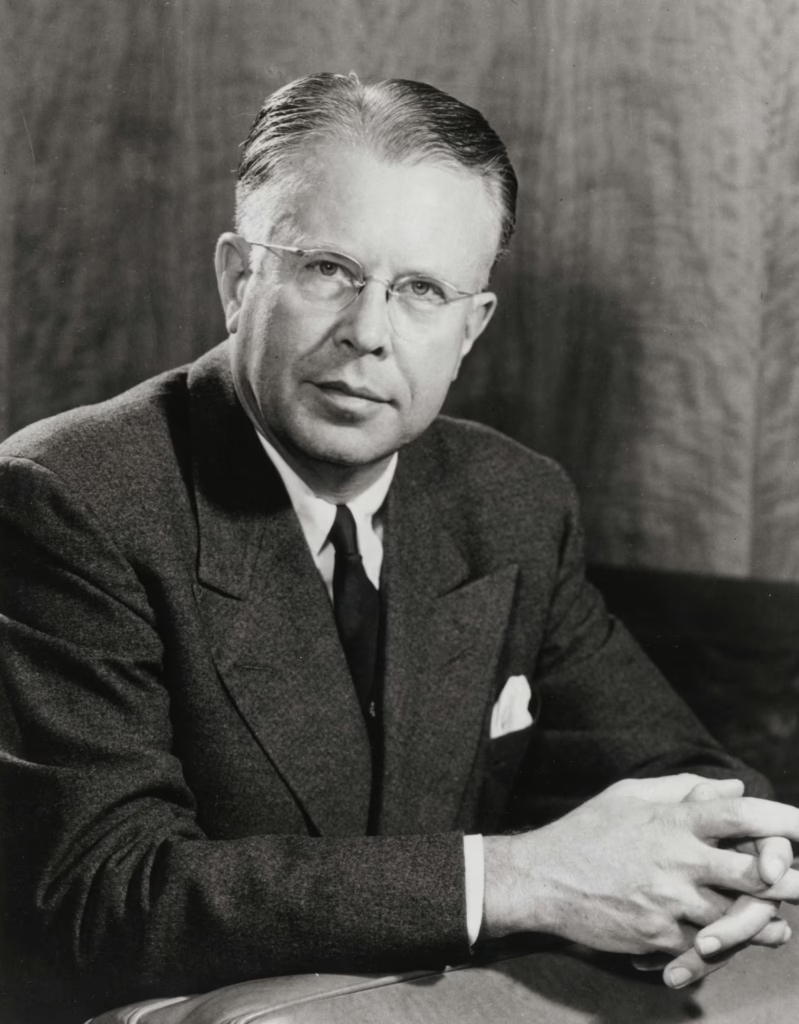
Born in 1901 in Canton, South Dakota, Ernest Orlando Lawrence grew up in a family of Norwegian immigrants who valued education. His early academic talent carried him from the University of South Dakota to the University of Minnesota, and then to Yale, where he completed a PhD in physics in 1925. Those years established the foundations of his interest in experimental physics and the emerging field of nuclear science.
Lawrence’s career took off when he joined the University of California, Berkeley, in 1928. Only a year later, he conceived the idea that would define his legacy: the cyclotron. This compact particle accelerator allowed scientists to reach previously unattainable energies, opening the door to new discoveries in nuclear reactions and isotopes. The invention not only earned him the 1939 Nobel Prize in Physics but also transformed Berkeley into a global centre for nuclear research. His Radiation Laboratory became a model for “big science,” where large teams, advanced machinery, and significant funding converged to tackle ambitious scientific goals.
During World War II, Lawrence’s expertise placed him at the heart of the Manhattan Project. He oversaw the development of electromagnetic separation techniques used to produce enriched uranium, contributing directly to the Allied war effort. After the war, he continued to advocate for large‑scale scientific facilities and played a key role in establishing the national laboratory system.
Lawrence’s later years were marked by both scientific ambition and political engagement, particularly in debates over nuclear weapons and national defence. His intense workload and frequent travel eventually took a toll on his health. In 1958, while on a diplomatic mission related to nuclear testing, he suffered a serious illness and died shortly afterward at the age of 57.
Ernest Lawrence's Work
Pioneer of Particle Acceleration
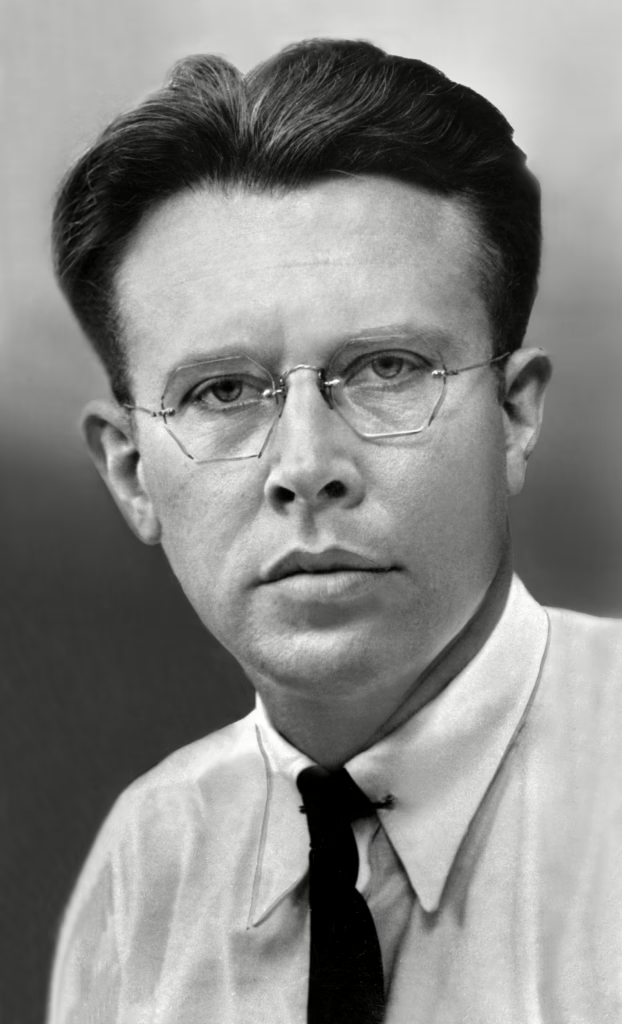
Ernest Lawrence’s most influential work centred on the invention of the cyclotron in 1929. This compact particle accelerator used magnetic fields to propel charged particles to high energies, enabling nuclear reactions that had previously been impossible to study in a laboratory. The cyclotron transformed experimental physics by making high‑energy research more accessible and laid the foundation for the vast accelerators used today in particle physics.
Development of Radioactive Isotopes
Lawrence’s cyclotrons produced a wide range of artificial radioactive isotopes, many of which became essential tools in medicine, chemistry, and biology. These isotopes were used for cancer treatment, medical imaging, and tracing chemical processes. His work helped establish nuclear medicine as a major scientific and clinical field.
Leadership of the Radiation Laboratory
At the University of California, Berkeley, Lawrence founded and directed the Radiation Laboratory, which became one of the world’s leading centres for nuclear research. Under his leadership, the lab expanded rapidly, developing larger and more powerful accelerators. This environment fostered collaboration among physicists, engineers, and chemists, shaping the model of “big science”; large teams, large budgets, and large machines.
Contributions to the Manhattan Project
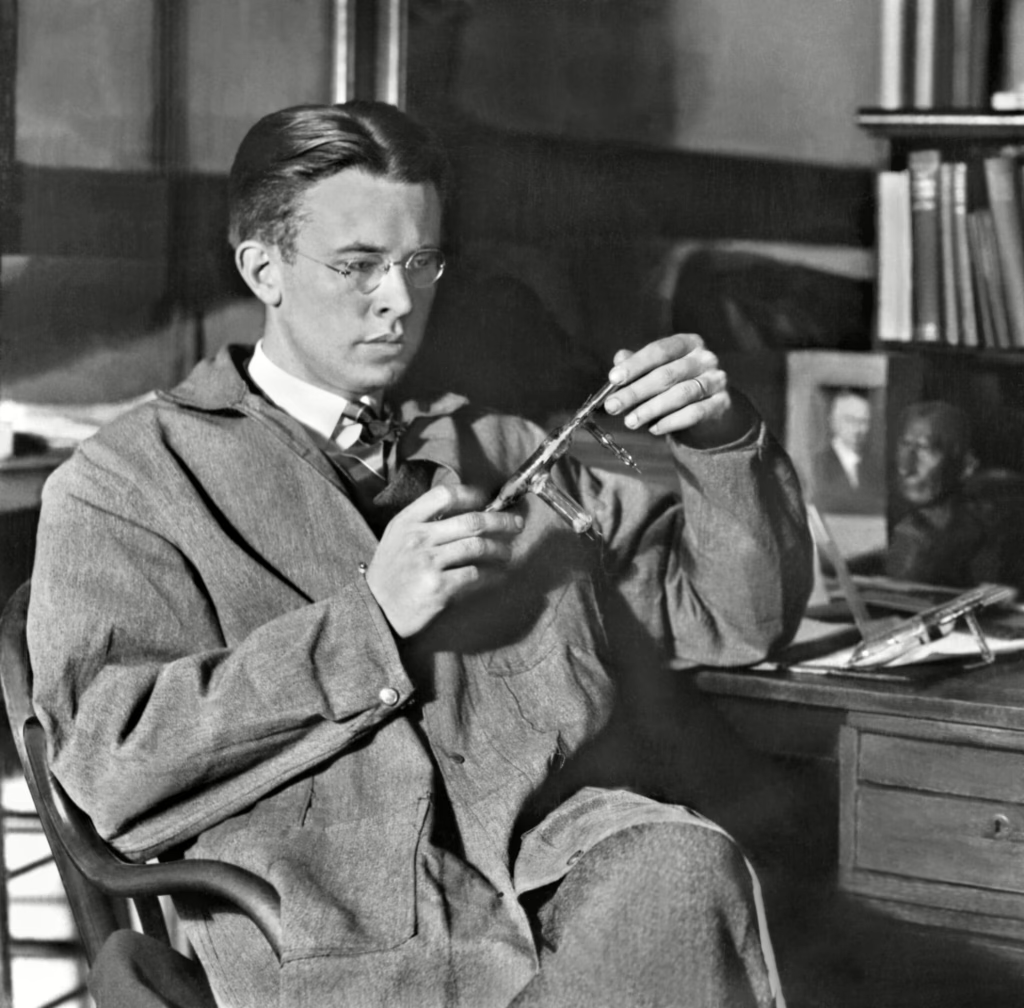
During World War II, Lawrence played a major role in the Manhattan Project, applying his accelerator expertise to the electromagnetic separation of uranium isotopes. His laboratory developed the “calutron,” a device used at Oak Ridge to produce enriched uranium. Although not a theoretical physicist, his organisational and engineering skills were crucial to the project’s success.
Post‑war Scientific Infrastructure
After the war, Lawrence continued to advocate for large‑scale scientific facilities. His efforts contributed to the creation of the national laboratory system in the United States. Two major laboratories (Lawrence Berkeley National Laboratory and Lawrence Livermore National Laboratory) were later named in his honour, reflecting the lasting impact of his work on American science.
Ernest Lawrence's Legacy
Major Awards and Distinctions
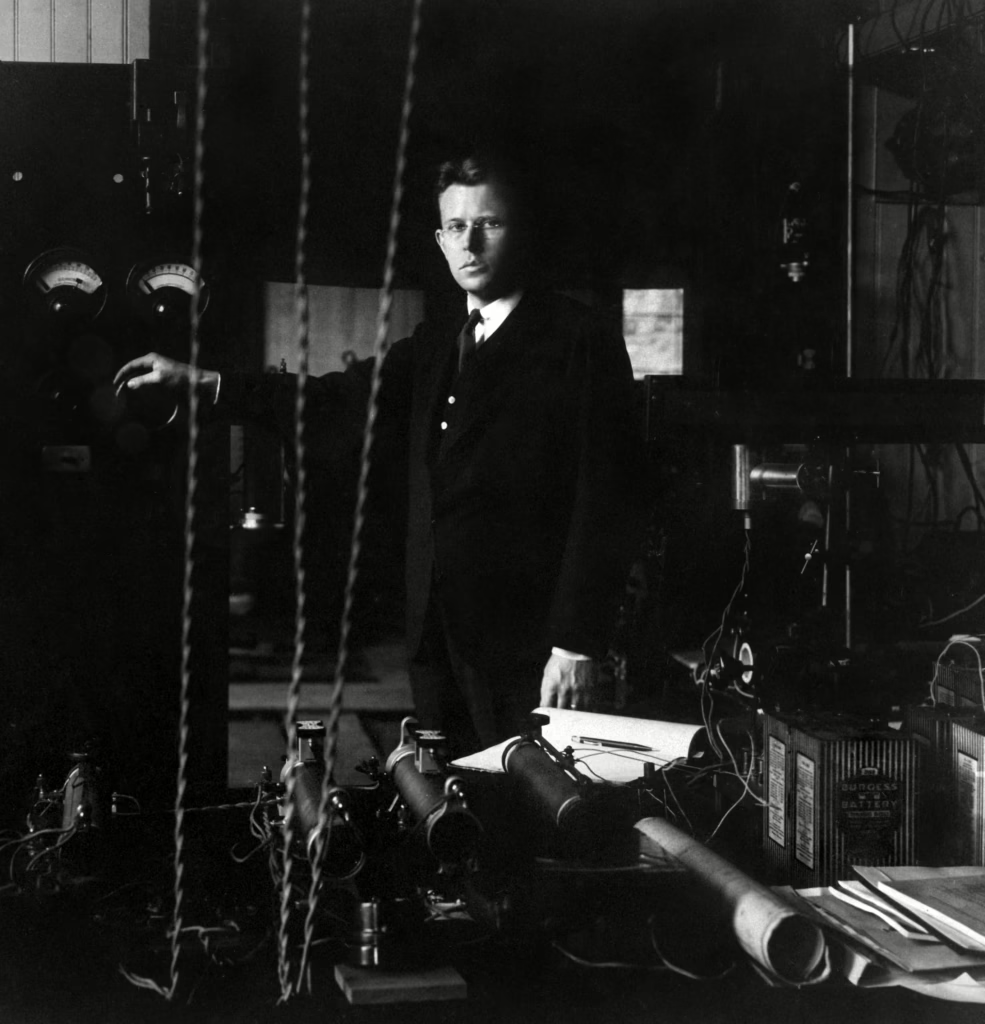
Ernest Lawrence received some of the most prestigious scientific honours of the 20th century. His invention of the cyclotron earned him the 1939 Nobel Prize in Physics, making him the first scientist from the University of California to receive a Nobel. He was also awarded the Comstock Prize, the Hughes Medal, and the Faraday Medal, each recognising his contributions to nuclear physics and accelerator technology. Throughout his career, he was elected to the National Academy of Sciences and received numerous honorary doctorates from leading universities.
National and Government Recognition
Lawrence’s work had profound national significance, especially during World War II. For his leadership in the Manhattan Project and his contributions to national defence, he received the Presidential Medal for Merit, one of the highest civilian honours in the United States at the time. His influence extended into government science policy, and he became a trusted advisor on nuclear research and post‑war scientific planning.
Legacy in Institutions and Technology
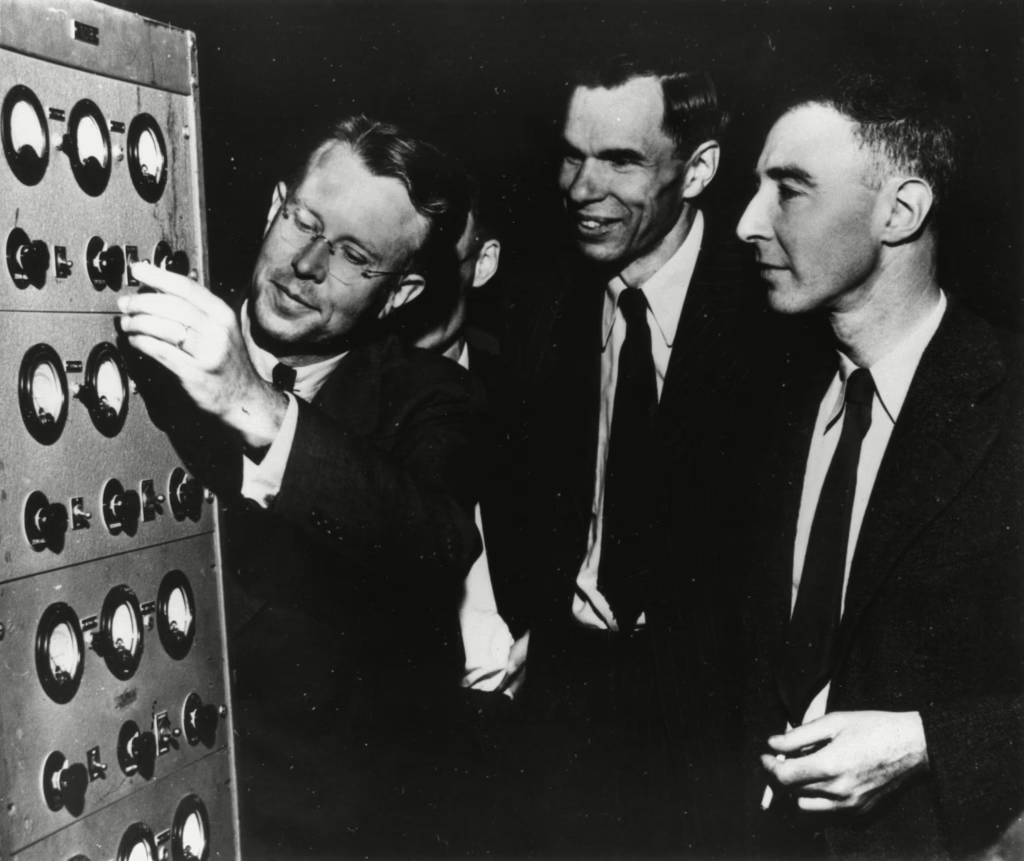
Few scientists have left such a visible institutional legacy. Two major U.S. national laboratories bear his name, reflecting his foundational role in their creation. His influence persists in the design of modern particle accelerators, the structure of collaborative research, and the widespread use of radioisotopes in medicine and industry. Lawrence’s legacy is not only technological but cultural: he helped define the way large‑scale science operates in the modern world.
Explore Further
Continue learning about the lives of the people that shaped nuclear history.
Arthur Compton – The Quiet Revolutionary of Quantum Theory
Hyman G. Rickover – Father of the Nuclear Navy
Leslie Groves – The Race to Build the Atomic Bomb
Glenn T. Seaborg – The Man Who Rewrote the Periodic Table
Did you know? Explore Nuclear also offers great careers information and learning resources.
Below you can find references to the information and images used on this page.
Content References
- Ernest Lawrence – Biographical – NobelPrize.org
- Ernest Orlando Lawrence – Lawrence Berkeley National Laboratory
- Ernest O. Lawrence, Co-Founder | Lawrence Livermore National Laboratory
- Manhattan Project Scientists: Ernest Orlando Lawrence (U.S. National Park Service)
- Timeline of Ernest Lawrence: Key Milestones and Achievements | Timepath Wiki
- Ernest O. Lawrence | Biographies
- Manhattan Project: People > Administrators > Ernest Lawrence
- Ernest Lawrence – Wikipedia
- Ernest Orlando Lawrence | Nobel Prize, cyclotron, atomic research | Britannica
Image References
- HD.1A.007 (12662186395) – ENERGY.GOV – Public Domain
- Portrait 1939 Ernest O. Lawrence – Berkeley Lab – CC BY-NC-ND 2.0
- Ernest Orlando Lawrence at the 10 inch Cyclotron – Berkeley Lab – CC BY-NC-ND 2.0
- Ernest Orlando Lawrence – Berkeley Lab – CC BY-NC-ND 2.0
- HD.4G.011 (10405626024) – ENERGY.GOV – Public Domain