
Werner Heisenberg's Life
Life and Work
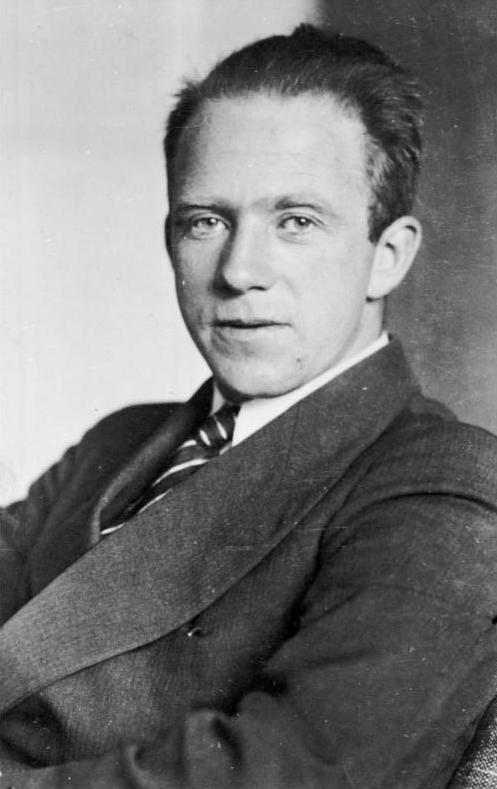
Werner Heisenberg was born on December 5, 1901, in Würzburg, Germany, into an academic family. He studied physics at the University of Munich under Arnold Sommerfeld and later worked with prominent physicists such as Max Born and Niels Bohr. His early exposure to cutting-edge theoretical physics laid the foundation for his rapid ascent in the scientific community. By the mid-1920s, Heisenberg was already contributing to the emerging field of quantum mechanics.
In 1925, Heisenberg introduced matrix mechanics, the first complete and consistent formulation of quantum mechanics. This revolutionary approach discarded classical concepts of particle trajectories and instead used abstract mathematical structures to describe atomic behaviour. Two years later, he formulated the uncertainty principle, which states that certain pairs of physical properties—like position and momentum—cannot be simultaneously known with arbitrary precision. This principle fundamentally altered the philosophical understanding of measurement and reality in physics.
Heisenberg’s contributions earned him the Nobel Prize in Physics in 1932 for the creation of quantum mechanics and its application to atomic systems. Throughout the 1930s and 1940s, he continued to work on nuclear physics and quantum field theory. During World War II, he was involved in Germany’s nuclear energy project, a controversial chapter in his career that has been the subject of much historical debate. After the war, Heisenberg played a key role in rebuilding German science and became director of the Max Planck Institute for Physics.
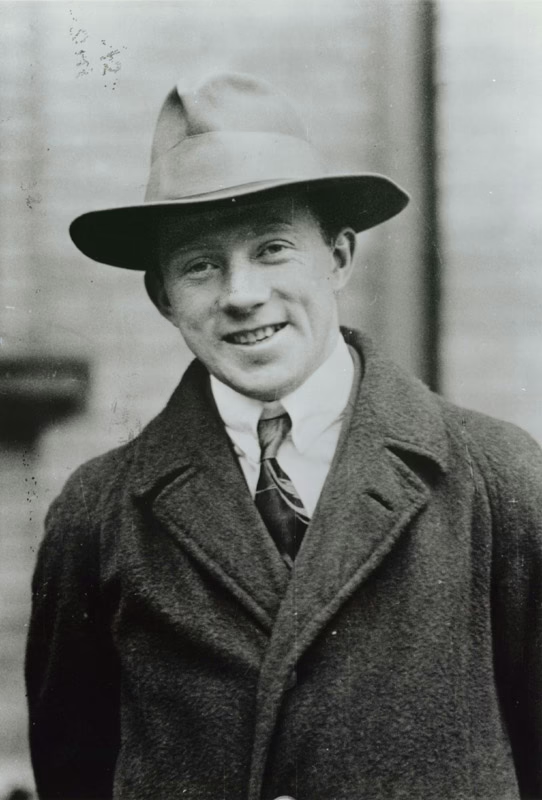
In his later years, Heisenberg explored unified field theories and the philosophical implications of quantum mechanics. He wrote extensively on the nature of scientific inquiry and the limits of human knowledge. He passed away on February 1, 1976, in Munich. Heisenberg’s legacy endures through his foundational contributions to quantum theory, his influence on generations of physicists, and his role in shaping the philosophical discourse around science and reality.
Werner Heisenberg's Scientific Contributions
Quantum Mechanics and Matrix Formulation
Werner Heisenberg’s most ground-breaking contribution was the development of matrix mechanics in 1925, the first complete and consistent formulation of quantum mechanics. This approach abandoned classical trajectories and instead used arrays of numbers (matrices) to represent observable quantities like position and momentum. It laid the foundation for modern quantum theory and was later shown to be equivalent to Schrödinger’s wave mechanics.
The Uncertainty Principle
In 1927, Heisenberg introduced the uncertainty principle, a cornerstone of quantum mechanics. It states that certain pairs of physical properties—such as position and momentum—cannot be simultaneously measured with arbitrary precision. This principle fundamentally changed the understanding of measurement and determinism in physics, emphasising the probabilistic nature of quantum systems.
Nuclear Physics and Particle Theory
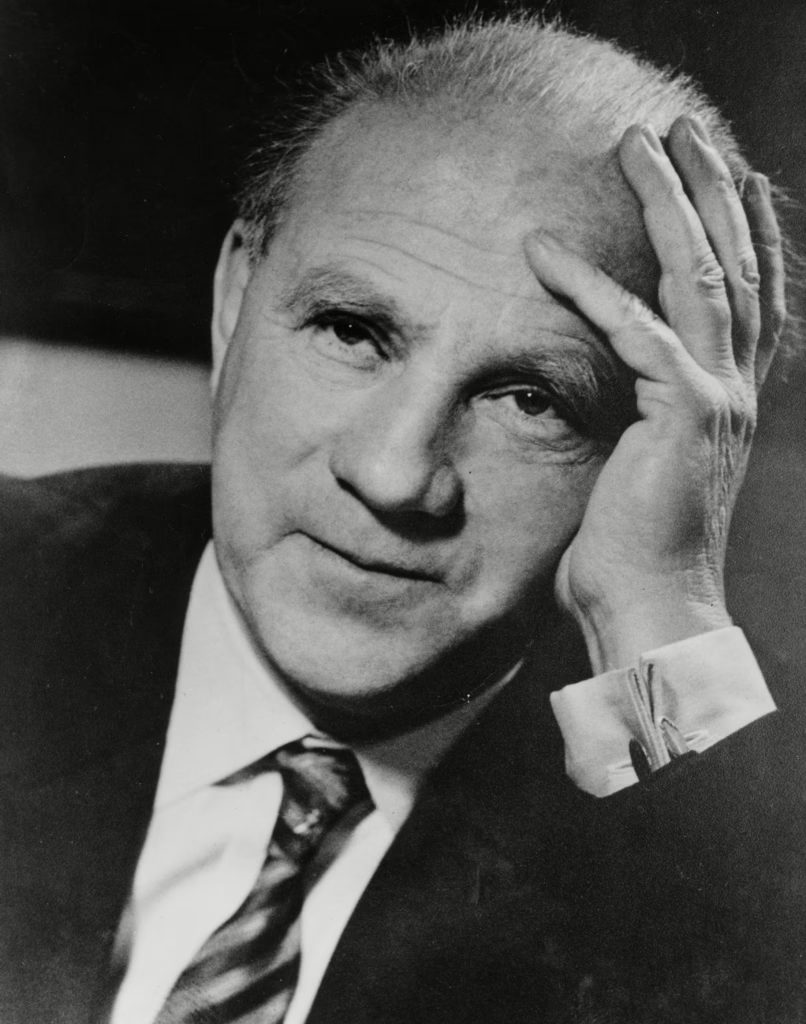
Heisenberg made significant contributions to nuclear physics, including the theory of nuclear forces. He proposed models explaining the structure and stability of atomic nuclei, particularly the role of exchange forces between protons and neutrons. His work influenced the development of quantum field theory and the study of elementary particles.
S-Matrix Theory and Quantum Field Theory
In the post-war period, Heisenberg explored the S-matrix approach to particle interactions, which focuses on observable quantities like scattering amplitudes rather than unobservable intermediate states. He also worked on nonlinear spinor field theories in an attempt to unify fundamental forces, although these efforts were less influential than his earlier work.
Contributions to Turbulence and Philosophy of Science
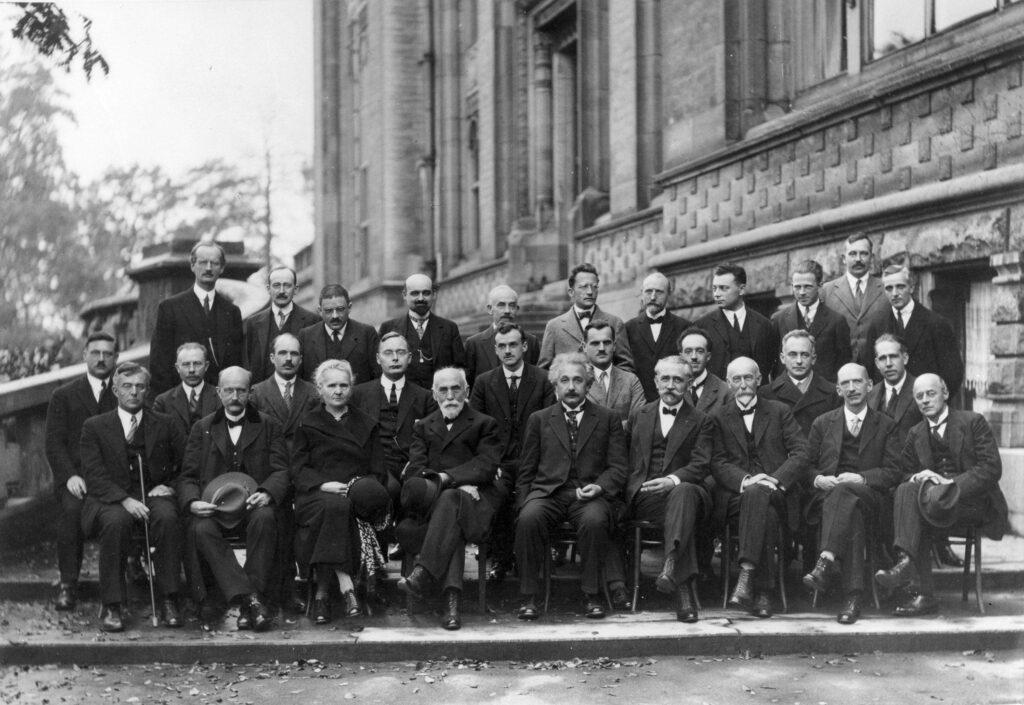
Later in his career, Heisenberg studied turbulence in fluid dynamics, applying statistical methods to understand chaotic systems. He also wrote extensively on the philosophical implications of quantum mechanics, advocating for a view of science grounded in observable phenomena and mathematical structure.
Werner Heisenberg's Accomplishments
Awards and Honours
Heisenberg received numerous prestigious awards throughout his career. In 1932, he was awarded the Nobel Prize in Physics for the creation of quantum mechanics and its application to atomic systems. He also received the Max Planck Medal in 1933, recognising his outstanding contributions to theoretical physics. He was elected to several prominent scientific academies, including the Royal Society of London, the American Academy of Arts and Sciences, and the Pontifical Academy of Sciences. In post-war Germany, he was honoured with the Grand Cross of the Order of Merit of the Federal Republic of Germany, one of the nation’s highest civilian awards.
Legacy
Heisenberg’s legacy is profound and enduring. His work fundamentally changed the way scientists understand nature at the quantum level. The uncertainty principle remains a cornerstone of quantum mechanics and has influenced philosophical discussions about determinism and the limits of human knowledge. Beyond his scientific contributions, Heisenberg played a key role in rebuilding German science after World War II, serving as director of the Max Planck Institute for Physics and advocating for peaceful uses of nuclear energy. His influence extends beyond physics into philosophy, education, and public policy, making him one of the most significant figures in 20th-century science.
Explore Further
Continue learning about the lives of the people that shaped nuclear history.
Rudolf Peierls – The Physicist Who Made the Atomic Bomb Possible
J. Robert Oppenheimer – Father of the Atomic Bomb
William Penney – Building the UK’s Nuclear Deterrent
Hyman G. Rickover – Father of the Nuclear Navy
Did you know? Explore Nuclear also offers great careers information and learning resources.
Below you can find references to the information and images used on this page.
Content References
- Werner Heisenberg – Biographical – NobelPrize.org
- Werner Heisenberg Biography – life, family, children, young, son, information, born, time
- Werner Heisenberg – Important Scientists – The Physics of the Universe
- Werner Heisenberg – Wikipedia
- Home – Heisenberg Web Exhibit
- Werner Heisenberg | Biography, Nobel Prize, & Facts | Britannica
Image References
- Porträt Werner Heisenberg – Unknown author – CC BY-SA 3.0 DE
- Werner Karl Heisenberg in 1927 – Unknown author – Public Domain
- Werner Heisenberg – American Institute of Physics – Free to use
- Solvay conference 1927 – Benjamin Couprie – Public Domain
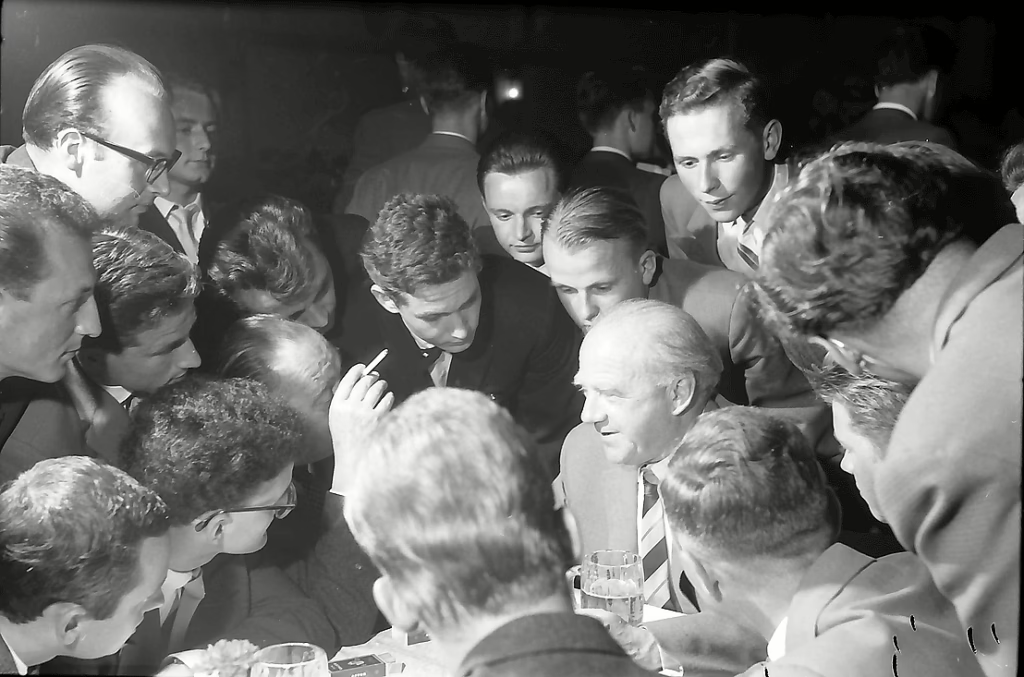
- Werner Heisenberg im Kreise von Studenten – Willy Pragher – CC BY 4.0