
Niels Bohr's Life
Life and Work
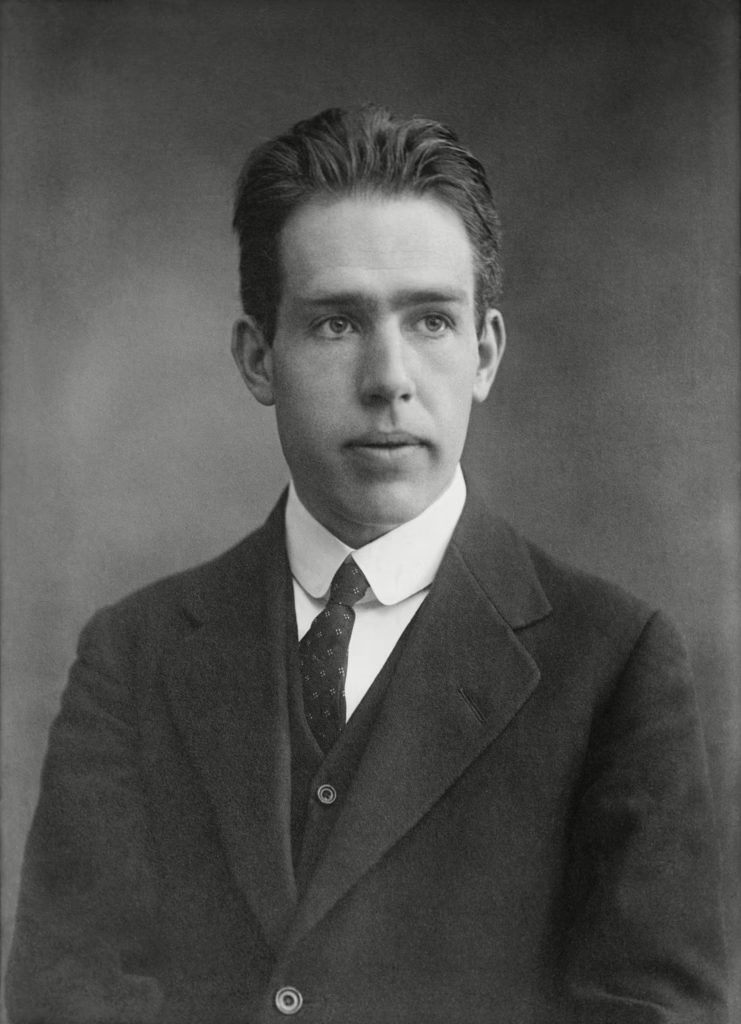
Niels Henrik David Bohr was born on October 7, 1885, in Copenhagen, Denmark, into an academic family. His father, Christian Bohr, was a professor of physiology, and his mother, Ellen Adler, came from a distinguished family in education. Growing up in this intellectual environment, Bohr developed a strong interest in science. He studied at the University of Copenhagen, earning his master’s degree in 1909 and his doctorate in 1911.
Bohr’s most famous contribution came in 1913, when he proposed the Bohr model of the atom, which introduced the idea that electrons orbit the nucleus in fixed energy levels. This model explained atomic spectra and laid the foundation for quantum mechanics. He later expanded his ideas into the principle of complementarity, a cornerstone of the Copenhagen interpretation of quantum mechanics.
In recognition of his work, Bohr received the Nobel Prize in Physics in 1922. He founded the Institute for Theoretical Physics in Copenhagen (later renamed the Niels Bohr Institute), which became a hub for leading physicists from around the world. His influence extended beyond theory, as he mentored many future Nobel laureates.
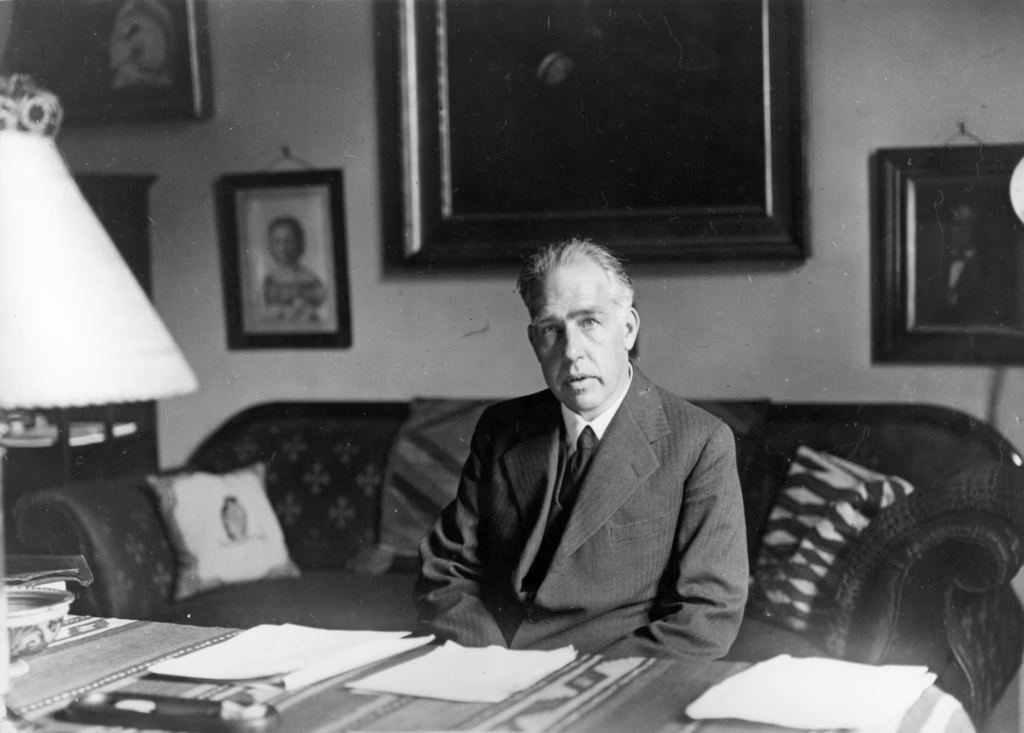
During World War II, Bohr fled Nazi-occupied Denmark and eventually reached the United States, where he contributed to the Manhattan Project. After the war, he became a strong advocate for the peaceful use of atomic energy and promoted international cooperation in science. His efforts earned him global recognition, including the prestigious Order of the Elephant in 1947.
Bohr remained active in scientific and public life until his death on November 18, 1962, in Copenhagen. His legacy endures not only through his scientific discoveries but also through his vision of science as a collaborative and humanistic endeavour.
Niels Bohr's Scientific Contributions
The Bohr Model of the Atom
In 1913, Bohr introduced his revolutionary model of the atom, proposing that electrons orbit the nucleus in fixed energy levels. This explained why atoms emit light at specific wavelengths, solving puzzles in atomic spectra that classical physics could not address. The Bohr model was a crucial step toward quantum mechanics, even though later refinements replaced its details.
Quantum Mechanics and Complementarity
Bohr was a central figure in the development of quantum theory. He introduced the principle of complementarity, which states that particles like electrons can exhibit both wave-like and particle-like behavior, but never both simultaneously. This idea became a cornerstone of the Copenhagen interpretation of quantum mechanics, shaping how physicists understand uncertainty and measurement.
Correspondence Principle
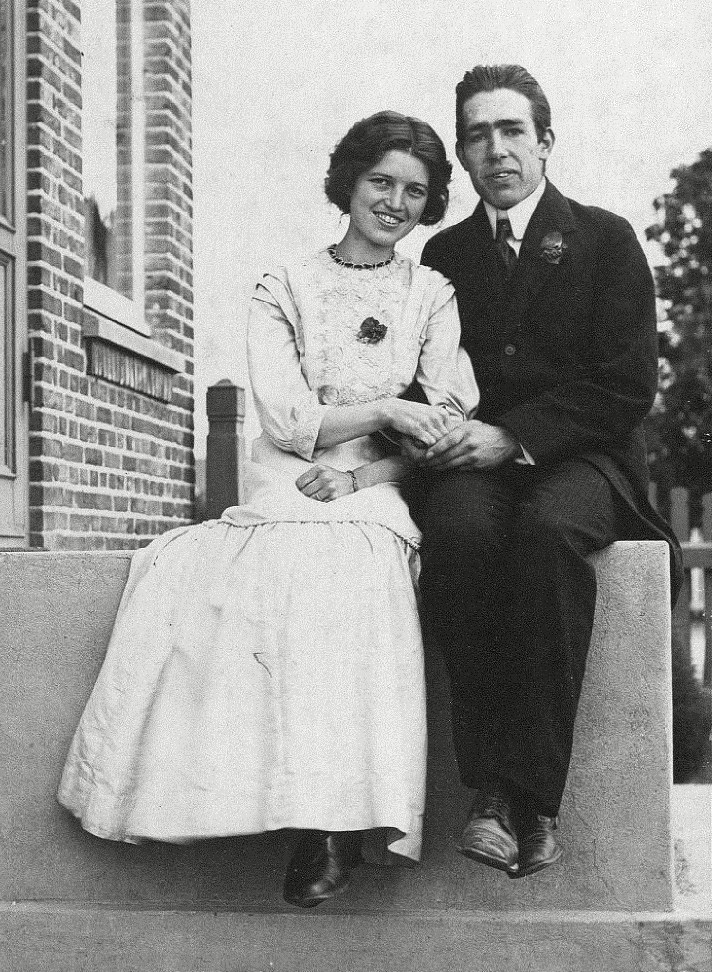
Another key contribution was Bohr’s correspondence principle, which argued that quantum mechanics must align with classical physics in the limit of large systems. This principle helped bridge the gap between old and new physics, ensuring that quantum theory did not discard classical mechanics but extended it.
Nuclear Physics and the Liquid Drop Model
Bohr also made major advances in nuclear physics. His liquid drop model explained nuclear fission by likening the nucleus to a droplet of liquid that could split when disturbed. This model was vital for understanding nuclear reactions and influenced the development of nuclear energy and weapons.
Niels Bohr's Accomplishments
Awards and Distinctions
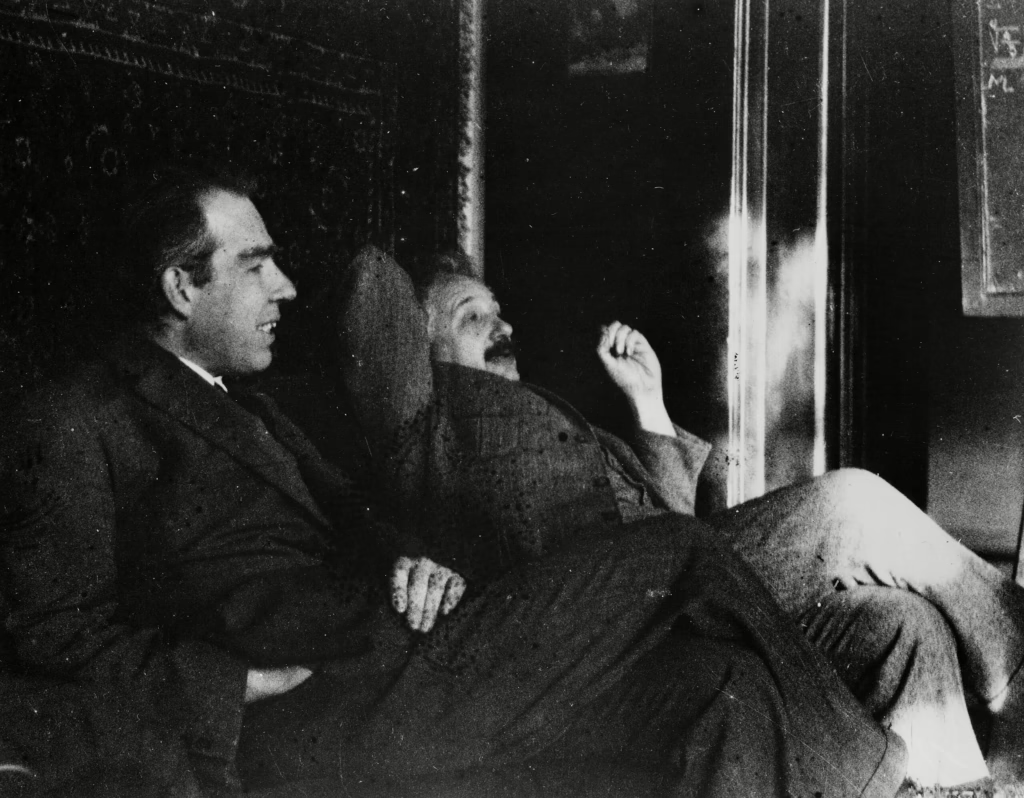
Niels Bohr received the Nobel Prize in Physics in 1922 for his work on atomic structure and radiation. This award recognised his revolutionary Bohr model of the atom, which explained atomic spectra and laid the foundation for quantum mechanics. In 1947, he was awarded the Order of the Elephant, Denmark’s highest honour, a distinction rarely given to scientists, symbolising his importance not only to science but also to Danish national identity.
Institutional Legacy
Bohr founded the Institute for Theoretical Physics in Copenhagen (later renamed the Niels Bohr Institute) in 1921. It became a global hub for theoretical physics, attracting and training many future Nobel laureates, including Werner Heisenberg and Wolfgang Pauli. The institute remains a leading research centre today, continuing Bohr’s vision of collaborative science.
Cultural and Global Impact
Beyond physics, Bohr is remembered as one of Denmark’s greatest intellectual figures. His advocacy for the peaceful use of nuclear energy after World War II highlighted his commitment to ethical science. His name endures in institutions, medals, and the broader narrative of modern physics, symbolising both scientific brilliance and moral responsibility.
Explore Further
Continue learning about the lives of the people that shaped nuclear history.
Henri Becquerel – The Dawn of Atomic Discovery
Eugene Wigner – A Life Shaped by Symmetry and Science
Marie Curie – A Symbol of Perseverance, Intelligence and Scientific Curiosity
Pierre Curie – Unlocking the Secrets of Magnetism and Matter
Did you know? Explore Nuclear also offers great careers information and learning resources.
Below you can find references to the information and images used on this page.
Content References
Image References
- Niels Bohr – LOC – ggbain – 35303 – Bain News Service – Public Domain
- Niels Bohr 1935 – Unknown author – Public Domain
- Niels Bohr and Margrethe engaged 1910 – Unknown author – Public Domain
- Niels Bohr Albert Einstein by Ehrenfest – Paul Ehrenfest – Public Domain
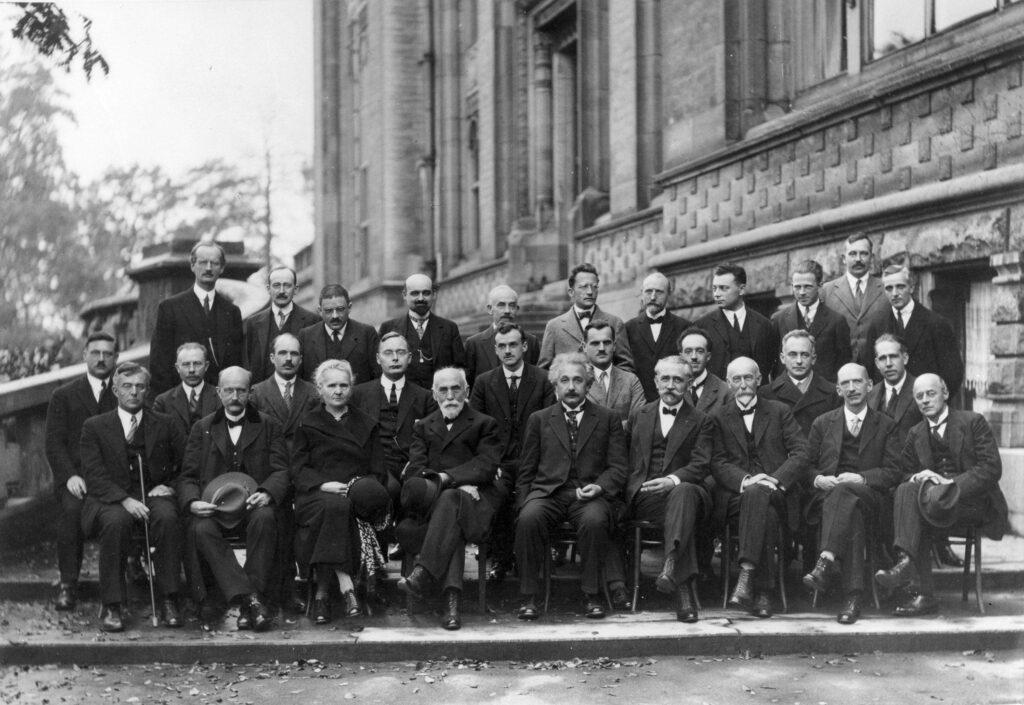
- Solvay conference 1927 Version2 – Benjamin Couprie – Public Domain