
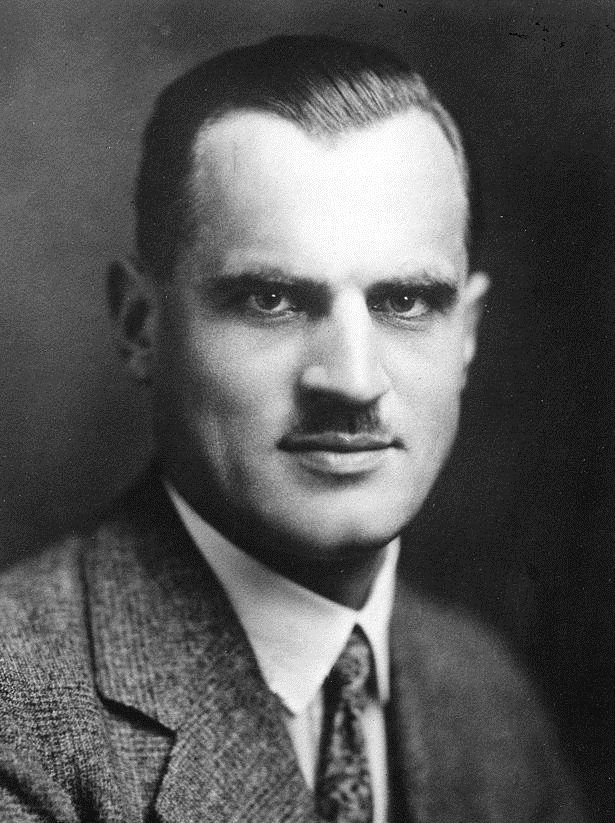
Arthur Compton's Life
Life and Work
Arthur Holly Compton was born on 10 September 1892 in Wooster, Ohio, into an academically distinguished family; his father was a philosophy professor and dean, and his brothers would later become prominent university presidents. He studied at the College of Wooster, earning his Bachelor of Science in 1913, before moving to Princeton University, where he completed his M.A. in 1914 and Ph.D. in 1916. After a brief period teaching physics at the University of Minnesota, he worked as a research engineer at the Westinghouse Lamp Company, gaining practical experience in applied physics before spending a year at Cambridge University as a National Research Council Fellow.
Compton’s academic career advanced rapidly. In 1920, he became Wayman Crow Professor of Physics and head of the physics department at Washington University in St. Louis, and in 1923 he moved to the University of Chicago, where he conducted the ground-breaking research that defined his scientific legacy. His most famous contribution was the discovery of the Compton effect, demonstrating that X‑rays scatter off electrons like particles rather than waves. This finding provided crucial evidence for quantum theory and earned him the 1927 Nobel Prize in Physics. His work also extended to cosmic rays, where he helped show that they include positively charged particles.
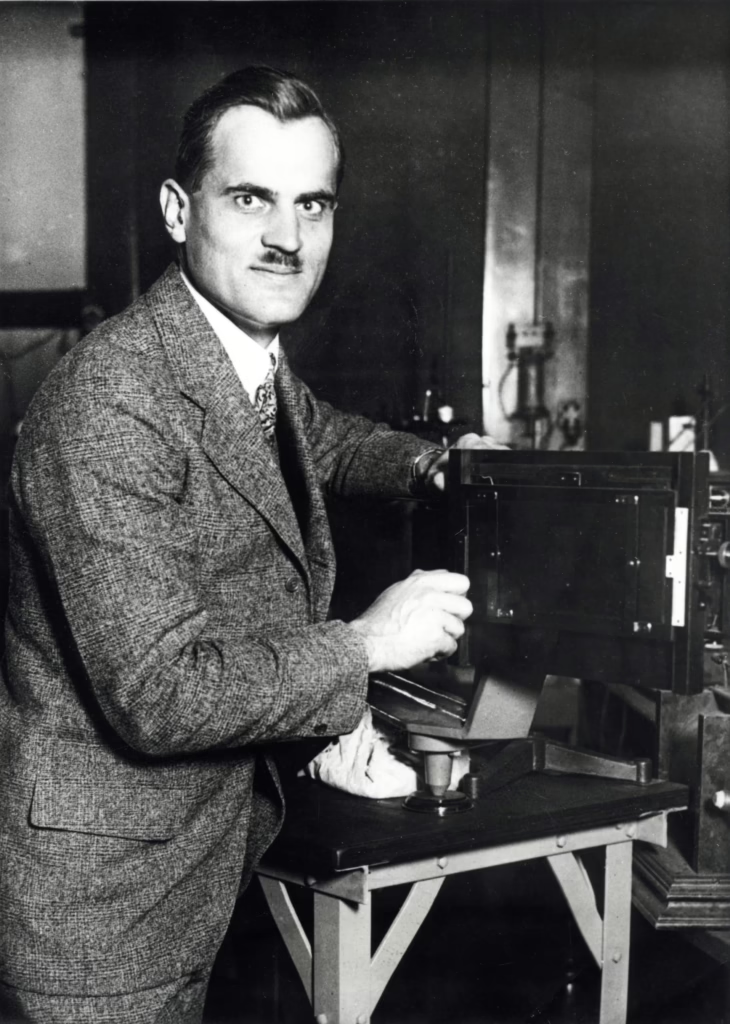
During World War II, Compton played a major role in the Manhattan Project, coordinating research that contributed to the development of the first atomic bombs. After the war, he returned to Washington University in St. Louis as chancellor, guiding the institution through a period of expansion and scientific growth. Throughout his career, he received numerous honours, including the Matteucci Medal, the Hughes Medal, and the U.S. Medal for Merit.
Compton spent his final years continuing his scientific and academic work, and he died on 15 March 1962 in Berkeley, California, at the age of 69. His legacy endures as one of the key figures who shaped modern physics, particularly through his contributions to quantum mechanics and high‑energy astrophysics.
Arthur Compton's Work
X‑Ray Scattering and Atomic Structure
Before his Nobel‑winning work, Compton had already advanced the understanding of X‑ray scattering and the distribution of electrons in atoms. His doctoral thesis, The Intensity of X‑Ray Reflection and the Distribution of the Electrons in Atoms (1917), helped refine early models of atomic structure and the interaction between radiation and matter.
The Compton Effect and Quantum Physics
Arthur Compton’s most influential scientific contribution was the discovery of the Compton effect, published in 1922. By directing X‑ray photons at electrons in a metal, he demonstrated that the scattered X‑rays had a longer wavelength because part of their energy had been transferred to the electrons. This experiment provided decisive evidence that electromagnetic radiation behaves as particles (photons) as well as waves, confirming and extending Einstein’s quantum theory of light. The discovery reshaped modern physics and earned Compton the 1927 Nobel Prize in Physics.
Research on Cosmic Rays
Compton also made major contributions to the study of cosmic rays, high‑energy particles arriving from space. His global measurements of cosmic‑ray intensity helped show that these rays are charged particles, not gamma radiation as previously believed. His work clarified the nature of cosmic radiation and influenced the development of particle physics and astrophysics.
Leadership in Nuclear Research
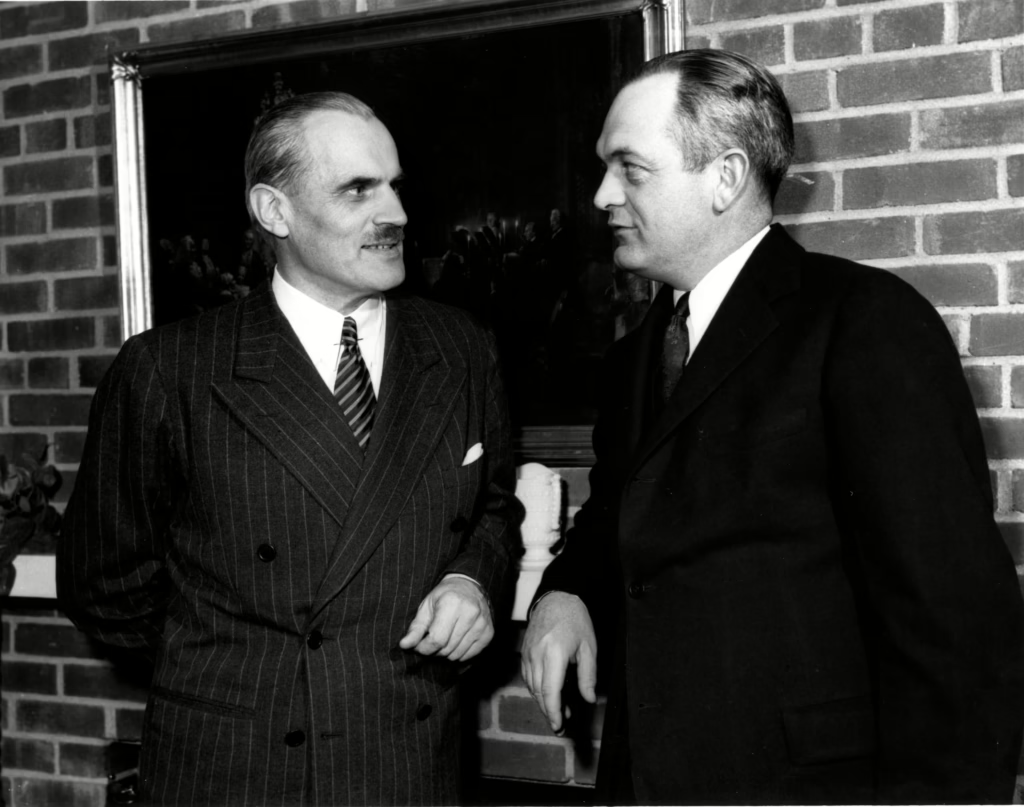
During the Second World War, Compton played a central scientific and administrative role in the Manhattan Project. As director of the Chicago Metallurgical Laboratory, he oversaw research that led to Chicago Pile‑1, the first controlled, self‑sustaining nuclear chain reaction. His leadership helped coordinate theoretical physics, reactor design, and materials science, making him a key figure in the development of nuclear energy and weaponry.
Arthur Compton's Accomplishments
Awards and Honours
Arthur Compton received some of the most prestigious scientific awards of the 20th century. His most significant recognition was the 1927 Nobel Prize in Physics, awarded for his discovery of the Compton effect. This achievement placed him among the central figures of early quantum physics.
He went on to receive several other major honours, including the Matteucci Medal in 1930, the Hughes Medal in 1940, and the Franklin Medal in 1940, each acknowledging his contributions to physics and his pioneering work in X‑ray scattering and cosmic rays. In 1946, he was awarded the U.S. Medal for Merit, one of the highest civilian honours in the United States, recognising his leadership in wartime scientific research, particularly his role in the Manhattan Project.
Legacy
Compton’s legacy is defined by his transformative contributions to quantum physics and high‑energy astrophysics. The Compton effect remains a foundational concept taught in physics worldwide, and it continues to influence modern research in particle physics, radiation science, and cosmology.
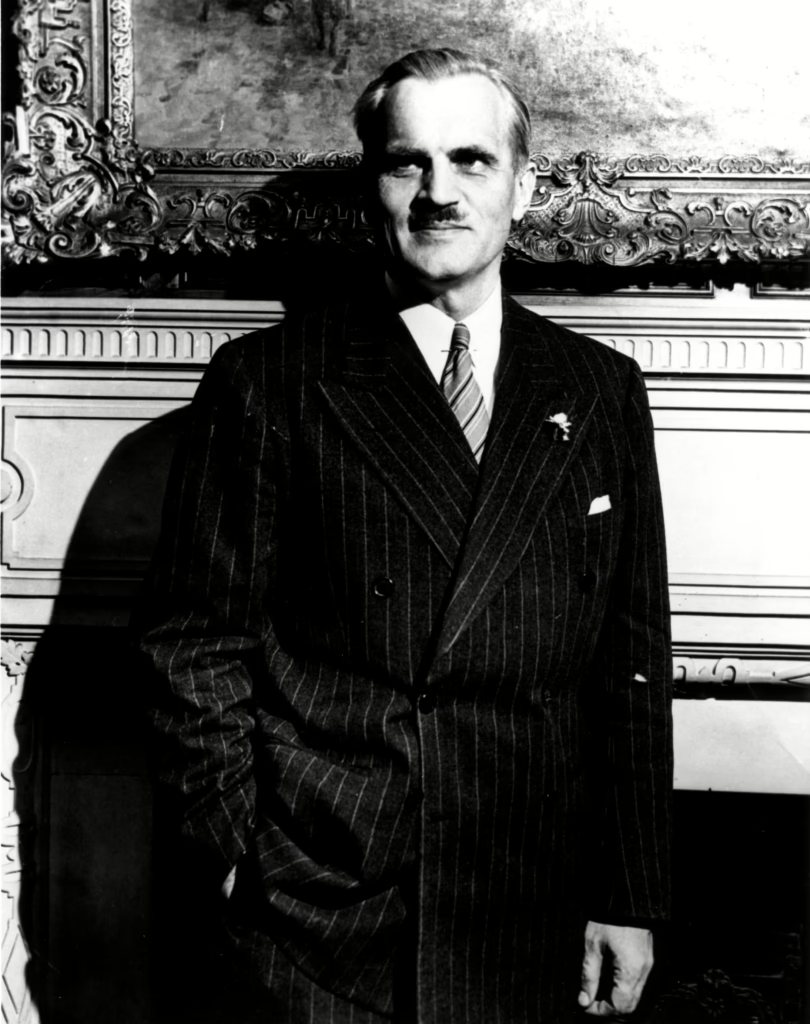
Beyond his scientific discoveries, Compton’s leadership in the Manhattan Project and his role in achieving the first controlled nuclear chain reaction left a lasting imprint on nuclear science and global history. His career also inspired generations of physicists, and his name remains associated with scientific excellence, educational leadership, and the advancement of modern physics.
Explore Further
Continue learning about the lives of the people that shaped nuclear history.
Lise Meitner – A Pioneering Physicist and Educator
Pierre Curie – Unlocking the Secrets of Magnetism and Matter
Walter Zinn – Building the Foundations of Modern Nuclear Power
Joseph John Thomson – A Pioneer of the Subatomic Age
Did you know? Explore Nuclear also offers great careers information and learning resources.
Below you can find references to the information and images used on this page.
Content References
Image References
- Arthur Compton 1927 – Unknown Author – Public Domain
- Nobelprijswinnaars, Arthur Compton – Unknown Author – Public Domain
- Arthur Compton and Martin D. Whitaker in 1946 – Ed Westcott ENERGY.GOV – Public Domain
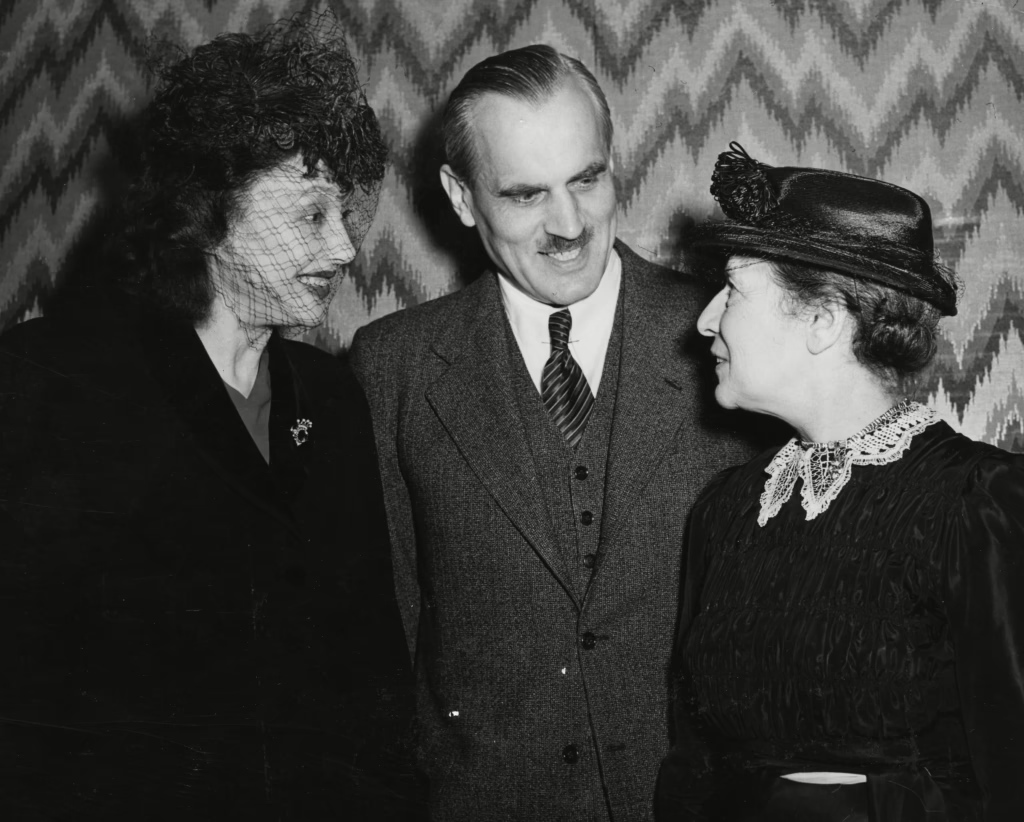
- Lise Meitner standing at meeting with Arthur H. Compton and Katherine Cornell – Smithsonian Institution – No known copyright restrictions
- Arthur Compton at Oak Ridge – Ed Westcott ENERGY.GOV – Public Domain