
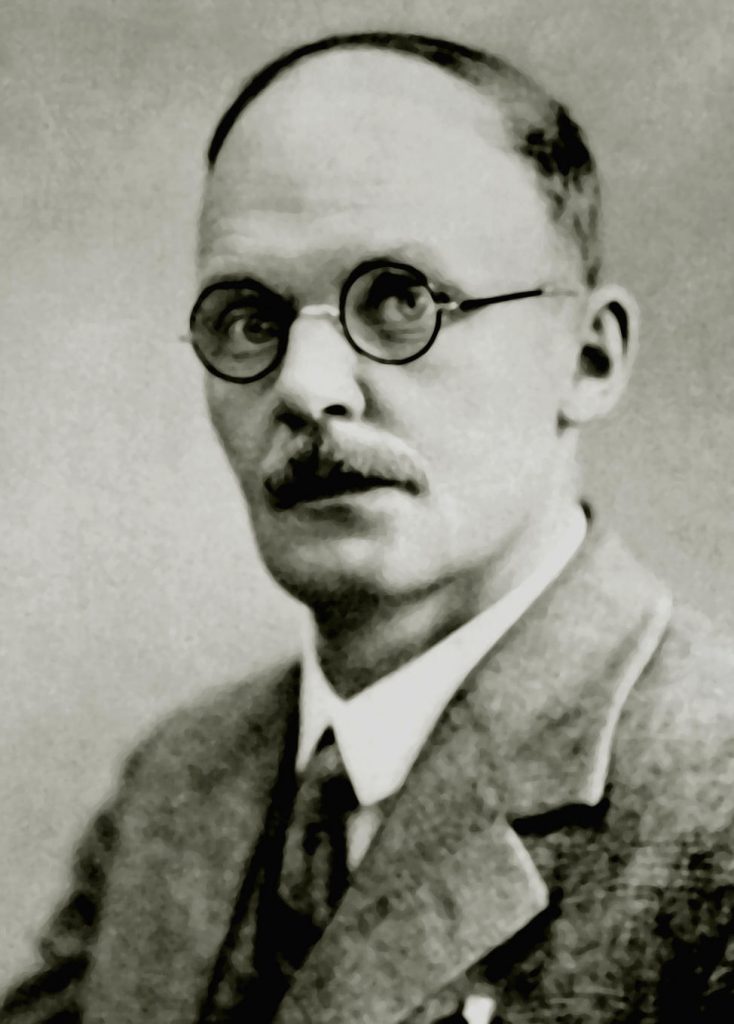
Hans Geiger's Life
Hans Geiger, born on September 30, 1882, in Neustadt an der Haardt, Germany, was a key figure in the development of nuclear physics and radiation detection. Coming from an academically inclined family, Geiger pursued his studies in physics and mathematics at the University of Erlangen, where he earned his doctorate in 1906 with research focused on electrical discharges in gases.
His scientific career took a significant turn when he joined forces with Ernest Rutherford at the University of Manchester in 1907. Together with Ernest Marsden, Geiger conducted the famous gold foil experiment, later known as the Geiger–Marsden experiment. This experiment was instrumental in the development of Rutherford’s nuclear model of the atom. In 1911, Geiger and physicist John Mitchell Nuttall formulated the Geiger–Nuttall law, which described the relationship between radioactive decay and the energy of emitted particles.
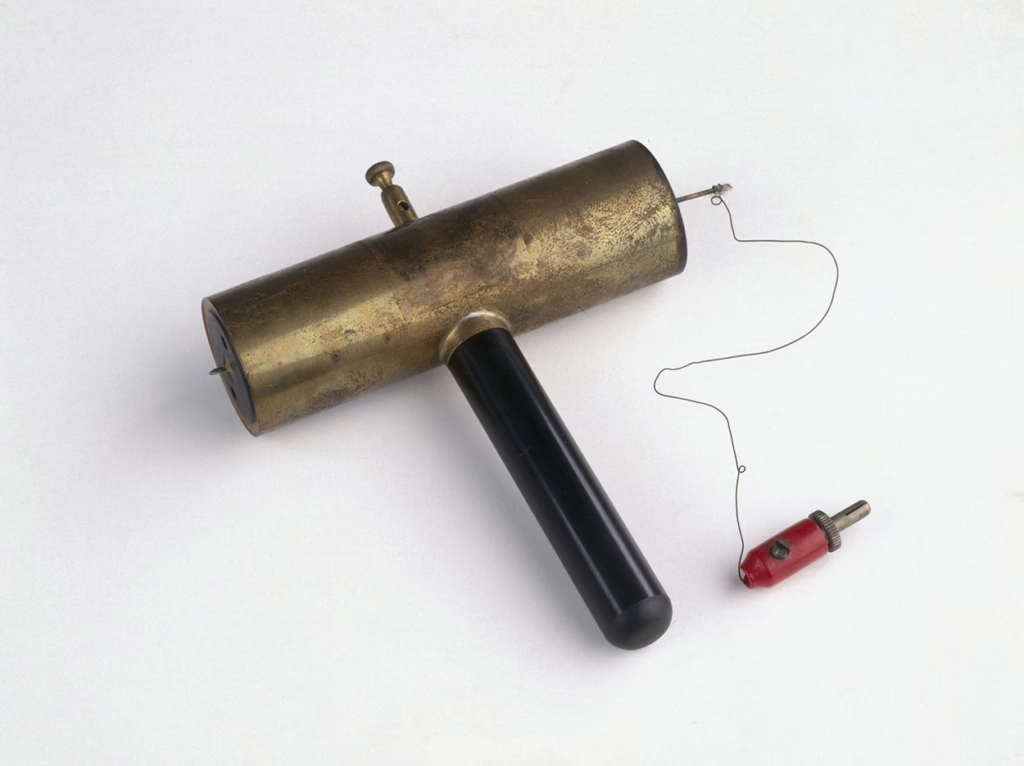
Geiger’s name became widely known after he invented the Geiger–Müller counter in 1928, alongside his student Walther Müller. This device could detect various forms of ionising radiation, including alpha, beta, and gamma particles, and its design remains at the core of modern radiation detectors. With its characteristic clicking sound, the Geiger counter became essential in medical, industrial, and scientific settings, enabling people to measure and monitor radiation levels reliably and easily.
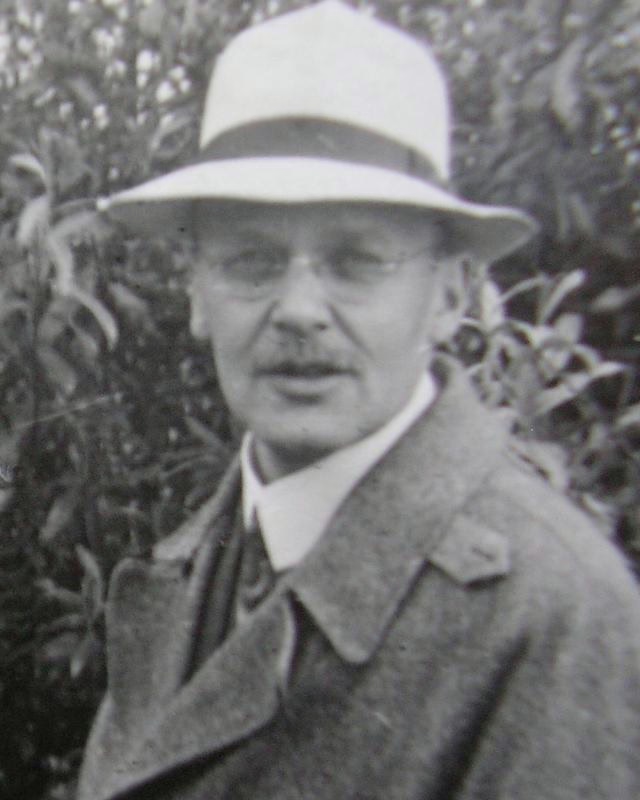
Throughout his academic career, Geiger held positions at prestigious institutions, including the Physikalisch-Technische Reichsanstalt, the University of Kiel, the University of Tübingen, and finally the Technische Universität Berlin. His work spanned numerous areas within nuclear physics, from studying cosmic rays and artificial radioactivity to participating in Germany’s wartime Uranium Club, which explored nuclear technology during World War II.
Despite his brilliance, Geiger’s ethical record during the Nazi era was mixed. While he signed a petition opposing governmental interference in academic institutions, he did not speak out publicly in support of Jewish colleagues who faced persecution. His final years were marked by the turmoil of the war, and he died on September 24, 1945, shortly after surviving the Battle of Berlin.
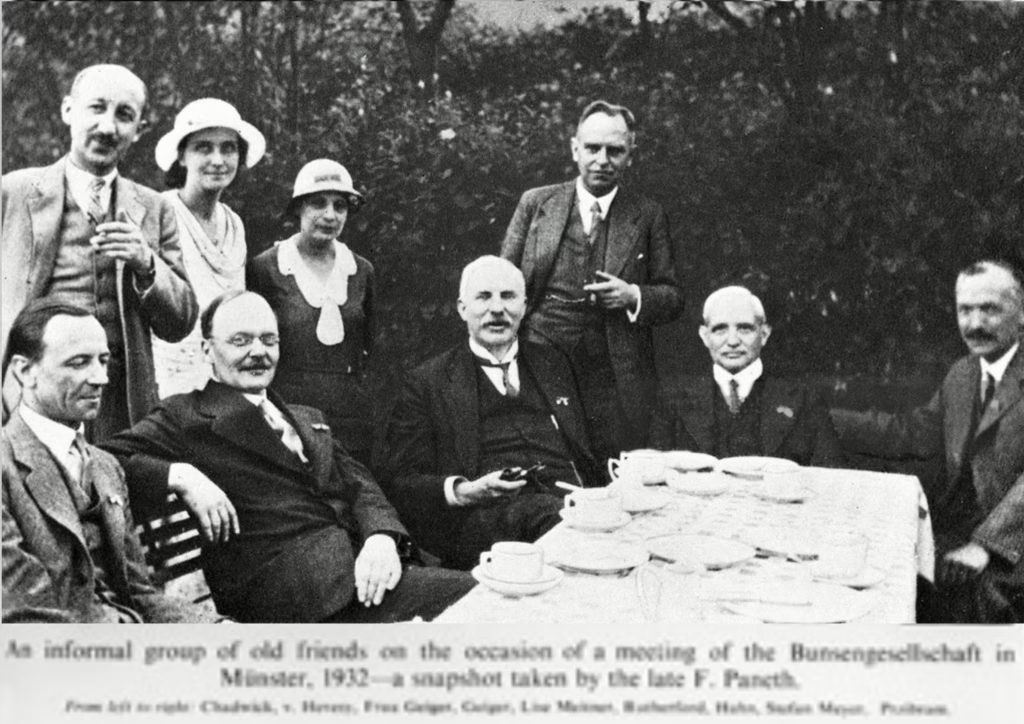
Hans Geiger's Scientific Contributions
Hans Geiger’s scientific achievements went far beyond the invention of the Geiger counter.
Rutherford Scattering Experiments (1908–1913)
Early in his career, Geiger played a central role in experiments that reshaped our understanding of atomic structure. While working with Ernest Rutherford and Ernest Marsden at the University of Manchester, he helped conduct the gold foil experiment, which revealed that atoms consist of a dense, positively charged nucleus surrounded by empty space. This insight led to the nuclear model of the atom and effectively overturned the plum pudding model that had previously dominated scientific thought.
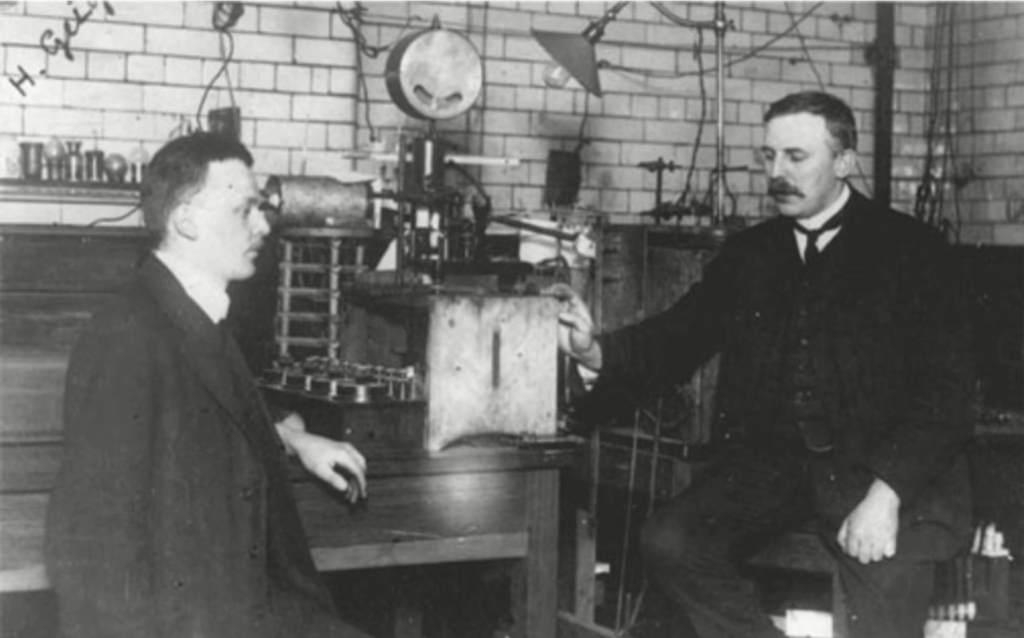
Geiger–Nuttall Law (1911)
In 1911, Geiger teamed up with John Mitchell Nuttall to formulate what became known as the Geiger–Nuttall law. This law established a quantitative relationship between the radioactive decay rate of an element and the energy of the alpha particles it emits. The law not only explained trends in radioactive behaviour but also offered predictive power in determining the properties of isotopes, critical in both theoretical and applied nuclear physics.
Bothe–Geiger Coincidence Experiment (1924–1925)
Geiger’s scientific influence continued in the 1920s when he collaborated with Walther Bothe to pioneer the coincidence method in particle detection. Their work validated the Compton effect and demonstrated the conservation of energy during particle interactions. These experiments supported quantum theories of light and laid the groundwork for advanced detection methods used in particle physics experiments today.
Geiger–Müller Tube (1928)
Perhaps his most enduring invention was the Geiger–Müller counter, developed with his student Walther Müller in 1928. This device allowed for practical and widespread detection of alpha, beta, and gamma radiation. Its ease of use made radiation monitoring possible not only in laboratories but also in medical settings, nuclear facilities, and even by the general public. The counter’s distinct clicking sound became iconic and synonymous with radiation detection.
Cosmic Ray Research, Artificial Radioactivity, and Nuclear Fission
Geiger was also among the first physicists to observe cosmic-ray showers while working at the University of Tübingen, marking an important milestone in astrophysics. Later, at Technische Universität Berlin, he explored artificial radioactivity and nuclear fission—topics that gained intense significance during World War II. As a member of Germany’s Uranium Club, Geiger was involved in wartime efforts to study nuclear technology, although historical records suggest he was not deeply engaged in weapons development.
Hans Geiger's Accomplishments
Hughes Medal
Geiger received the Hughes Medal from the Royal Society in 1929, awarded for his pioneering work in radiation detection and the development of the Geiger–Müller counter. This device became a cornerstone of experimental physics, enabling scientists to detect and measure ionizing radiation with unprecedented accuracy. In 1937, he was honored with the Duddell Medal and Prize, which recognized his outstanding contributions to experimental physics and instrumentation.
Duddell Medal
In 1937, he was honored with the Duddell Medal and Prize, which recognized his outstanding contributions to experimental physics and instrumentation.
Legacy
Beyond formal accolades, Geiger’s true legacy lies in the enduring impact of his inventions and discoveries. The Geiger–Müller counter, developed with Walther Müller in 1928, remains one of the most widely used tools for detecting radiation. Its influence spans fields from nuclear research and medicine to environmental monitoring and public safety. The device’s iconic clicking sound has become a symbol of vigilance in the atomic age.
Explore Further
Continue learning about the lives of the people that shaped nuclear history.
Leona Woods – The Lone Woman of Chicago Pile-1
Rudolf Peierls – The Physicist Who Made the Atomic Bomb Possible
Willard Libby – Reshaping Our Understanding of the Ancient World
Enrico Fermi – Architect of the Nuclear Age
Did you know? Explore Nuclear also offers great careers information and learning resources.
Below you can find references to the information and images used on this page.
Content References
Image References
- Hans Geiger – Unknown author – Public Domain
- Physicist Hans Geiger, 1928 – GFHund – CC BY 3.0
- Bunsentagung 1932 Münster – Friedrich Paneth – Public Domain
- Geiger-Rutherford – Unknown author – Public Domain
- Early Geiger counter, made by Hans Geiger, 1932 – Science Museum London – CC BY-SA 2.0