
Table of Contents
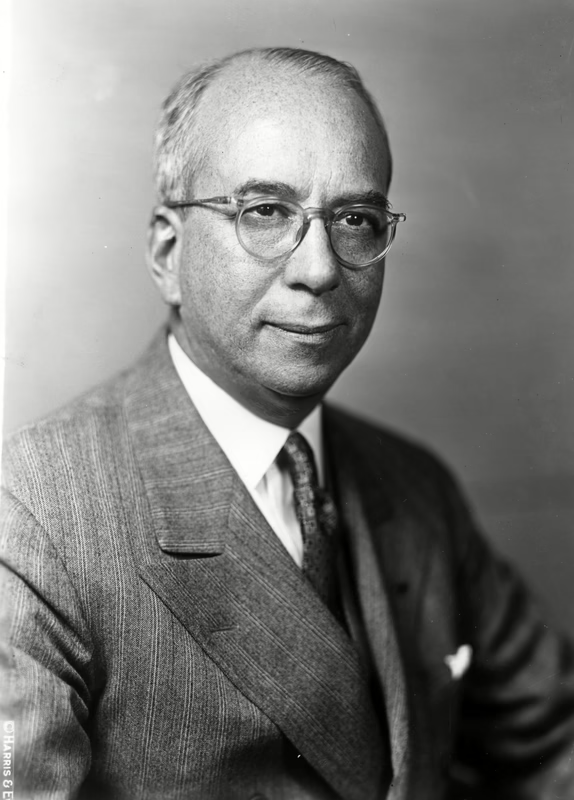
Lewis Strauss's Life
Life and Work
Born in Charleston, West Virginia, Lewis Lichtenstein Strauss grew up in modest circumstances and lost the vision in one eye at age ten. Although he hoped to study physics, financial limitations led him instead to early work with Herbert Hoover during World War I, including food relief efforts in Europe.
After the war, Strauss built a successful career at the investment bank Kuhn, Loeb & Co., eventually becoming a partner and self‑made millionaire. His philanthropic interests included funding radium research after his mother’s death from cancer. He also served in the U.S. Navy from 1926 to 1945, rising to the rank of Rear Admiral and earning several military honours.
Strauss became one of the original members of the U.S. Atomic Energy Commission (AEC) in 1946 and later its chairman in the 1950s. In this role, he was a central figure in the development of nuclear weapons and nuclear power during the early Cold War. He is perhaps most remembered for his role in the 1954 hearings that led to the revocation of J. Robert Oppenheimer’s security clearance, a decision that shaped public debates about science, loyalty, and national security.
His later career included serving as Acting U.S. Secretary of Commerce under President Eisenhower, though his nomination for the permanent post was rejected by the Senate in 1959. Strauss spent his final years largely out of public life and died in 1974 in Virginia, leaving behind a complex legacy intertwined with America’s nuclear age.
Lewis Strauss's Work
Early Career and Public Service Foundations
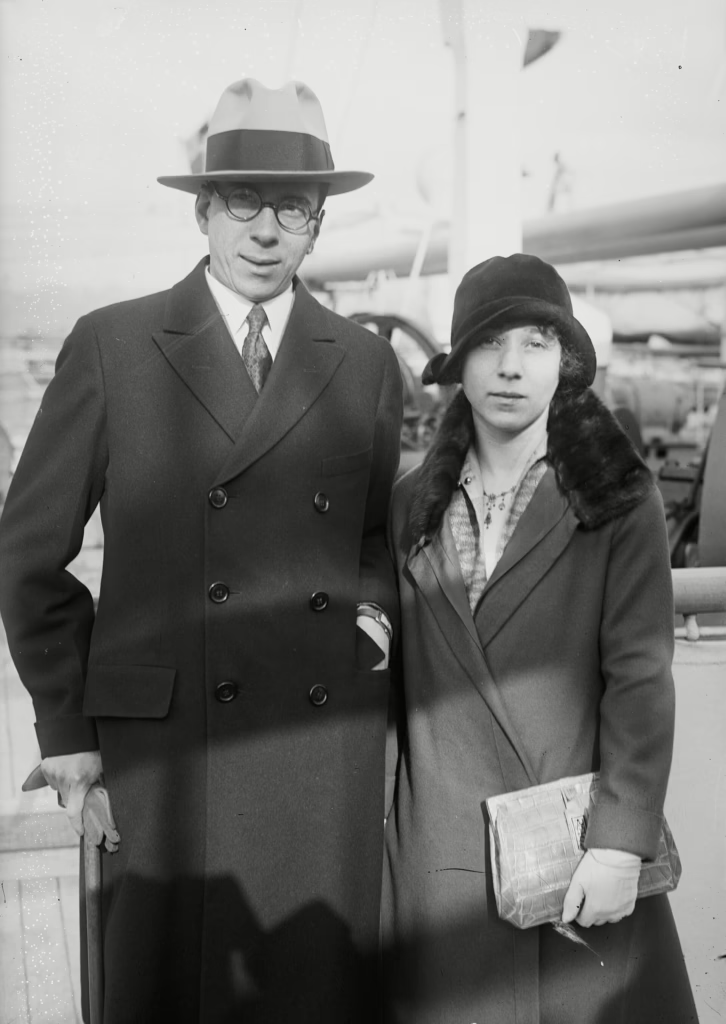
Lewis Strauss began his professional life in public service during World War I, working closely with Herbert Hoover on international food relief. This early exposure to government operations shaped his lifelong interest in national policy. After the war, he entered the world of finance, joining the investment bank Kuhn, Loeb & Co., where he became a partner and accumulated significant wealth. His financial success enabled him to support scientific and medical causes, particularly cancer research.
Naval Service and Wartime Contributions
Strauss served in the U.S. Navy Reserve beginning in the 1920s and remained active through World War II. He rose to the rank of Rear Admiral and played a role in logistics and ordnance planning. His naval experience strengthened his belief in strong national defence and influenced his later positions on nuclear weapons and security.
Atomic Energy Commission Leadership
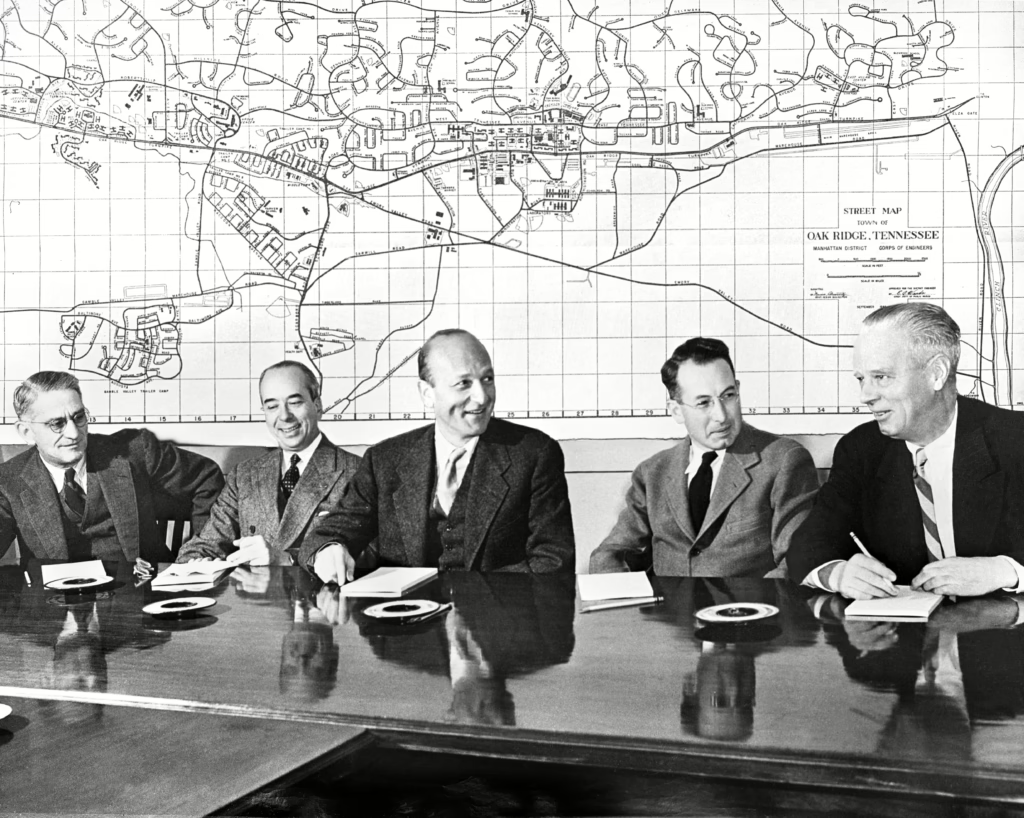
Strauss’s most consequential work came through the U.S. Atomic Energy Commission (AEC). As one of its original commissioners in 1946 and later as chairman (1953–1958), he helped shape early American nuclear policy. He strongly advocated for the development of the hydrogen bomb and pushed for tight security controls over nuclear information. His tenure was marked by both technological ambition and political controversy, most notably his involvement in the 1954 hearings that led to the revocation of J. Robert Oppenheimer’s security clearance. This episode cemented Strauss’s reputation as a fierce anti-communist and a polarising figure in the scientific community.
Promotion of Nuclear Power
Beyond weapons, Strauss championed civilian nuclear energy. He famously predicted that nuclear power would one day be “too cheap to meter,” reflecting his optimism about technological progress. Under his leadership, the AEC supported early reactor development and laid groundwork for the commercial nuclear industry, though his predictions proved overly ambitious.
Secretary of Commerce Nomination
In the late 1950s, Strauss served as Acting Secretary of Commerce under President Eisenhower. His attempt to secure Senate confirmation for the permanent role failed after a contentious hearing process, which highlighted longstanding political rivalries and concerns about his leadership style. The rejection effectively ended his government career.
Lewis Strauss's Legacy
Influence on Nuclear Policy
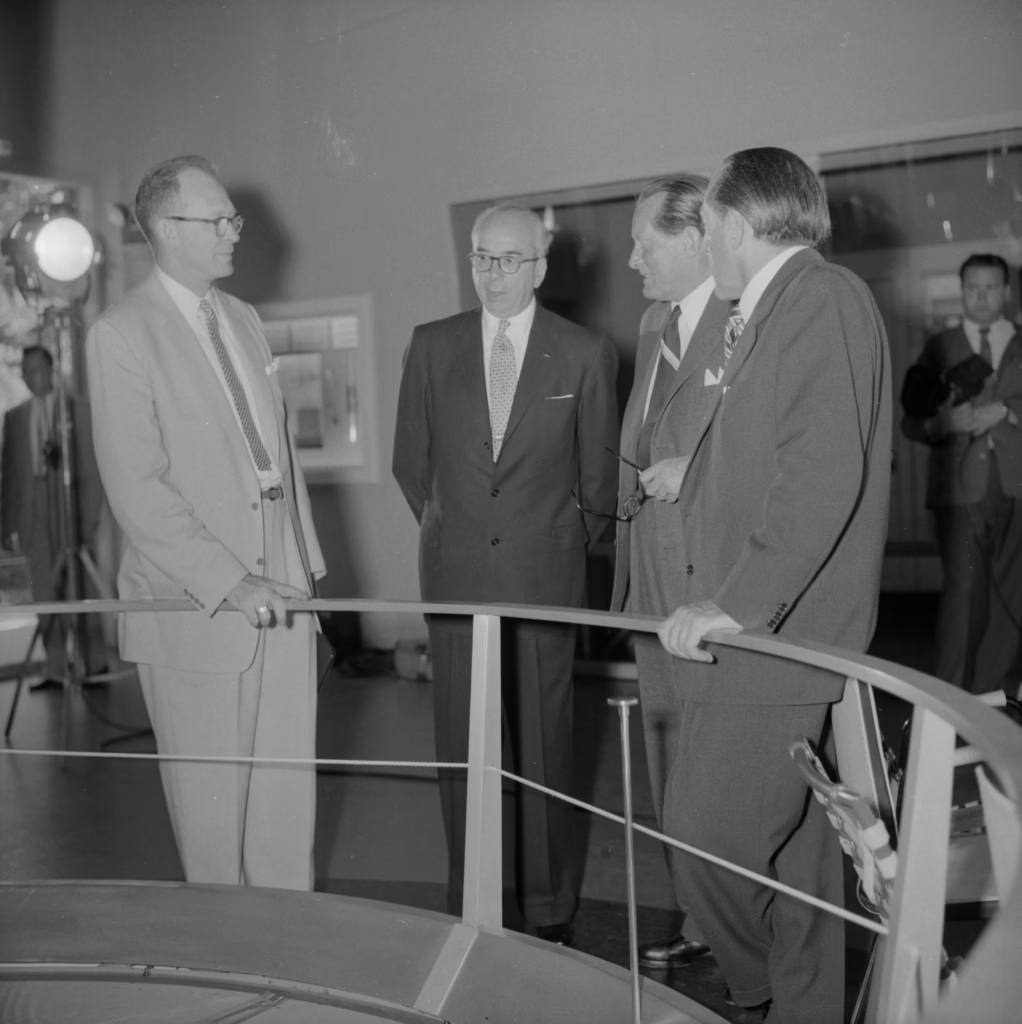
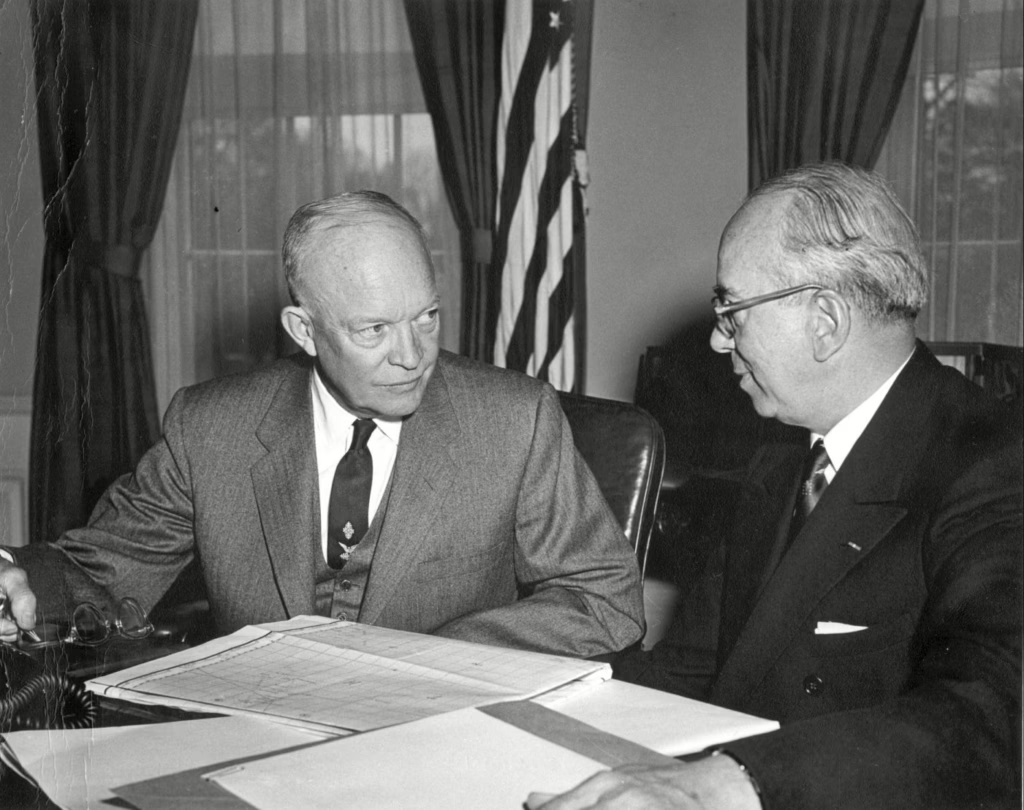
Strauss’s influence was most strongly felt in the realm of atomic energy. As both an original member and later chairman of the U.S. Atomic Energy Commission, he played a decisive role in shaping early Cold War nuclear strategy. He championed the development of the hydrogen bomb, advocated strict security protocols, and pushed for rapid expansion of nuclear capabilities. Strauss’s stance often placed him at the centre of political and scientific disputes, while his firm anti‑communist posture and belief in strong national defence made him a key figure in the intersection of science and national security during the 1950s.
Legacy and Historical Assessment
Strauss’s legacy is complex and often polarising. Supporters view him as a principled defender of national security and a visionary who believed deeply in the promise of nuclear technology. Critics, however, argue that his combative style, secrecy, and role in the Oppenheimer affair damaged trust between government and the scientific community. His failed 1959 nomination for Secretary of Commerce further cemented his reputation as a divisive figure in Washington.
Despite these controversies, Strauss remains a central figure in the history of American nuclear policy. His decisions shaped the trajectory of both military and civilian atomic development, and his career continues to be studied as a case study in the tensions between science, politics, and security during the Cold War.
Explore Further
Continue learning about the lives of the people that shaped nuclear history.
Arthur Eddington – The Man Who Proved Einstein Right
Leslie Groves – The Race to Build the Atomic Bomb
Homi J. Bhabha – Father of the Indian Nuclear Programme
Lise Meitner – A Pioneering Physicist and Educator
Did you know? Explore Nuclear also offers great careers information and learning resources.
Below you can find references to the information and images used on this page.
Content References
Image References
- Lewis Strauss – Harris-Ewing collection – No known copyright restrictions
- Lewis Strauss & wife – Bain News Service, publisher – Public Domain
- AEC Commission First Group Oak Ridge 1947 – doe-oakridge – Public Domain
- Lewis Strauss in Switzerland ETH – Lindroos, Björn Erik – CC BY-SA 4.0
- Eisenhower and Strauss – NARA photograph – Public Domain