
Chien-Shiung Wu's Life
Life and Work
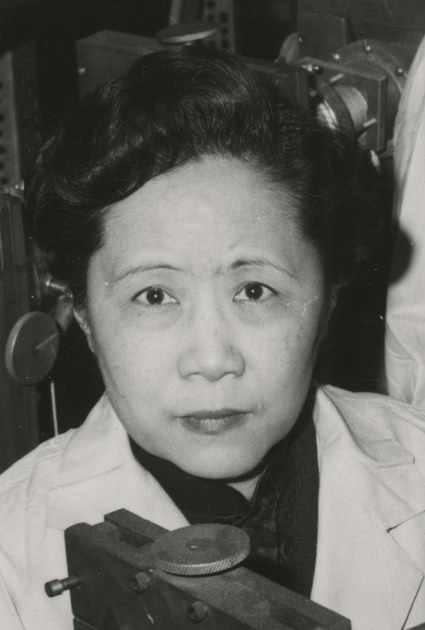
Chien-Shiung Wu was a pioneering Chinese-American physicist whose work fundamentally reshaped our understanding of nuclear and particle physics. Born in 1912 in Liuhe, Jiangsu Province, China, Wu was raised in a progressive household that valued education, especially for women. She pursued physics at National Central University in Nanjing and later moved to the United States, earning her Ph.D. from the University of California, Berkeley in 1940 under the mentorship of Ernest Lawrence, a Nobel laureate and inventor of the cyclotron.
Wu’s career was marked by ground-breaking experimental work. During World War II, she contributed to the Manhattan Project, helping to develop the process for uranium enrichment used in atomic bombs. However, her most famous achievement came in 1956 when she conducted the Wu experiment, which disproved the law of conservation of parity in weak nuclear interactions. This discovery overturned a fundamental assumption in physics and validated the theoretical predictions of Tsung-Dao Lee and Chen-Ning Yang, who later received the Nobel Prize. Wu’s critical role in the experiment was widely acknowledged, though she was controversially excluded from the award.
Throughout her career, Wu broke numerous barriers for women and minorities in science. She became the first female president of the American Physical Society and received many honours, including the National Medal of Science and the Wolf Prize in Physics. Her work not only advanced the field of nuclear physics but also inspired generations of scientists. Chien-Shiung Wu passed away in 1997, leaving behind a legacy of brilliance, perseverance, and trailblazing achievement in the face of adversity.
Chien-Shiung Wu's Scientific Contributions
Nuclear Physics and the Manhattan Project
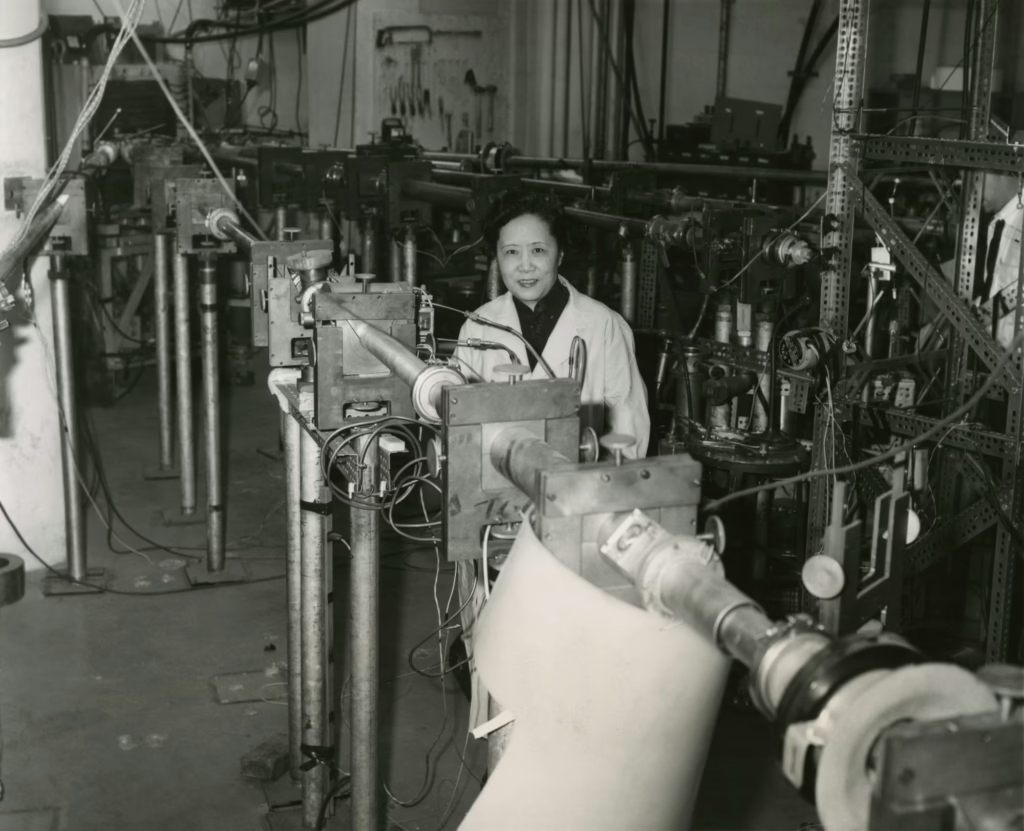
During World War II, Wu joined the Manhattan Project at Columbia University, where she worked on the gaseous diffusion method for separating uranium isotopes. Her expertise in beta decay was instrumental in improving the efficiency of uranium enrichment—a critical step in producing the fissile material used in atomic bombs. Although much of her work was classified, Wu’s contributions helped shape the technological backbone of the U.S. nuclear program.
The Wu Experiment and Parity Violation
Wu’s most celebrated achievement came in 1956 when she conducted a ground-breaking experiment that challenged a fundamental assumption in physics: the conservation of parity. Working with cobalt-60 isotopes cooled to near absolute zero, Wu demonstrated that beta particles emitted during radioactive decay favoured a particular direction, violating mirror symmetry. This result confirmed the theoretical predictions of Tsung-Dao Lee and Chen-Ning Yang, who received the Nobel Prize in Physics in 1957. Wu’s experimental brilliance made the discovery possible, yet she was controversially excluded from the award—a decision widely criticised in the scientific community.
Precision Experiments in Beta Decay
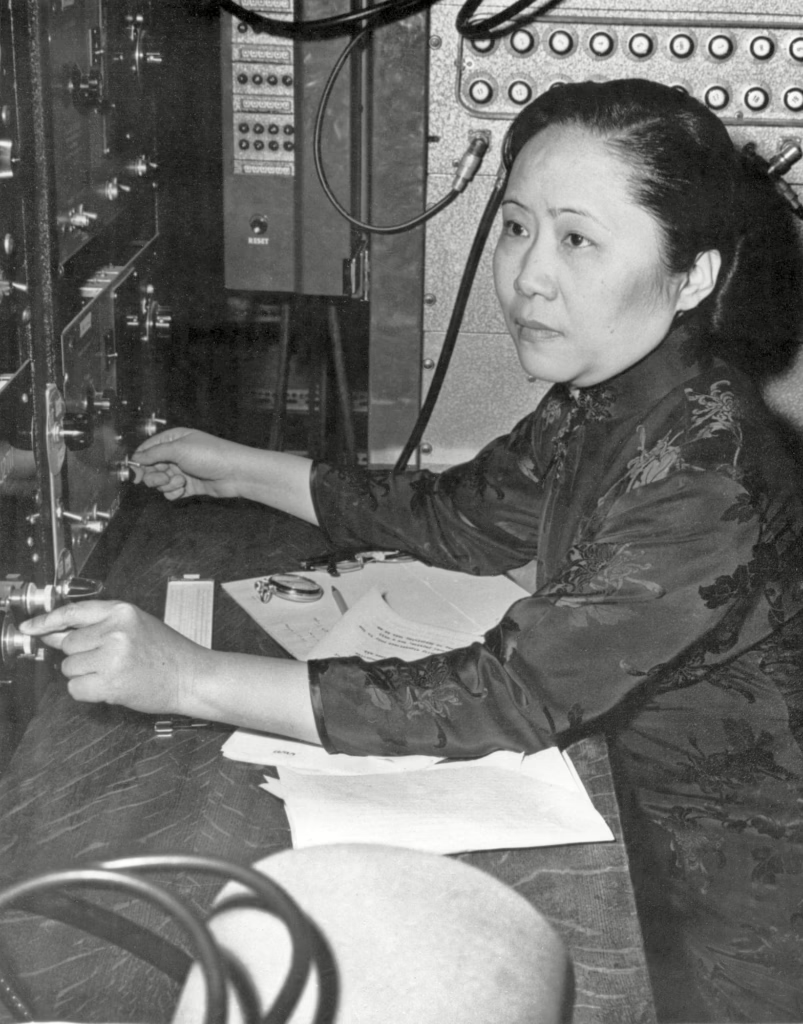
Wu was renowned for her meticulous approach to experimental physics. Her studies of beta decay extended beyond parity violation, providing critical data that refined the understanding of weak nuclear forces. She developed techniques for measuring the angular distribution and energy spectra of emitted particles, which helped validate and constrain theoretical models. Her work contributed to the development of the electroweak theory, a cornerstone of the Standard Model of particle physics.
Chien-Shiung Wu's Accomplishments
Awards and Honours
Chien-Shiung Wu received numerous prestigious awards throughout her career, recognising her contributions to nuclear and particle physics. In 1975, she was awarded the National Medal of Science, one of the highest scientific honours in the United States. She also received the Wolf Prize in Physics in 1978 for her work on beta decay and parity violation.
Wu was elected to the American Academy of Arts and Sciences, the National Academy of Sciences, and became a fellow of the American Physical Society. She was also the first woman to serve as president of the American Physical Society, breaking a significant gender barrier in the scientific community.
International Recognition
Wu’s achievements were recognised globally. She received honorary degrees from institutions such as Harvard University, Princeton University, and Yale University. In 1990, she was inducted into the National Women’s Hall of Fame, and in 1998, the U.S. Postal Service honoured her with a commemorative stamp as part of its “Women in Science” series.
In China, Wu was celebrated as a national hero. Her legacy is honoured through schools and awards named after her, including the Chien-Shiung Wu College at Southeast University in Nanjing.
Advocacy and Mentorship
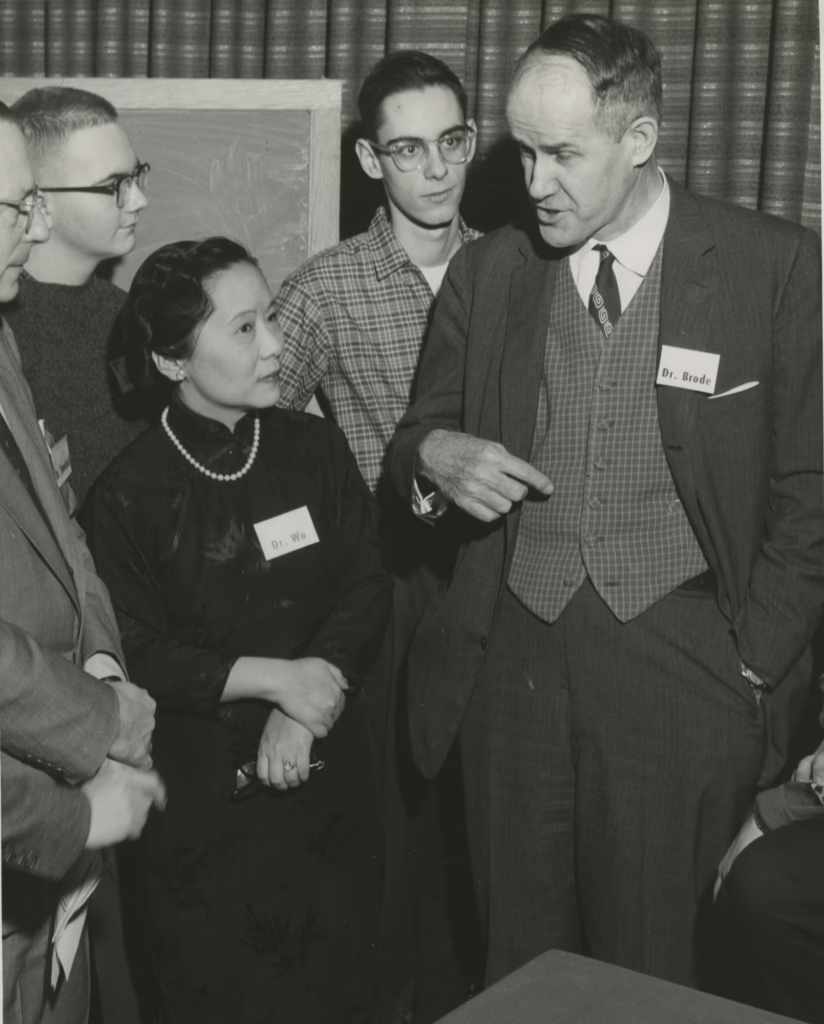
Beyond her research, Wu was a passionate advocate for women in science. She frequently spoke out against gender discrimination and encouraged young women to pursue careers in physics. As a professor at Columbia University, she mentored many students, including women and international scholars, fostering a more inclusive scientific community.
Legacy
Chien-Shiung Wu is remembered as one of the most influential experimental physicists of the 20th century. Her nickname, the “First Lady of Physics,” reflects both her scientific stature and her role as a trailblazer for women in STEM. Despite being overlooked for the Nobel Prize, her legacy endures through her discoveries, her advocacy, and the generations of scientists she inspired.
Explore Further
Continue learning about the lives of the people that shaped nuclear history.
Joseph John Thomson – A Pioneer of the Subatomic Age
Hans Bethe – From Quantum Mechanics to the Stars
Alvin M. Weinberg – The Visionary Behind America’s Early Reactors
Harold Urey – From Deuterium to the Dawn of Life
Did you know? Explore Nuclear also offers great careers information and learning resources.
Below you can find references to the information and images used on this page.
Content References
- Chien-Shiung Wu | National Women’s History Museum
- Dr. Chien-Shiung Wu, The First Lady of Physics (U.S. National Park Service)
- Chien-Shiung Wu – Nuclear Museum
- Life Story: Chien-Shiung Wu, 1912-1997 – Women & the American Story
- Chien-Shiung Wu – Wikipedia
- Chien-Shiung Wu | Biography, Accomplishments, Importance, & Facts | Britannica
Image References
- Chien-shiung Wu (1912-1997) (cropped) – Smithsonian Institution – No known copyright restrictions
- Chien-Shiung Wu (1912-1997) in 1963 – Science Service (Smithsonian Institution) – No known copyright restrictions
- Chien-shiung Wu (1912-1997) – Smithsonian Institution – No known copyright restrictions
- Left to right Chien-shiung Wu (1912-1997) and Dr. Brode – Smithsonian Institution – No known copyright restrictions
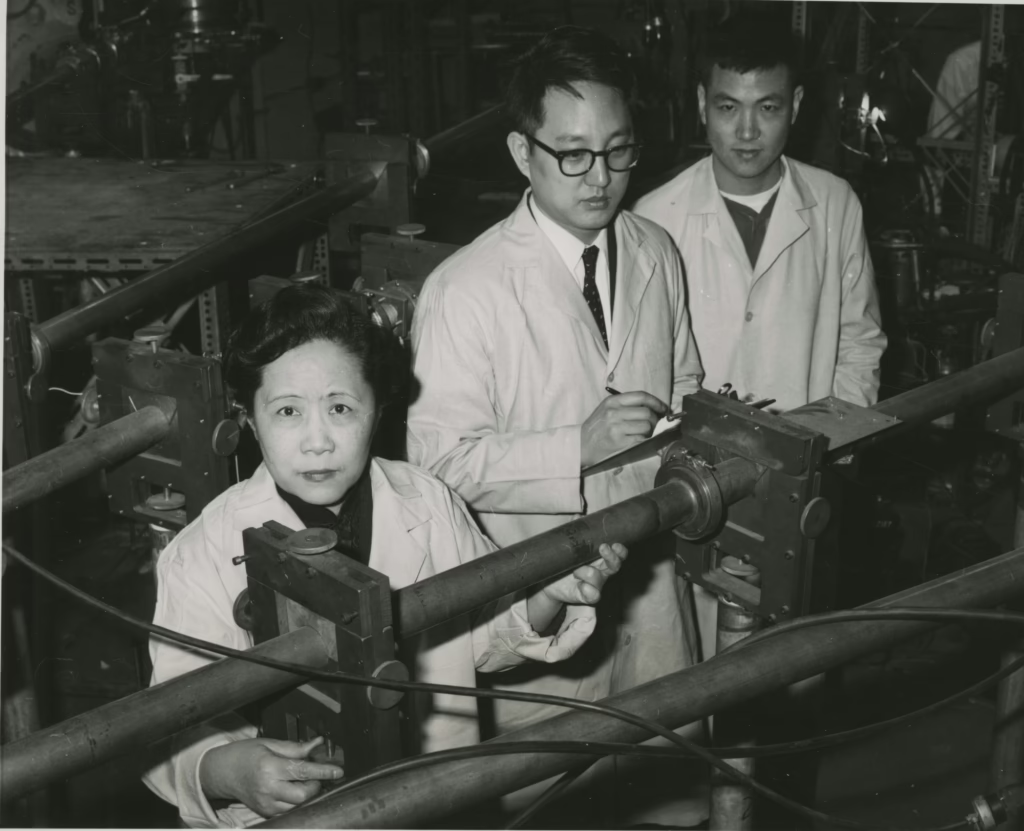
- Left to right Chien-shiung Wu (1912-1997), Y.K. Lee, and L.W. Mo – Smithsonian Institution – No known copyright restrictions