
Understanding Nuclear Space Propulsion
As humanity sets its sights on Mars, the outer planets, and even interstellar travel, the limitations of conventional propulsion systems become increasingly apparent. Chemical rockets, while reliable, are inefficient for long-duration missions. Electric propulsion offers better efficiency but lacks the thrust needed for rapid transit. Enter nuclear propulsion, a technology that promises to revolutionise space travel by offering high efficiency, greater thrust, and the potential to dramatically shorten mission times.
What Is Nuclear Space Propulsion?
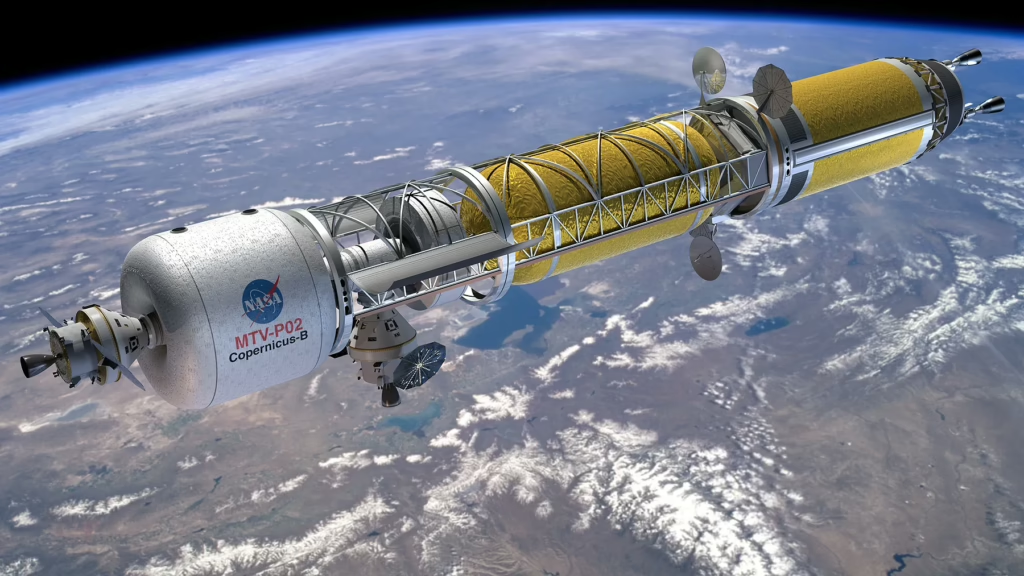
Nuclear space propulsion is a method of powering spacecraft using energy derived from nuclear reactions. Unlike traditional chemical rockets that burn fuel to produce thrust, nuclear propulsion systems harness the immense energy released from splitting atoms (fission) or potentially fusing them (fusion). This technology offers the promise of faster, more efficient space travel, especially for missions beyond Earth’s orbit.
Why Use Nuclear Propulsion in Space?
The main advantage of nuclear propulsion is its high efficiency. Chemical rockets are limited by the energy density of their fuel, which restricts how fast and far they can travel. Nuclear systems, on the other hand, can deliver much higher specific impulse—a measure of how efficiently a rocket uses its fuel. This means spacecraft can travel farther, faster, and carry heavier payloads with less fuel.
Types of Nuclear Propulsion Systems
There are several types of nuclear propulsion systems being researched and developed:
| Type | Overview | Advantages | Challenges |
|---|---|---|---|
|
Nuclear Thermal Propulsion (NTP) |
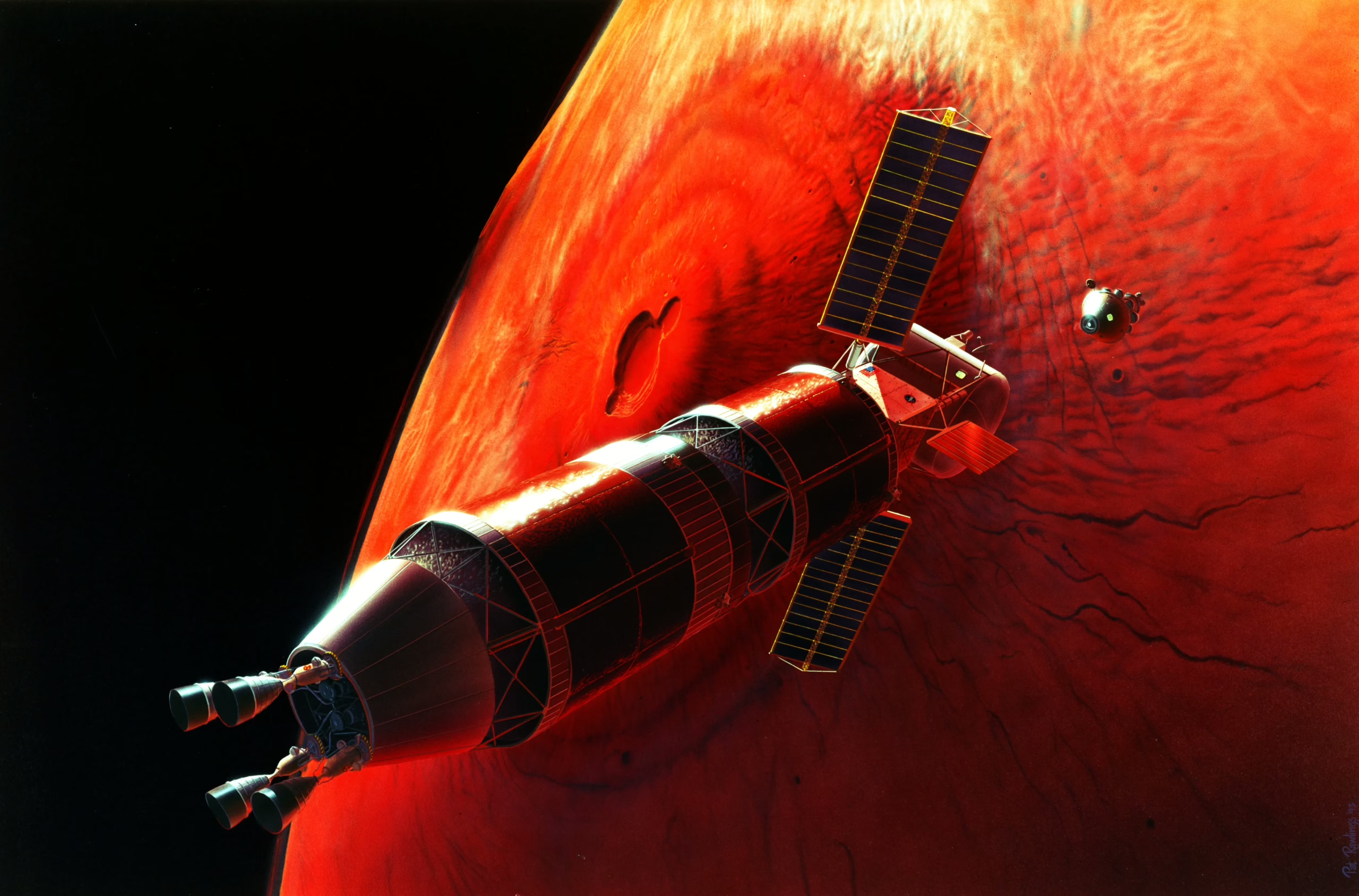
NTP systems use a nuclear reactor to heat a propellant, typically liquid hydrogen. The heated gas expands and is expelled through a nozzle to produce thrust, similar to a conventional rocket engine but with much higher efficiency. |
Offers twice the specific impulse of chemical rockets. Provides high thrust, making it suitable for crewed missions to Mars and beyond. Reduces travel time significantly compared to chemical propulsion. |
Requires robust radiation shielding for crew safety. Involves complex reactor design and thermal management. Raises concerns about launch safety due to onboard nuclear material. |
|
Nuclear Electric Propulsion (NEP) |
NEP systems use a nuclear reactor to generate electricity, which then powers electric thrusters such as ion or Hall-effect engines. These thrusters expel charged particles at high velocities to produce thrust. |
Extremely fuel-efficient, ideal for long-duration missions. Can operate continuously for years, enabling deep-space exploration. Provides onboard electrical power for instruments and systems. |
Produces low thrust, requiring long acceleration periods. Not suitable for launch or rapid maneuvers. Requires advanced power conversion and thermal control systems. |
|
Nuclear Pulse Propulsion |
This concept involves detonating a series of small nuclear explosions behind a spacecraft. A large pusher plate absorbs the force of each explosion, propelling the spacecraft forward. This was the basis of the 1950s–60s Project Orion. |
Theoretically capable of interplanetary or interstellar travel. Offers extremely high thrust and efficiency. |
Technically and politically controversial. Violates nuclear test ban treaties. Poses significant environmental and safety risks. |
|
Radioisotope Propulsion |
This system uses the heat from radioactive decay (e.g., plutonium-238 or americium-241) to either generate electricity or directly heat a propellant. Unlike fission reactors, it relies on passive decay. |
Simple and reliable. Already used in radioisotope thermoelectric generators (RTGs) for spacecraft power. |
Produces low power and thrust, limiting its use to small spacecraft or auxiliary systems. Not suitable for primary propulsion of large missions. |
Pros & Cons of Nuclear Space Propulsion
Pros of Nuclear Space Propulsion
High Efficiency and Specific Impulse
Nuclear propulsion systems, especially Nuclear Thermal Propulsion (NTP) and Nuclear Electric Propulsion (NEP), offer significantly higher specific impulse compared to chemical rockets. This means they use fuel more efficiently, allowing spacecraft to carry heavier payloads or travel longer distances with less propellant.
Faster Travel Times
One of the most compelling benefits is reduced mission duration. For example, a crewed mission to Mars using NTP could take 3–4 months instead of the 9 months required by chemical propulsion. Shorter travel times reduce exposure to cosmic radiation and improve mission safety and feasibility.
Extended Mission Lifespan
NEP systems can operate continuously for years, making them ideal for deep space missions to the outer planets or even interstellar probes. Their ability to generate sustained thrust over long periods enables gradual acceleration and efficient navigation.
Dual Utility
Nuclear reactors can serve dual purposes: providing propulsion and supplying electrical power to spacecraft systems, habitats, and scientific instruments. This is especially valuable for missions to environments with limited solar energy, such as the outer solar system or permanently shadowed lunar regions.
Cons of Nuclear Space Propulsion
Radiation Risks
One of the biggest concerns is radiation. Nuclear reactors emit harmful radiation that can endanger astronauts and sensitive electronics. Effective shielding is essential but adds weight and complexity to spacecraft design.
Launch Safety and Public Perception
Launching nuclear material into space carries inherent risks. Accidents during launch could result in radioactive contamination. Public opposition and political sensitivity around nuclear technology can also hinder development and deployment.
Engineering Challenges
Designing compact, lightweight, and reliable reactors for space use is a major technical hurdle. These systems must operate in extreme conditions, remain stable over long durations, and be resistant to mechanical failure.
Regulatory and Legal Barriers
International treaties, such as the Outer Space Treaty, impose restrictions on the use of nuclear technology in space. Navigating these legal frameworks requires careful planning and international cooperation, which can slow progress.
History of Nuclear Space Propulsion
Early Concepts and Cold War Ambitions
The idea of using nuclear energy for space travel emerged during the early years of the space race in the 1950s and 1960s. At the time, both the United States and the Soviet Union were exploring advanced propulsion systems to extend their reach into space.
One of the earliest and most ambitious concepts was Project Orion, developed in the U.S. during the late 1950s. Orion proposed propelling a spacecraft by detonating a series of small nuclear bombs behind it. While theoretically capable of interplanetary or even interstellar travel, the project was ultimately shelved due to concerns over nuclear fallout and the implications of violating international treaties.
The NERVA Program
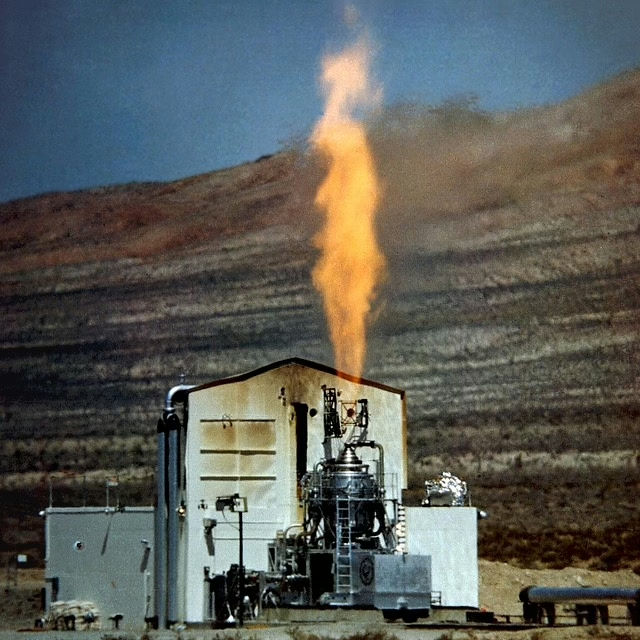
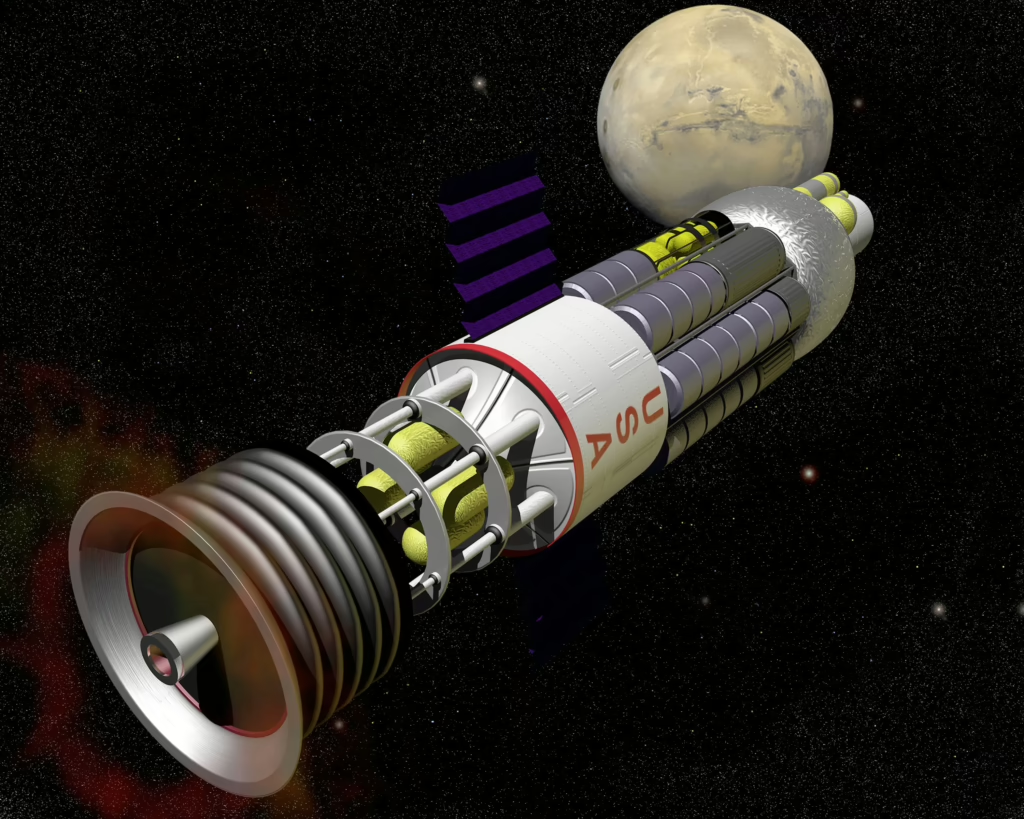
In the 1960s and early 1970s, NASA and the U.S. Atomic Energy Commission collaborated on the Nuclear Engine for Rocket Vehicle Application (NERVA) program. NERVA focused on Nuclear Thermal Propulsion (NTP), where a nuclear reactor heats hydrogen propellant to produce thrust.
The program successfully tested several ground-based reactors and demonstrated the feasibility of NTP. However, despite its technical success, NERVA was cancelled in 1973 due to shifting political priorities and budget constraints, particularly after the Apollo program ended.
Project Prometheus and Renewed Interest
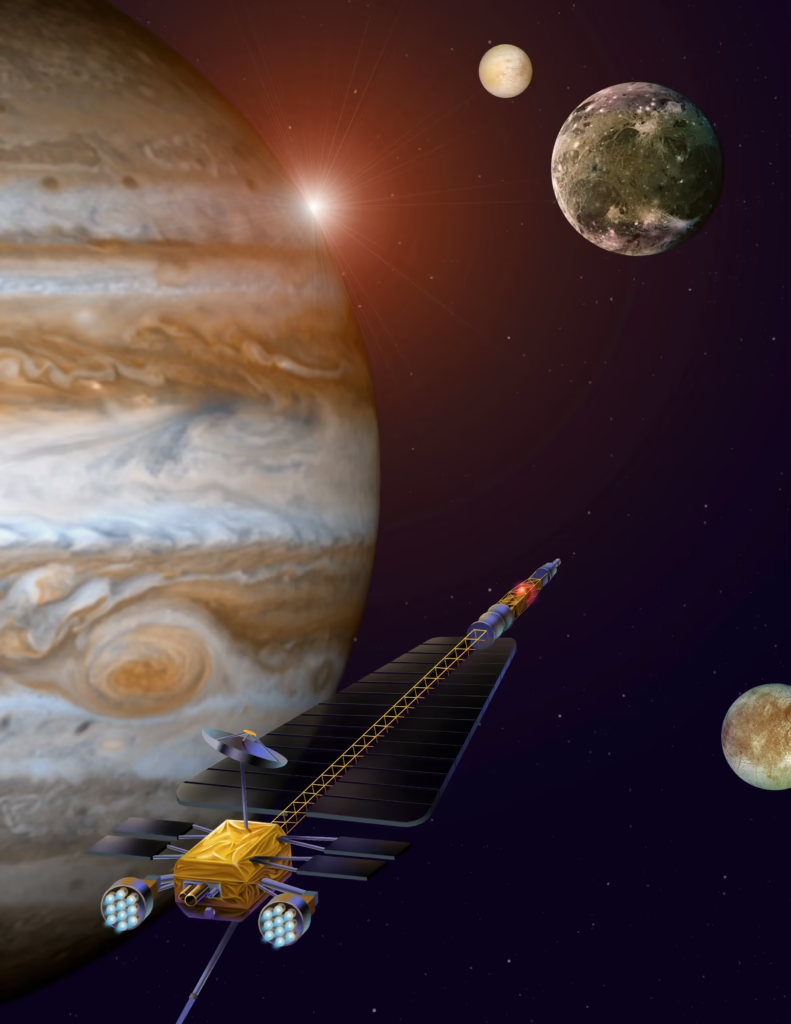
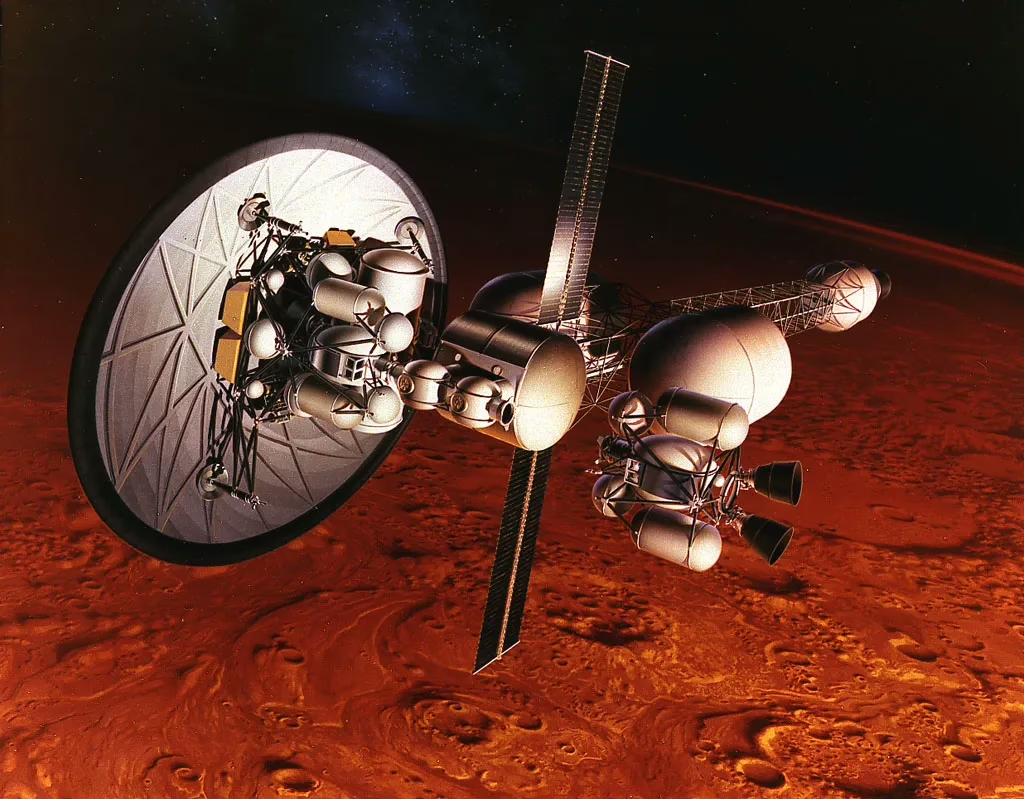
Interest in nuclear propulsion resurfaced in the early 2000s with Project Prometheus, initiated by NASA. This project aimed to develop Nuclear Electric Propulsion (NEP) systems for robotic missions to the outer planets, such as Jupiter’s moon Europa. NEP systems use a nuclear reactor to generate electricity, which then powers electric thrusters.
Project Prometheus was ambitious, but it faced technical challenges and budget cuts. It was eventually cancelled in 2005, though it laid the groundwork for future research into space-based nuclear reactors.
Current and Future Projects
As space agencies and private companies seek faster, more efficient ways to explore the solar system and beyond, nuclear propulsion is gaining renewed attention. From cancelled government programs to emerging private ventures, the landscape of nuclear space propulsion is evolving rapidly.
The Rise and Fall of NASA-DARPA’s DRACO Project
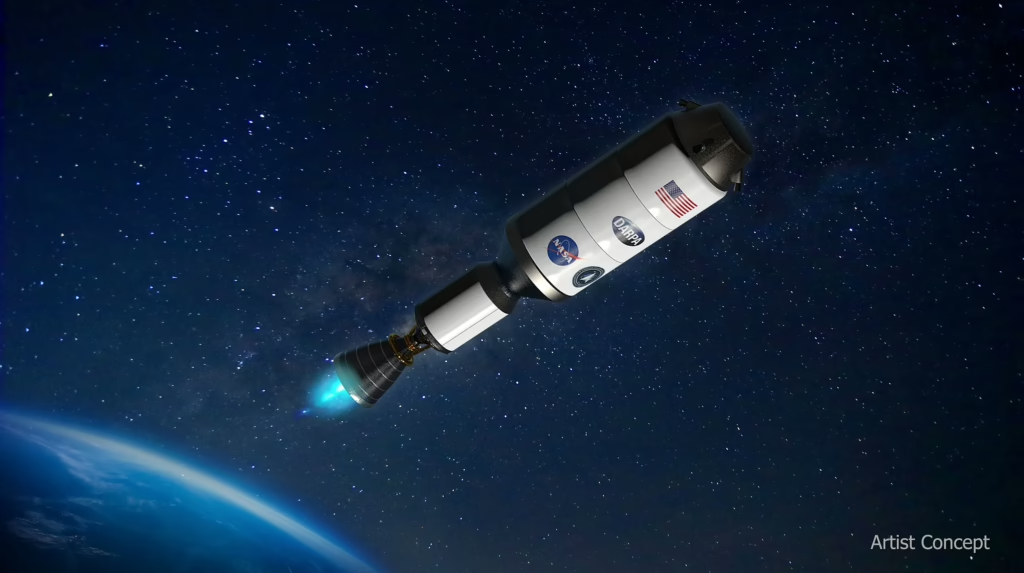
The Demonstration Rocket for Agile Cislunar Operations (DRACO) was a joint effort between NASA and DARPA to develop and test a nuclear thermal propulsion (NTP) system in orbit. Initially announced in 2023, the project aimed to launch a demonstration mission by 2027, with Lockheed Martin and BWX Technologies selected to build the spacecraft and reactor.
However, by mid-2025, DRACO was officially cancelled. The decision was driven by several factors:
- Falling launch costs due to SpaceX and other commercial providers reduced the cost-benefit advantage of NTP.
- Technical and regulatory hurdles, including difficulties in ground-testing nuclear reactors and new environmental requirements.
- A shift in interest toward nuclear electric propulsion (NEP), which offers higher efficiency and onboard power generation.
UK’s Nuclear-Plasma Propulsion Breakthrough
In July 2025, UK-based companies Magdrive and Perpetual Atomics announced a partnership to develop the world’s first nuclear-plasma space propulsion system. Their goal is to combine Magdrive’s compact plasma thrusters with Perpetual Atomics’ americium-241-based radioisotope power units. Magdrive has already launched plasma propulsion units for in-orbit testing, while Perpetual Atomics is developing power systems for ESA missions.
This system is designed for:
- Long-endurance missions in deep space.
- Earth-Moon infrastructure and defense applications.
- High-agility spacecraft that operate independently of solar power.
Private Sector Momentum: USNC, SpaceNukes, and Framatome
Several private companies are actively advancing nuclear propulsion technologies:
- Ultra Safe Nuclear Corporation (USNC) received a NASA contract to manufacture and test fuel for NTP engines. They are collaborating with Blue Origin to develop a propulsion system for near-term cislunar missions.
- Space Nuclear Power Corporation (SpaceNukes) is working with Lockheed Martin and BWX Technologies on the JETSON project—a nuclear electric propulsion demonstration led by the U.S. Space Force. SpaceNukes is commercializing Kilopower reactor technology originally developed by Los Alamos National Laborator.
- Framatome, a French nuclear company, launched Framatome Space to support propulsion and power systems for space missions. They are partnering with USNC to scale up TRISO fuel production and exploring feasibility studies with the Ariane Group.
Exlabs and Antares: Nuclear Microreactors for Deep Space
Southern California startups Exlabs and Antares Nuclear are developing the Science Exploration and Resource Vehicle (SERV), a modular spacecraft powered by Antares’ nuclear microreactors. Scheduled for launch in 2028 or 2029, SERV aims to demonstrate nuclear power in geostationary orbit and support missions with payloads exceeding 11,000 pounds. Antares has opened a large facility to support microreactor development, and the project is seen as a key step toward commercial nuclear-powered spacecraft.
Looking Ahead: Strategic Goals and Global Competition
Despite setbacks like DRACO’s cancellation, nuclear propulsion remains a strategic priority. NASA is planning to deploy a nuclear reactor on the Moon by 2030, and China and Russia are developing megawatt-scale systems for their lunar bases.
Nuclear space propulsion is transitioning from concept to reality. While government programs face challenges, private companies are driving innovation with new reactor designs and propulsion systems. As geopolitical competition intensifies and deep space missions become more ambitious, nuclear propulsion may soon become a cornerstone of space exploration.
Explore Further
Choose from the articles below to continue learning about nuclear.
Reprocessing – How Spent Nuclear Fuel is Recycled for Reuse
World Association of Nuclear Operators (WANO) – Who are they and what do they do?
Did you know? Explore Nuclear also offers great careers information and learning resources.
Below you can find references to the information and images used on this page.
Content References
- Space Nuclear Propulsion – NASA
- Nuclear power in space – Wikipedia
- Nuclear electric propulsion may reduce transit times to outer planets
- Space Nuclear @ MIT
- Making Nuclear Space Propulsion a Reality | RealClearScience
- The Space Review: Making a new case for space nuclear power
- (Nu)clear the Way: The Future of Nuclear Propulsion is Here | Lockheed Martin
- UK Duo to Build World’s First Nuclear-Plasma Space Propulsion System – Orbital Today
- Nuclear companies sign up for space technology missions – World Nuclear News
- US firms plan nuclear-powered spacecraft for deep space exploration
Image References
- NEP Mars no Planets – NASA – Public Domain
- Orion docked to Mars Transfer Vehicle – NASA – Public Domain
- Mars orbit rendez vous – NASA – Public Domain
- Kiwi A fire-up – Los Alamos National Laboratory – Unless otherwise indicated, this information has been authored by an employee or employees of the Los Alamos National Security, LLC (LANS), operator of the Los Alamos National Laboratory under Contract No. DE-AC52-06NA25396 with the U.S. Department of Energy. The U.S. Government has rights to use, reproduce, and distribute this information. The public may copy and use this information without charge, provided that this Notice and any statement of authorship are reproduced on all copies. Neither the Government nor LANS makes any warranty, express or implied, or assumes any liability or responsibility for the use of this information.
- Jupiter Icy Moons Orbiter – NASA – Public Domain
- Pulsed Fission Propulsion Concept – NASA – Public Domain
- Research Technology – NASA – Public Domain
- DRACO spacecraft – DARPA – Public Domain