
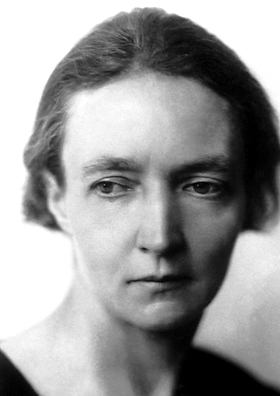
Irène Joliot-Curie's Life
Life and Work
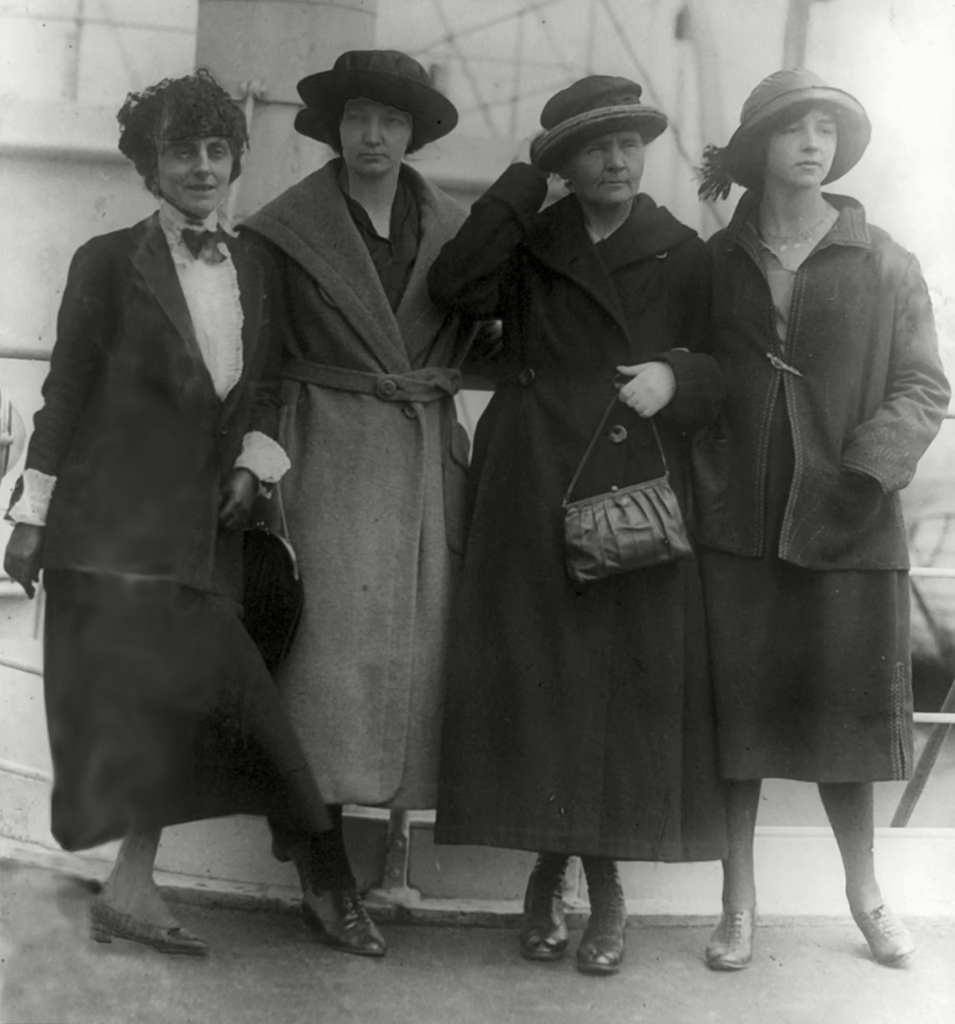
Irène Joliot-Curie (1897–1956) was a distinguished French scientist whose work in nuclear chemistry earned her a Nobel Prize and cemented her legacy as a pioneer in radioactivity. The daughter of Marie and Pierre Curie, Irène was immersed in science from an early age. During World War I, she assisted her mother in operating mobile X-ray units for battlefield medicine, sparking her lifelong interest in radiological research.
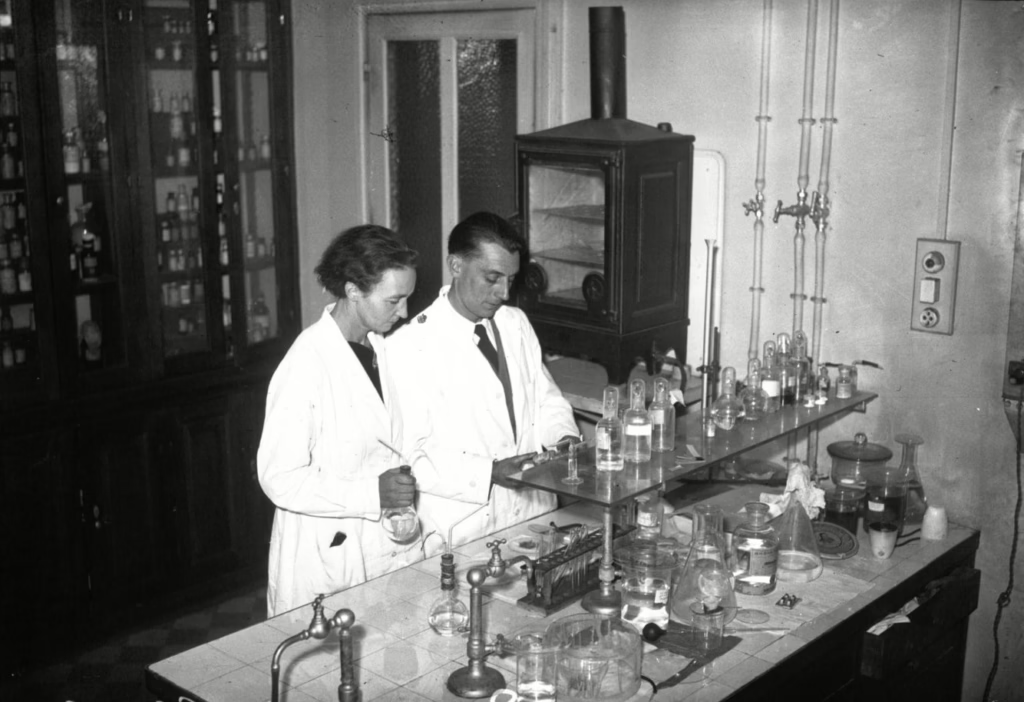
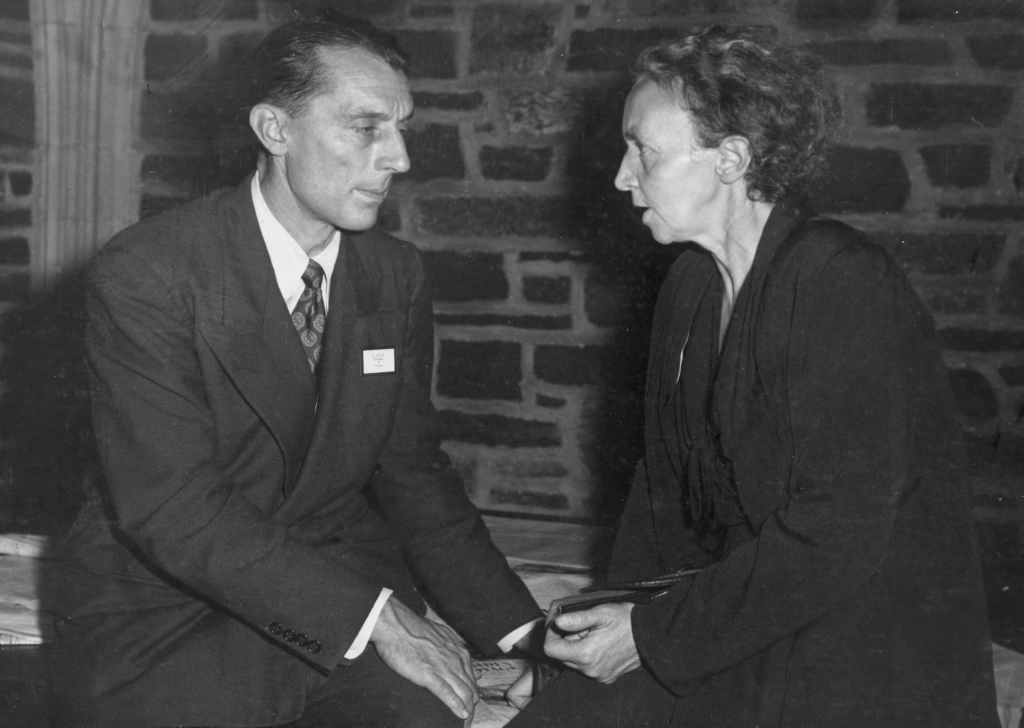
She earned her doctorate in science in 1925 and married fellow physicist Frédéric Joliot. Together, they made a groundbreaking discovery in 1934: artificial radioactivity. By bombarding stable elements with alpha particles, they created radioactive isotopes—a major advancement with applications in medicine and nuclear physics. This achievement earned them the Nobel Prize in Chemistry in 1935.
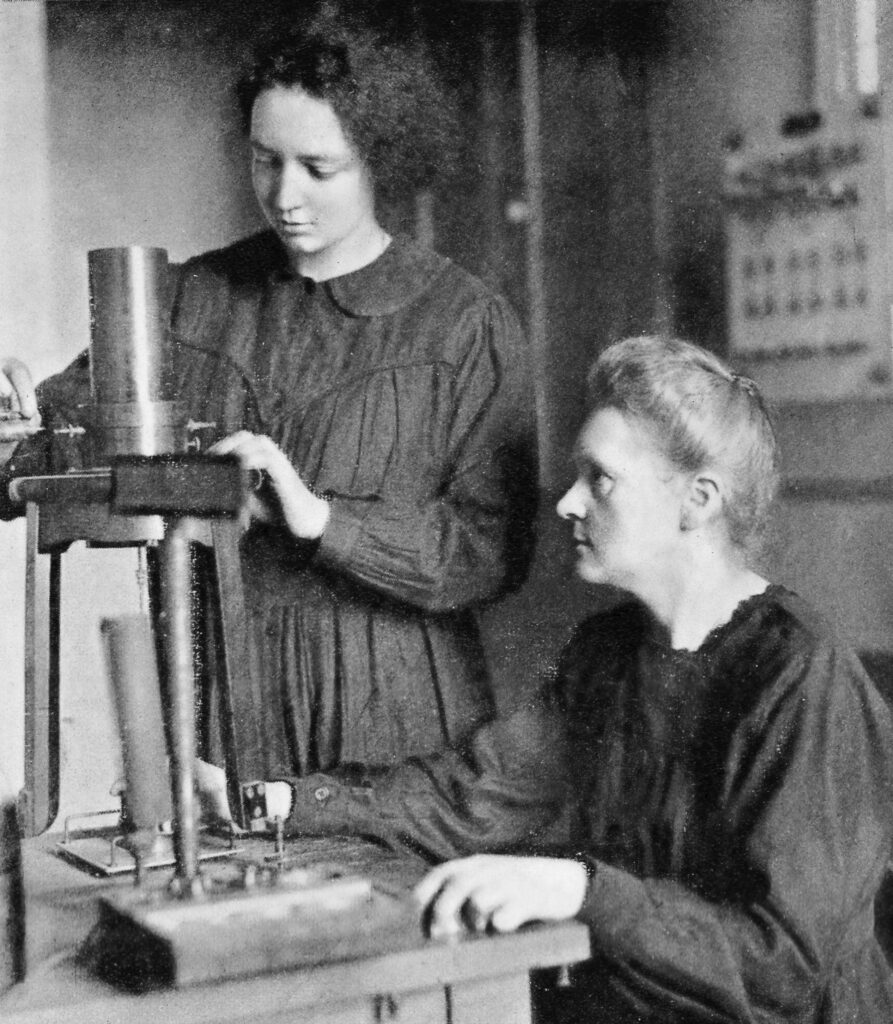
Beyond her scientific work, Irène was a committed public servant and advocate for women in science. She held leadership roles in French scientific institutions and served as Undersecretary of State for Scientific Research. Her later research contributed to the understanding of nuclear fission.
Irène died of leukemia, likely due to prolonged exposure to radiation. Her legacy endures through her scientific contributions and her role in advancing women’s participation in science. She remains a symbol of intellectual rigor and humanitarian commitment.
Irène Joliot-Curie's Scientific Contributions
Discovery of Artificial Radioactivity
In 1934, Irène Joliot-Curie and her husband Frédéric Joliot achieved a major scientific milestone by discovering artificial radioactivity. By bombarding stable elements such as boron, magnesium, and aluminium with alpha particles, they were able to produce radioactive isotopes that did not exist naturally. This was the first time scientists had successfully induced radioactivity in non-radioactive materials, proving that atomic nuclei could be transformed. Their work provided a new method for producing radioactive elements, which became essential in medical diagnostics and cancer treatment. For this achievement, the couple was awarded the Nobel Prize in Chemistry in 1935.
Advancement of Nuclear Physics
Irène continued her research into the structure and behaviour of atomic nuclei. Her studies on the interaction of neutrons with heavy elements contributed to the understanding of nuclear fission—a process later harnessed in nuclear energy and weaponry. Although she did not discover fission herself, her work helped pave the way for subsequent breakthroughs by scientists such as Otto Hahn and Lise Meitner.
Applications in Medicine and Industry
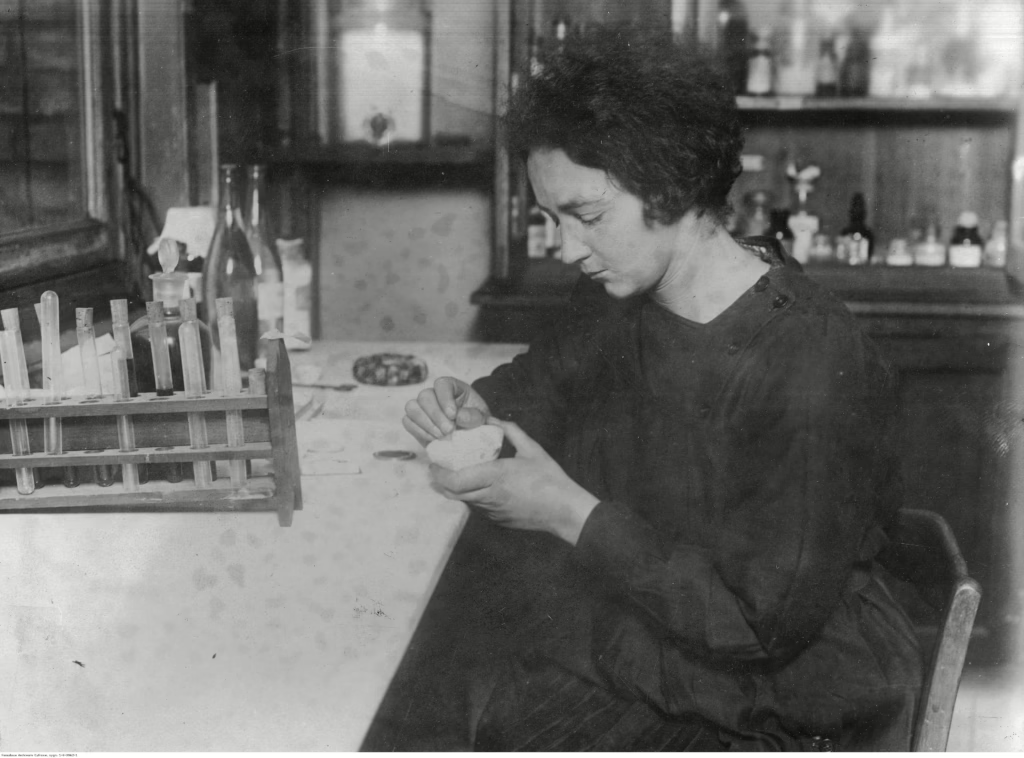
The Joliot-Curies’ discovery had far-reaching implications. Artificial radioisotopes became vital tools in medicine, used for imaging and treating diseases. Their research also influenced industrial processes, including material testing and chemical tracing. Irène’s scientific leadership extended beyond the lab: she held key roles in French scientific institutions and advocated for women in science, helping shape postwar research policy.
Irène Joliot-Curie's Accomplishments
Awards and Honors
Irène Joliot-Curie received the Nobel Prize in Chemistry in 1935, shared with her husband Frédéric Joliot, for their discovery of artificial radioactivity. This achievement placed her among a rare group of women Nobel laureates and marked the continuation of the Curie family’s extraordinary scientific legacy. In addition to the Nobel, she was elected to several prestigious scientific bodies, including the French Academy of Medicine, and received honorary degrees and international recognition for her contributions to science.
Public Service and Scientific Leadership
In 1936, Irène was appointed Undersecretary of State for Scientific Research in the French government, becoming one of the first women to hold such a position. She used her role to advocate for increased investment in scientific research and education. Later, she succeeded her mother as director of the Radium Institute in Paris, where she oversaw critical research in nuclear physics and mentored the next generation of scientists.
Advocacy and Political Engagement
Irène was a committed advocate for women in science. She actively promoted gender equality in academic institutions and supported policies that encouraged women’s participation in research. Politically, she aligned with progressive causes and was involved in peace movements and international scientific cooperation, especially in the tense pre- and post-World War II eras.
Enduring Legacy
Irène Joliot-Curie’s legacy is multifaceted. Her discovery of artificial radioactivity revolutionised medicine, enabling the development of radioactive isotopes used in diagnostics and cancer therapy. Her contributions to nuclear science laid the groundwork for future advancements in both energy and medical technologies. As a scientist, educator, and public servant, she remains a symbol of intellectual rigor, civic responsibility, and the transformative power of women in science.
Explore Further
Continue learning about the lives of the people that shaped nuclear history.
Eugene Wigner – A Life Shaped by Symmetry and Science
Emilio Segrè – A Journey Through Atoms, Antimatter, and History
Dmitri Mendeleev – The Man Who Brought Structure to the Elements
Niels Bohr – Architect of the Quantum World
Did you know? Explore Nuclear also offers great careers information and learning resources.
Below you can find references to the information and images used on this page.
Content References
- Irène Joliot-Curie – Biographical – NobelPrize.org
- Irene Joliot-Curie – Biography, Facts and Pictures
- Frédéric and Irène Joliot-Curie | Nobel Prize-Winning French Chemists | Britannica
- Irène Joliot-Curie and Frédéric Joliot | Science History Institute
- Irène Joliot-Curie – Wikipedia
- Irène Joliot-Curie | Association Curie et Joliot-Curie
- Irene Joliot-Curie – Nuclear Museum
Image References
- Irène Curie, 1935 – Nobel Foundation – Public Domain
- Irene and Marie Curie, 1925 – Unknown author – CC BY 4.0
- Irène et Frédéric Joliot-Curie, 1935 – Agence de presse Meurisse – Public Domain
- Irena Joliot-Curie – Unknown author – Public Domain
- Frederic and Irene Joliot-Curie – James Lebenthal – No known copyright restrictions
- Meloney-with-Irene-Marie-and-Eve Curie-1921 – Unknown author – Public Domain