
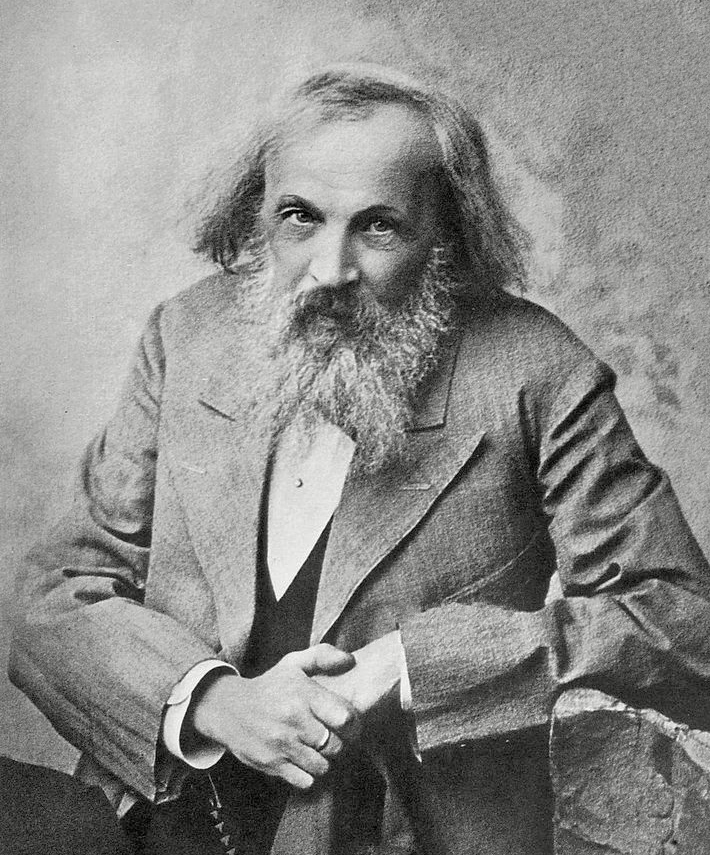
Dmitri Mendeleev's Life
Life and Work
Dmitri Ivanovich Mendeleev was born on 8 February 1834 in Verkhnie Aremzyani, Siberia, into a large family facing significant hardship. His father, a teacher, went blind and died during Mendeleev’s childhood, leaving his mother to support the family by running a glass factory. Despite these challenges, she was determined to secure her son a strong education and took him across Russia to find suitable schooling.
As a young man, Mendeleev studied at institutions in Tobolsk and later Saint Petersburg, where he developed a deep interest in chemistry. His academic talent led him to become a professor and researcher, focusing on solutions, petroleum, and chemical theory. His doctoral thesis, completed in 1865, explored the behaviour of alcohol–water mixtures, reflecting his early fascination with the structure of matter.
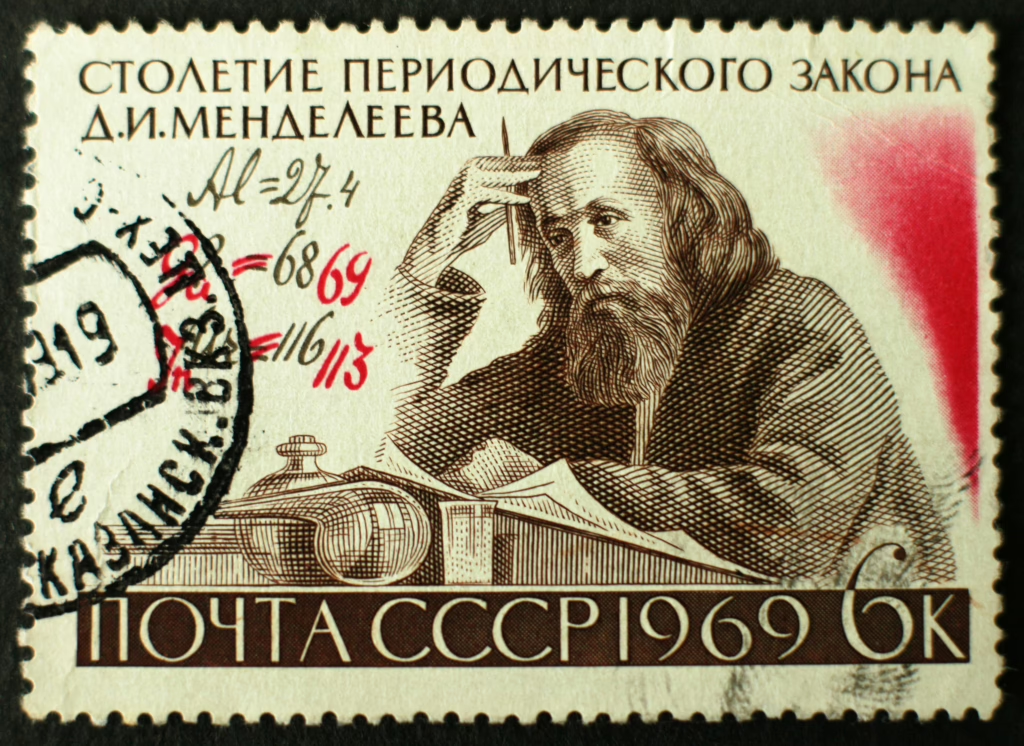
Mendeleev’s most enduring achievement came in 1869 when he formulated the periodic law and created the first widely recognised periodic table. By arranging elements according to atomic weight and identifying repeating patterns, he not only organised known elements but also predicted the existence and properties of several undiscovered ones, such as gallium and germanium. The later discovery of these elements confirmed the power of his system and secured his legacy as one of chemistry’s foundational figures.
Beyond his scientific work, Mendeleev was known for his prolific writing, including the influential textbook Principles of Chemistry. He received numerous honours, such as the Davy Medal and the Copley Medal, and remained active in scientific and industrial research throughout his life. Mendeleev died on 2 February 1907 in Saint Petersburg, leaving behind a transformative scientific legacy that continues to shape modern chemistry.
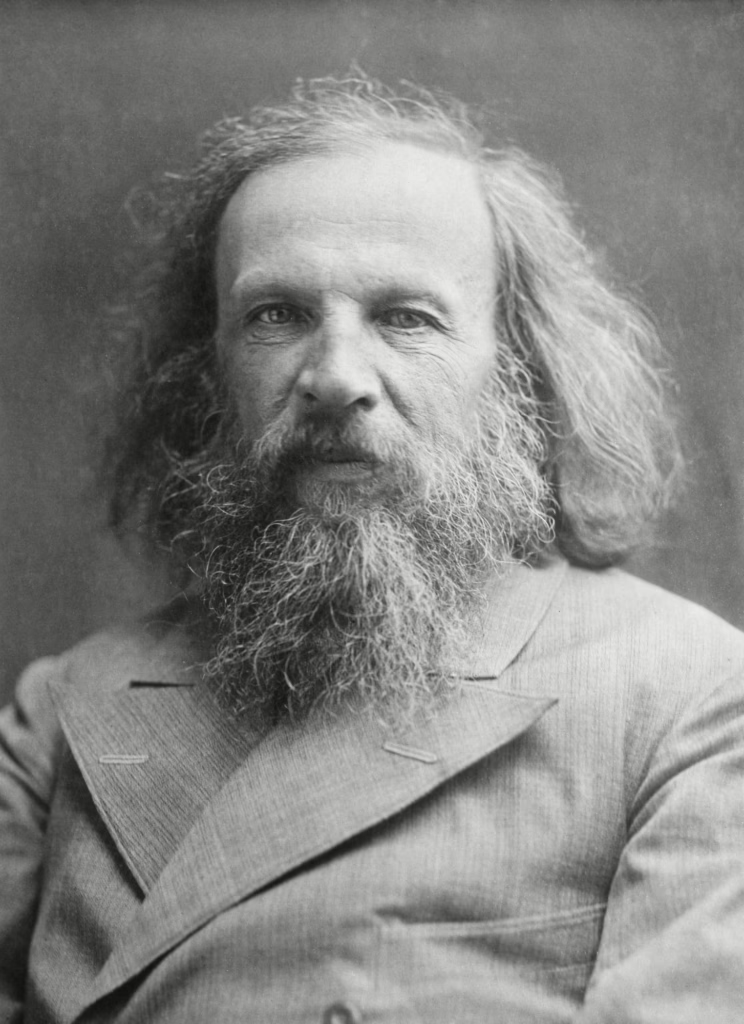
Dmitri Mendeleev's Work
Foundations in Chemical Education
Mendeleev’s early professional work centred on teaching and clarifying the principles of chemistry. His textbook ‘Principles of Chemistry’ became one of the most influential scientific texts of the 19th century, helping to standardise chemical knowledge across Europe. He had a talent for explaining complex ideas with clarity, and this educational focus shaped much of his later scientific thinking.
Development of the Periodic Law
Mendeleev’s most famous contribution was the formulation of the periodic law. While arranging elements for his textbook in 1869, he noticed repeating patterns in their properties when ordered by atomic weight. This insight led him to construct the first coherent periodic table. Crucially, he left gaps for elements not yet discovered and predicted their properties with remarkable accuracy. The later discoveries of gallium, scandium, and germanium confirmed the power of his predictions and cemented the periodic table as a foundational tool in chemistry.
Research on Solutions and Physical Chemistry
Beyond the periodic table, Mendeleev made significant contributions to the study of solutions. His doctoral work examined the behaviour of alcohol–water mixtures, and he later explored the nature of gases, liquids, and their transitions. His investigations helped shape early physical chemistry, particularly in understanding critical temperatures and the behaviour of substances under varying pressures.
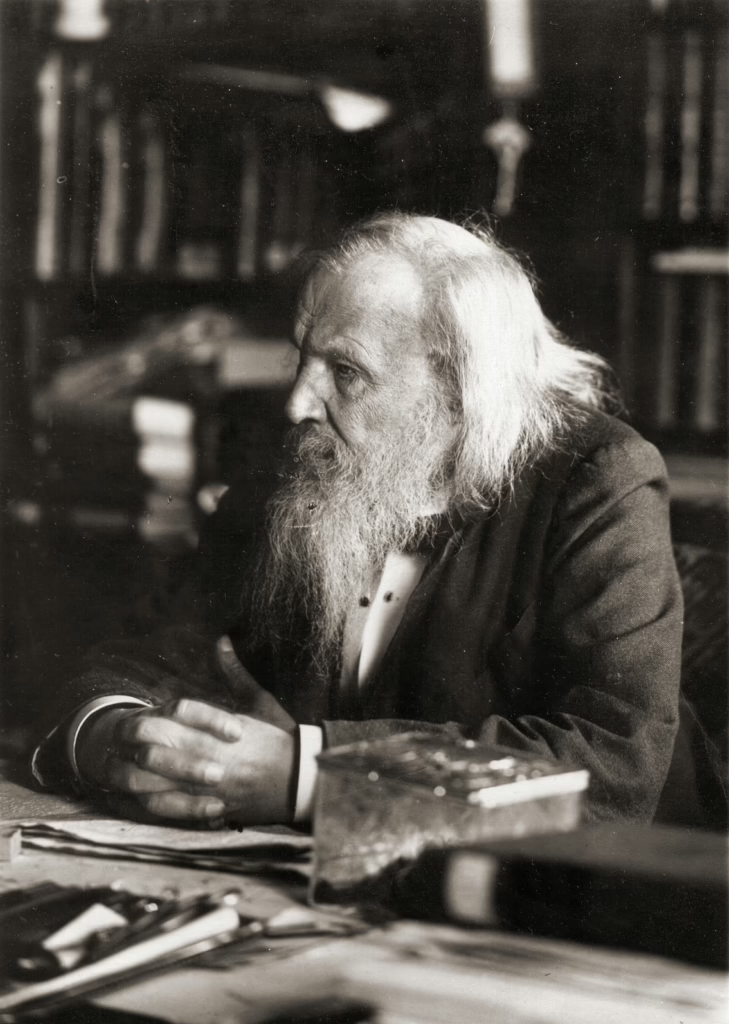
Industrial and Applied Science
Mendeleev was also deeply involved in practical scientific work. He researched petroleum and advocated for its use as a fuel source, anticipating its industrial importance. He contributed to the development of Russia’s oil industry, studied explosives, and worked on improving agricultural fertilisers. His applied research reflected a belief that science should serve national progress and everyday life.
Influence on Standards and Metrology
Later in his career, Mendeleev became director of the Russian Bureau of Weights and Measures. In this role, he helped modernise Russia’s measurement systems and supported the adoption of the metric system. His work in metrology demonstrated his commitment to precision and standardisation across scientific disciplines.
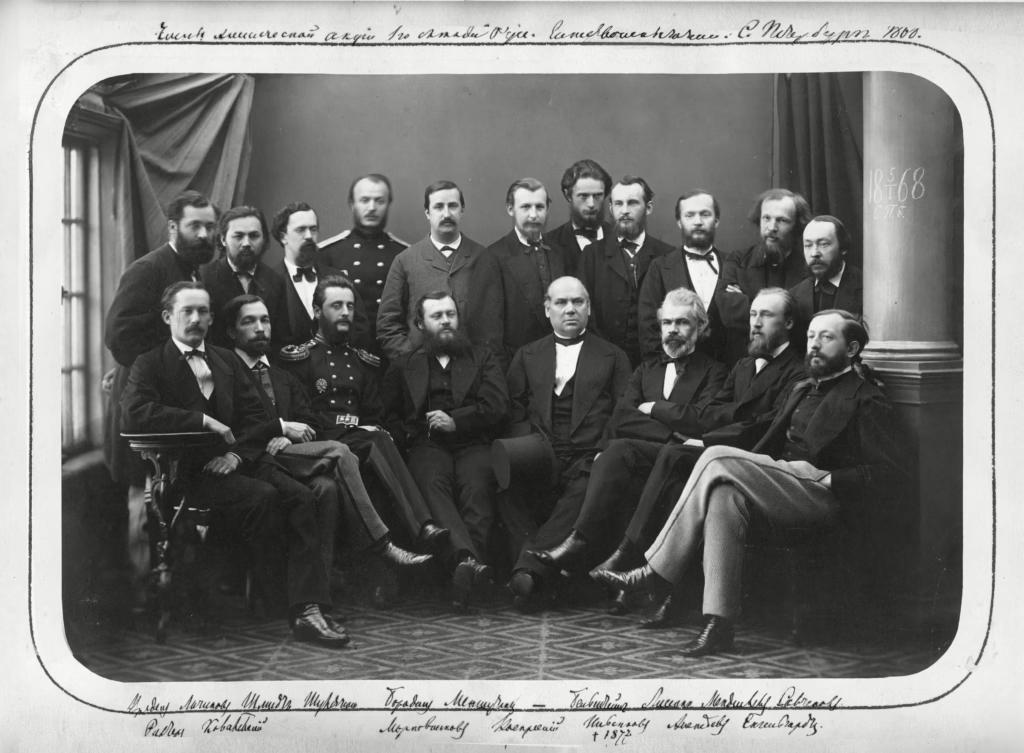
Dmitri Mendeleev's Legacy
Awards and Formal Recognition
Mendeleev received numerous prestigious scientific honours during his lifetime. He was awarded the Davy Medal in 1882 and the Copley Medal in 1905, two of the Royal Society’s highest distinctions. He also earned the Faraday Lectureship Prize in 1889 and was elected a Foreign Member of the Royal Society (ForMemRS) in 1892. His international reputation led to membership in major scientific academies across Europe and the United States, reflecting the global esteem in which he was held.
Additional Distinctions and Later Recognition
Beyond his lifetime, Mendeleev’s impact continued to be celebrated. UNESCO declared him the greatest scientist of all time in 1984, highlighting the enduring significance of his work. His legacy is further honoured through exhibitions and commemorations, including those hosted by the Dmitri Mendeleev Museum and Archives.
Legacy in Modern Scientific Culture
Mendeleev’s legacy extends far beyond his own discoveries. The periodic table remains one of the most iconic and essential tools in science, used daily in education, research, and industry. His name is commemorated through the UNESCO–Russia Mendeleev International Prize in the Basic Sciences, awarded annually to scientists whose work advances global scientific development. This prize reflects the lasting relevance of his contributions and the continued inspiration he provides to generations of researchers.
Explore Further
Continue learning about the lives of the people that shaped nuclear history.
Lewis Strauss – Visionary or Villain of the Atomic Era
Otto Hahn – The Dawn of the Atomic Age
Glenn T. Seaborg – The Man Who Rewrote the Periodic Table
He Zehui – Pioneer of Modern Chinese Physics
Did you know? Explore Nuclear also offers great careers information and learning resources.
Below you can find references to the information and images used on this page.
Content References
- Dmitri Mendeleev: Biography, Fun Facts, Gallery, Quoes and Works of Dmitri Mendeleev
- Journey of discovery
- Dmitri Mendeleev – Wikipedia
- Dmitri Mendeleev | Biography, Periodic Table, & Facts | Britannica
- Dmitri Mendeleyev – Periodic Table, Facts & Death
- Dmitri Mendeleev – Biography, Facts and Pictures
- Developing a modern periodic table: From spirals to the stars | Science Museum
Image References
- Mendeleev Photographische Gesellschaft 3 – Е.Л. Мрозовская – Public Domain
- Dmitry Mendeleev – Unknown author – Public Domain
- DIMendeleevCab – Unknown author – Public Domain
- RFCS 1868 – Serge Lachinov- Public Domain
- The Soviet Union 1969 CPA 3761 stamp – Bin im Garten – Not an object of copyright