
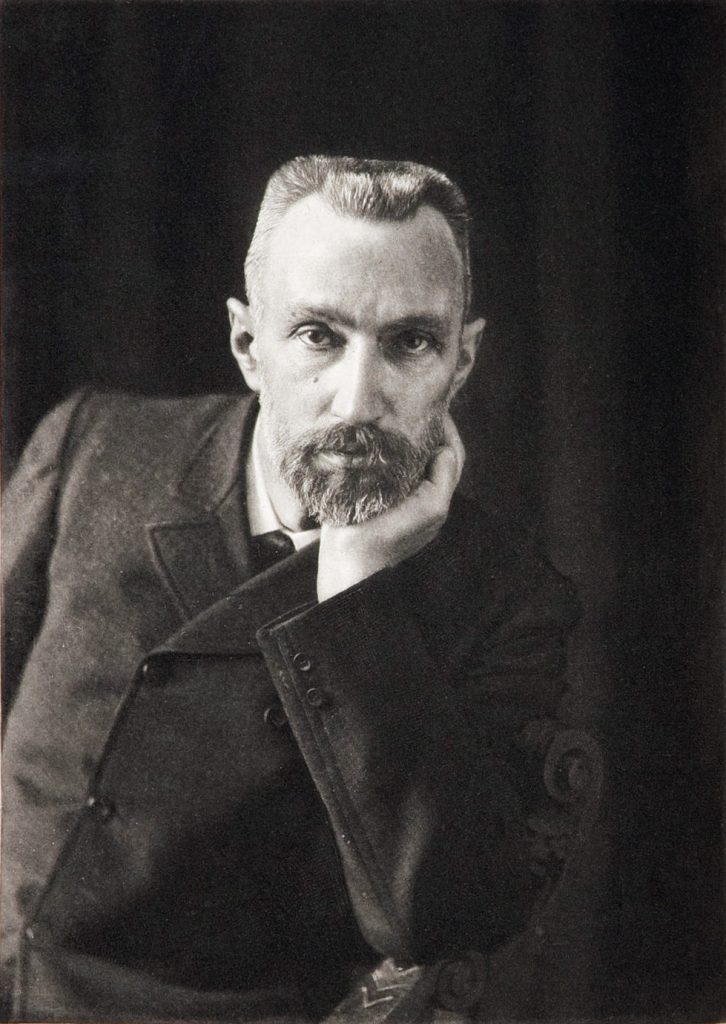
Pierre Curie's Life
Life and Work
Pierre Curie was born on May 15, 1859, in Paris to a medical practitioner. Educated largely at home, he showed an early aptitude for mathematics and science. By the age of 16, he had obtained his bachelor’s degree in science, and he later studied physics at the Sorbonne. His early research, conducted with his brother Jacques, led to the discovery of piezoelectricity in 1880, a property of certain crystals that generates an electric charge under mechanical stress.
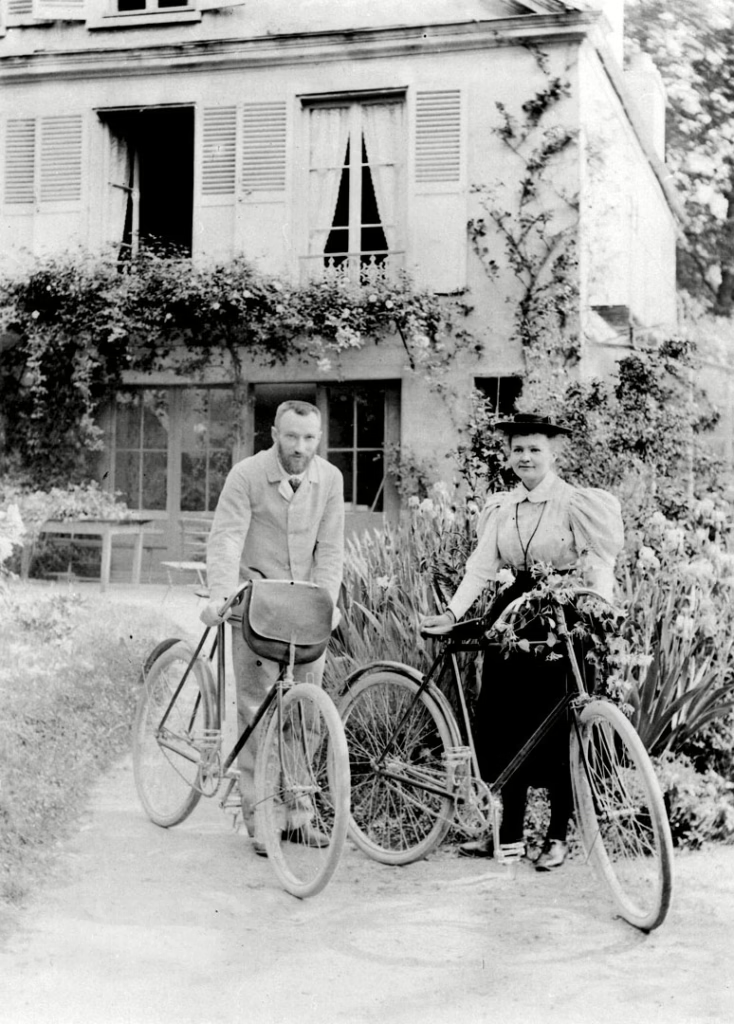
Curie’s scientific career advanced rapidly. He worked as a demonstrator and instructor before earning his doctorate in 1895. His research expanded into magnetism, where he formulated Curie’s law and advanced theories of symmetry in physical phenomena. That same year, he married Maria Skłodowska (Marie Curie), beginning one of the most famous scientific partnerships in history.
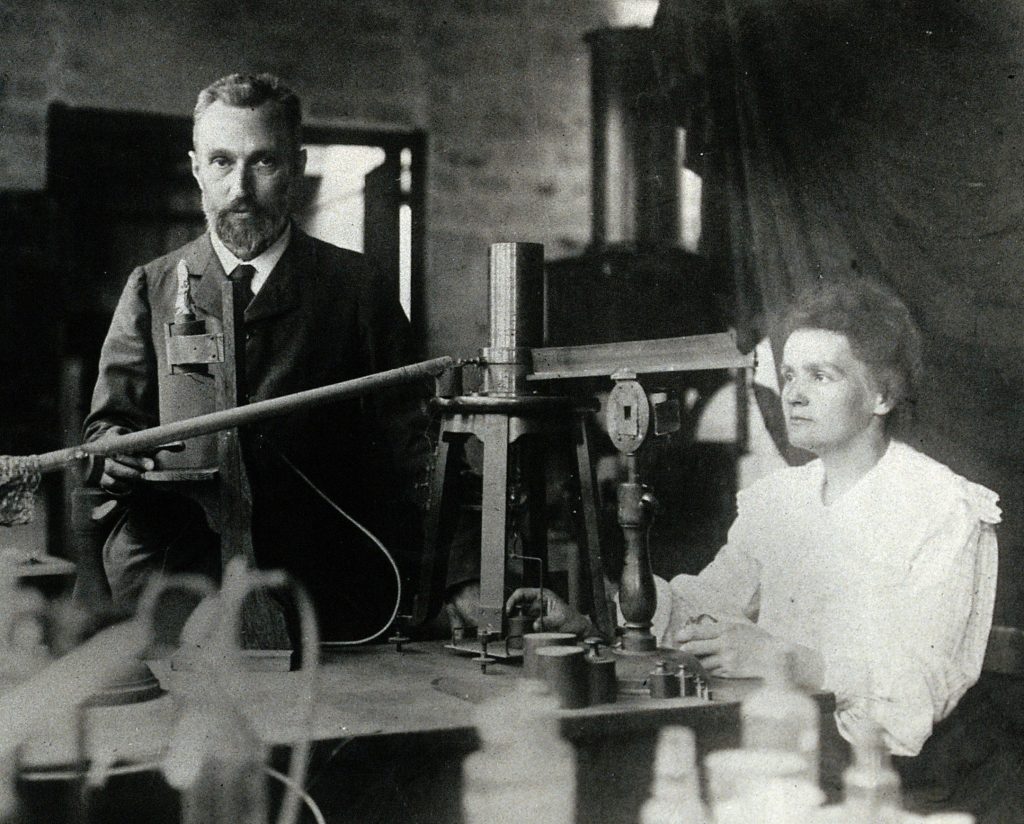
Together, Pierre and Marie Curie investigated radioactivity, a term coined by Marie. In 1898, they discovered polonium and radium, ground-breaking findings that transformed physics and medicine. Their work earned them the Nobel Prize in Physics in 1903, shared with Henri Becquerel. Pierre was also recognised with other honours, including the Davy Medal (1903) and the Matteucci Medal (1904).
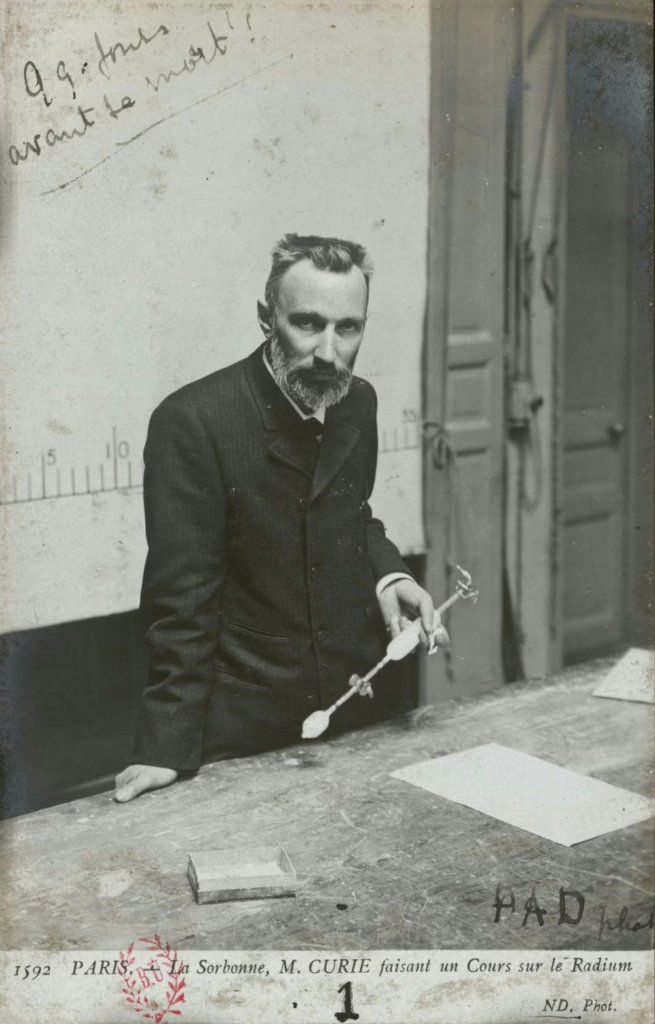
Tragically, Pierre Curie’s life was cut short. On April 19, 1906, he died in Paris after a street accident in which he was struck by a horse-drawn carriage. He was only 46 years old. Despite his early death, his contributions laid the foundation for modern studies of radioactivity and crystallography. In 1995, his remains were transferred to the Panthéon in Paris, alongside Marie Curie, in recognition of their enduring legacy.
Pierre Curie's Scientific Contributions
Early Work in Crystallography and Piezoelectricity
Pierre Curie began his career studying the properties of crystals. Alongside his brother Jacques, he discovered piezoelectricity in 1880, the phenomenon where certain crystals generate an electric charge when subjected to mechanical stress. This discovery laid the foundation for technologies such as microphones, sonar, and quartz watches. Their work also led to the development of the piezoelectric quartz balance, a precise instrument that became essential in scientific research.
Research on Magnetism
Curie made significant advances in the study of magnetism. He formulated Curie’s law, which describes how the magnetization of a material changes with temperature. He also identified the Curie point, the critical temperature at which certain materials lose their permanent magnetic properties. These discoveries remain fundamental in physics and materials science, influencing everything from magnetic storage devices to modern electronics.

Discovery of Radioactive Elements
In collaboration with his wife, Marie Curie, Pierre investigated the mysterious phenomenon of radioactivity, a term coined by Marie. Their research led to the discovery of polonium (1898) and radium (1898), two new elements that revolutionised science. These findings not only expanded the periodic table but also opened new avenues in medical treatment, particularly in cancer therapy through radiation. For this work, Pierre and Marie Curie shared the 1903 Nobel Prize in Physics with Henri Becquerel.
Principles of Symmetry and Scientific Philosophy
Curie also contributed to the theoretical framework of physics by exploring the principle of symmetry in natural phenomena. He argued that physical effects must correspond to the symmetries of their causes, an idea that influenced later developments in theoretical physics.
Pierre Curie's Accomplishments
Awards and Distinctions
Pierre Curie received several prestigious awards during his lifetime in recognition of his pivotal scientific work. In 1903, he shared the Nobel Prize in Physics with Marie Curie and Henri Becquerel for their joint research on radioactivity. That same year, he was awarded the Davy Medal by the Royal Society of London, acknowledging his contributions to chemistry and physics. In 1904, he received the Matteucci Medal, an Italian scientific honour given for outstanding achievements in physics. Posthumously, in 1909, he was recognised with the Elliott Cresson Medal by the Franklin Institute, further cementing his international reputation.
Honours and Recognition
Pierre Curie’s scientific achievements earned him widespread respect across Europe. He was appointed professor at the Faculty of Sciences in Paris, where he influenced a generation of physicists. His name lives on in scientific terminology: the Curie point (the temperature at which magnetic materials lose their magnetism) and Curie’s law remain fundamental concepts in physics. In 1995, nearly 90 years after his death, Pierre and Marie Curie’s remains were transferred to the Panthéon in Paris, a rare honour reserved for France’s most distinguished figures.
Legacy and Impact
Pierre Curie’s legacy extends far beyond his lifetime. His discoveries in piezoelectricity, magnetism, and radioactivity laid the foundation for modern physics and materials science. The discovery of radium and polonium with Marie Curie transformed medicine, particularly in cancer treatment through radiation therapy. His emphasis on precision and symmetry in scientific research influenced later theoretical physics. Today, his name is immortalised in the curie (Ci), a unit of radioactivity, ensuring his contributions remain embedded in scientific practice.
Explore Further
Continue learning about the lives of the people that shaped nuclear history.
Frédéric Joliot-Curie – A Life of Science and Conscience
Willard Libby – Reshaping Our Understanding of the Ancient World
Qian Sanqiang – Architect of China’s Nuclear Dawn
James Chadwick – The Man Who Found the Neutron
Did you know? Explore Nuclear also offers great careers information and learning resources.
Below you can find references to the information and images used on this page.
Content References
- Pierre Curie – Biographical – NobelPrize.org
- Pierre Curie – Facts – NobelPrize.org
- Marie and Pierre Curie and the discovery of polonium and radium – NobelPrize.org
- Pierre Curie – Nuclear Museum
- Pierre Curie | Biographies
- Pierre Curie – Wikipedia
- Pierre Curie | Awards, Biography, & Facts | Britannica
- Pierre Curie – Death, Marie Curie & Facts
Image References
- Pierre Curie by Dujardin c1906 – Dujardin – Public Domain
- Pierre Curie giving a lecture on radium at the Sorbonne – Unknown author – CC BY-SA 4.0
- Pierre Curie (1859-1906) and Marie Sklodowska Curie (1867-1934), c. 1903 – Smithsonian Institution – No known copyright restrictions
- Pierre and Marie Curie – Unknown photographer – Public Domain
- Familie Curie au BIPM, 1904 – Charles Édouard Guillaume – Public Domain
- Pierre and Marie Curie in front of their house in Sceaux in 1895 – Unknown author – Public Domain