
Frédéric Joliot-Curie's Life
Life and Work
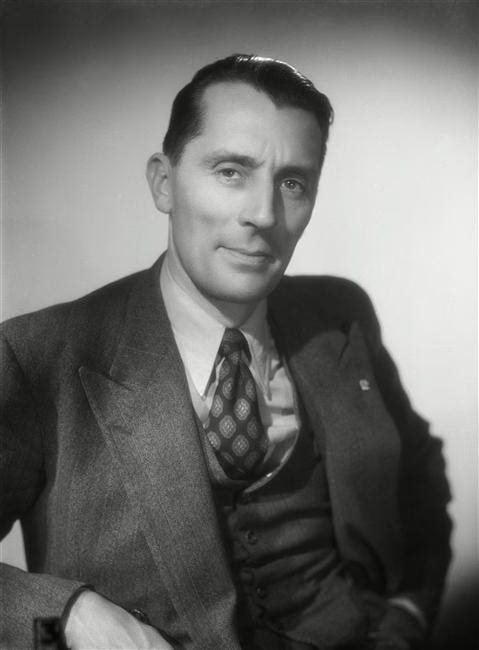
Frédéric Joliot-Curie was born Jean Frédéric Joliot on March 19, 1900, in Paris. He studied at the École de Physique et Chimie Industrielles de Paris, graduating at the top of his class in 1923. In 1925, he became an assistant to Marie Curie at the Radium Institute, where he met and later married her daughter, Irène Curie, in 1926. Together, they formed one of the most famous scientific partnerships of the 20th century.
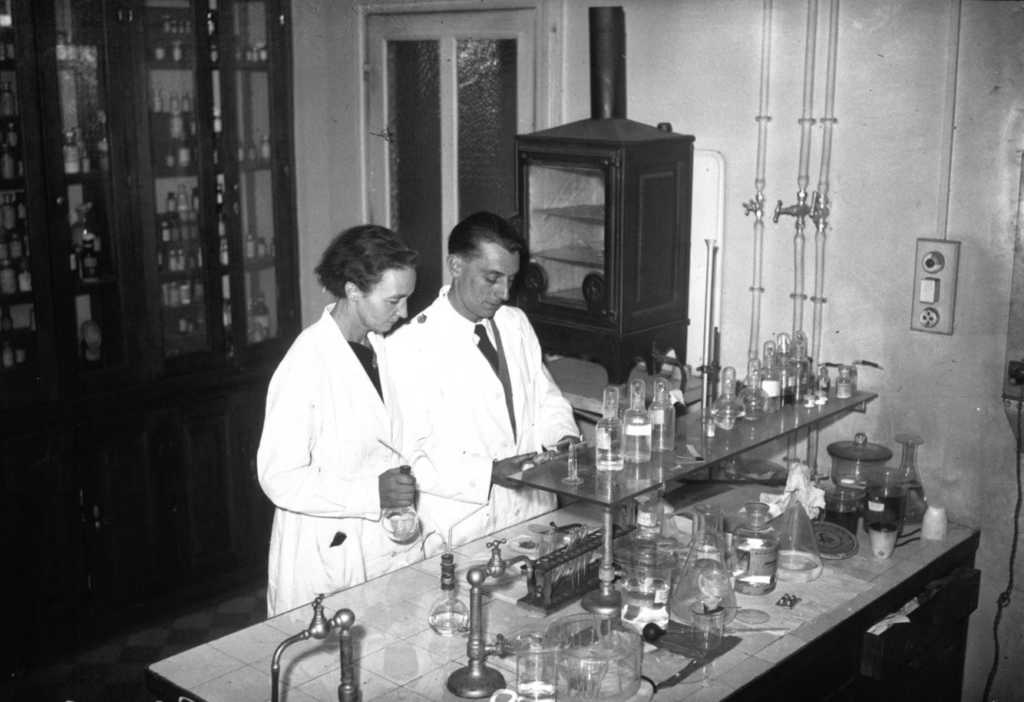
His early research focused on radio-elements and atomic structure. In collaboration with Irène, Joliot-Curie made their most celebrated discovery in 1934: artificial radioactivity. By bombarding elements with alpha particles, they created radioactive isotopes not found in nature. This breakthrough earned them the 1935 Nobel Prize in Chemistry, cementing their place in scientific history.
Beyond this, Joliot-Curie contributed significantly to nuclear physics. He became a professor at the Collège de France in 1937 and led pioneering work on nuclear chain reactions. His team built the first cyclotron in Western Europe and laid the groundwork for nuclear reactor development. During World War II, as Nazi forces occupied Paris, he safeguarded vital research by smuggling documents and materials out of France with colleagues Lew Kowarski and Hans Halban.
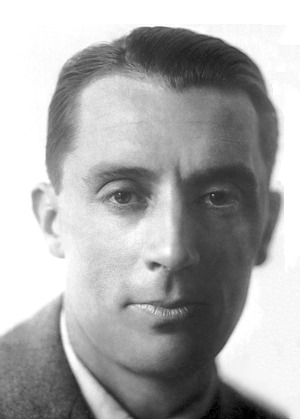
Politically, Joliot-Curie was deeply committed to social causes. He joined the French Communist Party and became active in movements advocating peace and scientific responsibility. After the war, he was appointed France’s High Commissioner for Atomic Energy, but his political affiliations led to his dismissal in 1950 during the Cold War climate. Despite this setback, he continued teaching and promoting science, while also campaigning against nuclear weapons.
Frédéric Joliot-Curie’s life was marked by both scientific brilliance and civic engagement. He died on August 14, 1958, in Arcouest, France, leaving behind a legacy of discovery and activism. His work not only advanced nuclear science but also highlighted the ethical responsibilities of scientists in society.
Frédéric Joliot-Curie's Scientific Contributions
Discovery of Artificial Radioactivity
In 1934, Frédéric and Irène Joliot-Curie achieved their most famous breakthrough: the creation of artificial radioactivity. By bombarding stable elements with alpha particles, they produced radioactive isotopes not found in nature. This discovery allowed scientists to generate radioactive materials cheaply and in large quantities, opening new avenues in nuclear physics, biology, and medicine. For this achievement, the couple was awarded the 1935 Nobel Prize in Chemistry.
Advances in Nuclear Physics
Beyond radioactivity, Joliot-Curie played a central role in the development of nuclear science in France. In 1937, he became a professor at the Collège de France and led research into nuclear chain reactions. His team built the first cyclotron in Western Europe, enabling deeper exploration of particle physics. He also investigated the conditions necessary to sustain a nuclear reactor, laying the groundwork for later nuclear energy projects.
Wartime Contributions
During World War II, Joliot-Curie worked to protect sensitive nuclear research. In 1940, just before the Nazi occupation of Paris, he and colleagues Lew Kowarski and Hans Halban smuggled crucial documents and materials to Britain, ensuring that France’s nuclear knowledge was preserved. His work was referenced in Albert Einstein’s famous 1939 letter to President Roosevelt, which warned of the potential for nuclear chain reactions to be weaponised.
Post-war Scientific Leadership
After the war, Joliot-Curie was appointed High Commissioner for Atomic Energy in France, where he oversaw the nation’s early nuclear energy program. He advocated for the peaceful use of atomic power, though his political affiliations eventually led to his dismissal in 1950. Despite this, he continued teaching and conducting research, influencing generations of scientists.
Frédéric Joliot-Curie's Accomplishments
Nobel Prize in Chemistry
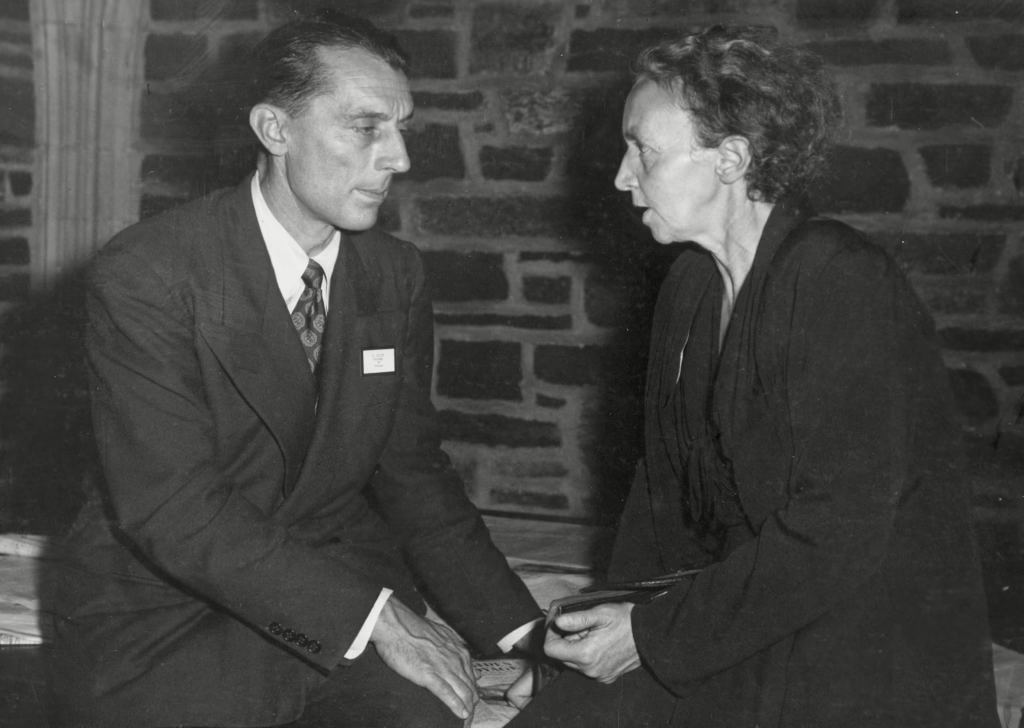
The most significant recognition of Joliot-Curie’s career came in 1935, when he and his wife Irène Joliot-Curie were awarded the Nobel Prize in Chemistry. Their discovery of artificial radioactivity revolutionised nuclear science and medicine, enabling the production of radioactive isotopes for research and therapeutic use. This award placed them among the most celebrated scientific couples in history, continuing the Curie family’s remarkable Nobel tradition.
Academic and National Honours
Joliot-Curie held prestigious academic positions, including his appointment as Professor at the Collège de France in 1937. After World War II, he became the High Commissioner for Atomic Energy in France, a role that underscored his importance in shaping the country’s nuclear program. He was also elected to the French Academy of Sciences, reflecting his standing within the scientific community.
International Recognition
His contributions earned him recognition beyond France. Joliot-Curie was awarded honorary degrees and memberships in scientific societies worldwide. He was also a recipient of the Hughes Medal of the Royal Society (1940), acknowledging his pioneering work in nuclear physics.
Political and Social Legacy
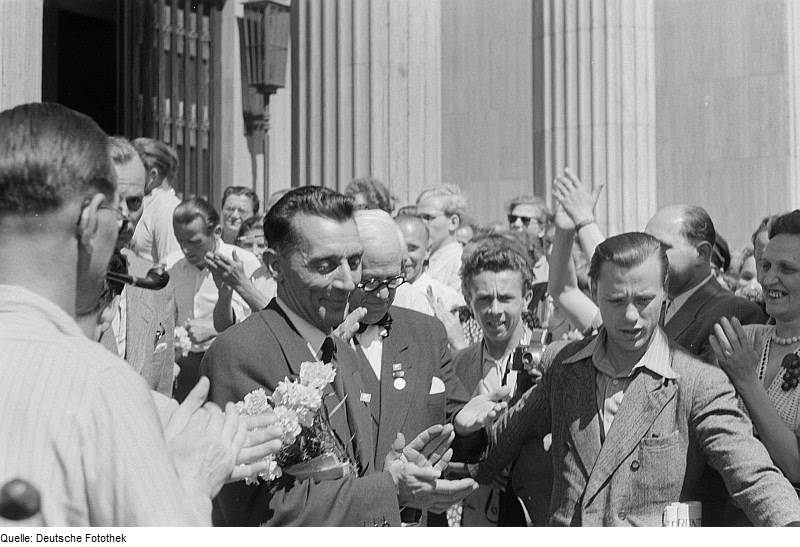
Joliot-Curie’s legacy extended beyond science. As a committed member of the French Communist Party, he was active in peace movements and campaigned against nuclear weapons. Although his political stance led to his dismissal from official posts during the Cold War, it also cemented his reputation as a scientist deeply concerned with the ethical responsibilities of research.
Enduring Legacy
Frédéric Joliot-Curie’s legacy lies in both his scientific breakthroughs and his moral vision. His discovery of artificial radioactivity continues to underpin medical treatments such as cancer radiotherapy and diagnostic imaging. His advocacy for peace and responsible science remains a model for scientists navigating the intersection of research and society. Today, he is remembered as a figure who combined scientific brilliance with civic conscience, ensuring that his influence endures in both laboratories and public discourse.
Explore Further
Continue learning about the lives of the people that shaped nuclear history.
Niels Bohr – Architect of the Quantum World
Walter Zinn – Building the Foundations of Modern Nuclear Power
George de Hevesy – The Founder of Nuclear Medicine
Lewis Strauss – Visionary or Villain of the Atomic Era
Did you know? Explore Nuclear also offers great careers information and learning resources.
Below you can find references to the information and images used on this page.
Content References
- Frédéric Joliot – Biographical – NobelPrize.org
- Frédéric Joliot-Curie | Association Curie et Joliot-Curie
- Frederic Joliot-Curie – Nuclear Museum
- Irène Joliot-Curie and Frédéric Joliot | Science History Institute
- Frédéric Joliot-Curie – Wikipedia
- Research Profile – Frédéric Joliot-Curie | Lindau Mediatheque
- Frédéric Joliot-Curie | Biographies
Image References
- Joliot-Curie Harcourt 1948 – Studio Harcourt – Public Domain
- Joliot-fred – Nobel Foundation – Public Domain
- Irène et Frédéric Joliot-Curie 1935 – Agence de presse Meurisse – Public Domain
- Frederic and Irene Joliot-Curie – James Lebenthal – No known copyright restrictions
- Fotothek Jean Frédéric Joliot-Curie – Roger Rössing – CC BY-SA 3.0 DE