
Leo Szilard's Life
Life and Work
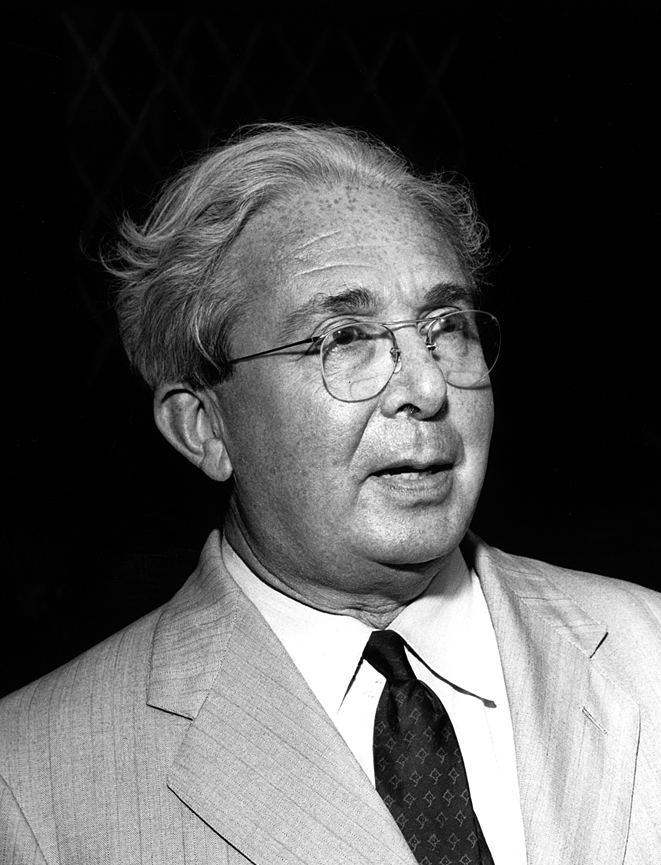
Leo Szilard was born on February 11, 1898, in Budapest, then part of Austria‑Hungary. Originally named Leó Spitz, his family adopted the Hungarian surname Szilard in 1900. He showed early talent in science and engineering, studying in Budapest before serving briefly in the Austro‑Hungarian Army during World War I, though illness kept him from active duty. After the war, he left Hungary amid political upheaval and moved to Berlin, where he studied engineering and later physics under prominent scientists such as Max von Laue and became close friends with Albert Einstein.
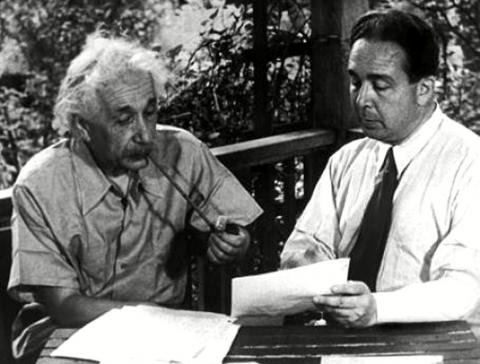
In Berlin, Szilard earned his PhD in 1922 and quickly became known for his sharp theoretical mind. As the Nazis rose to power in 1933, he fled Germany, first to Vienna and then to London, where he continued research and developed several important ideas, including the concept of a nuclear chain reaction, which he patented in 1934. His insight into the potential of nuclear fission would later prove pivotal. In 1938–39, alarmed by the possibility of Nazi Germany developing atomic weapons, Szilard drafted the famous Einstein–Szilard letter urging the U.S. government to begin atomic research, a key step toward launching the Manhattan Project.
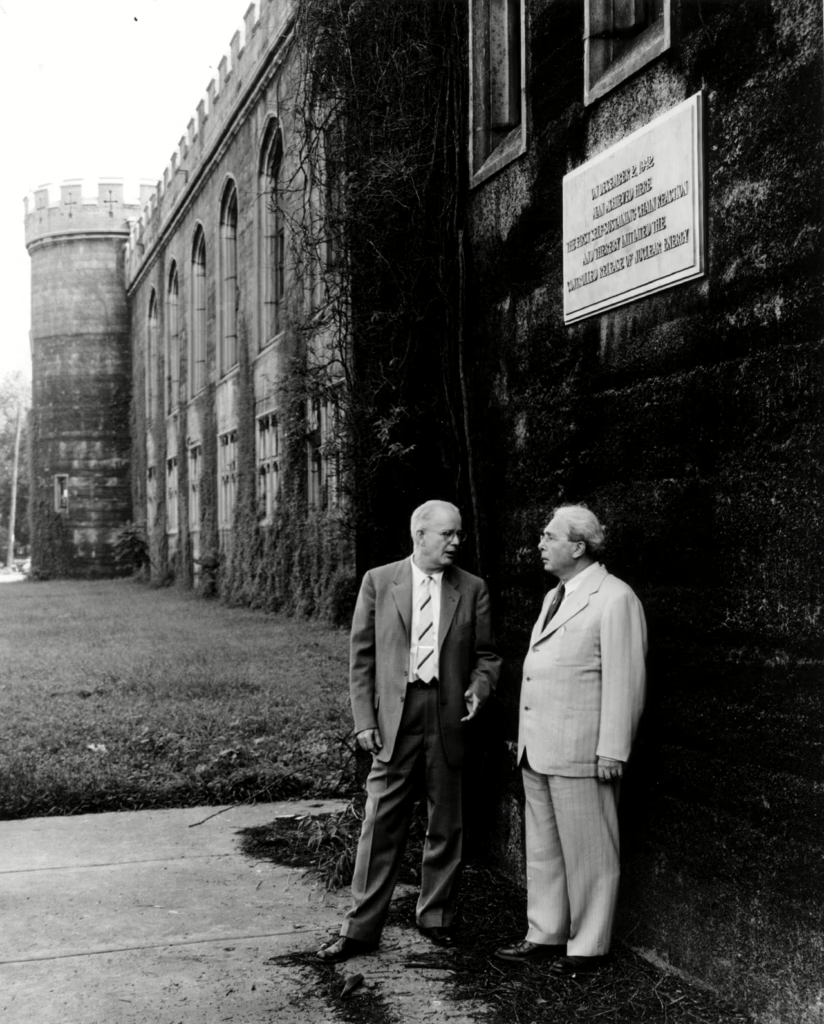
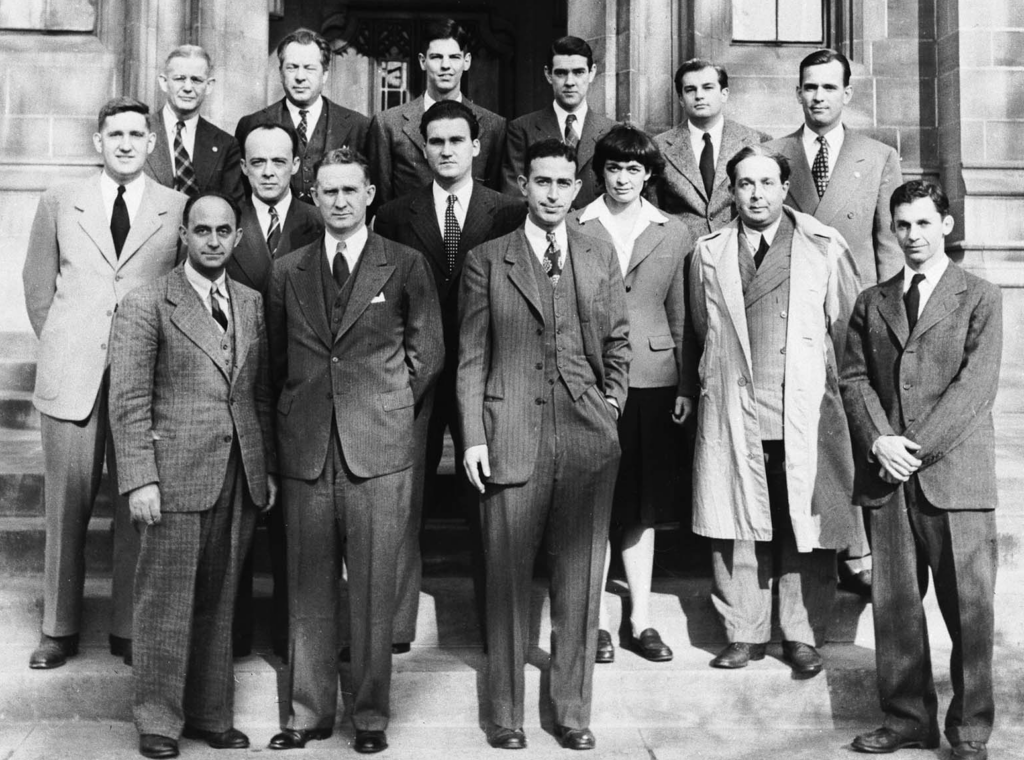
During World War II, Szilard worked in the United States, collaborating with Enrico Fermi at Columbia University and later at the University of Chicago. Together they built the first sustained nuclear reactor, achieving the world’s first controlled nuclear chain reaction in 1942. Despite his central role in the development of nuclear weapons, Szilard became an outspoken advocate for restraint. He opposed the use of the atomic bomb on Japan and later campaigned for international control of nuclear energy and peaceful applications of science.
After the war, Szilard shifted his focus from physics to biology, believing that the next great scientific frontier lay in understanding life. He joined the Salk Institute in California and pursued research in molecular biology while continuing to speak publicly on issues of science policy and global security. He remained a vocal proponent of arms control and rational governance of scientific power.
Leo Szilard died on May 30, 1964, in La Jolla, California, leaving behind a legacy that bridged scientific brilliance, moral conviction, and a lifelong commitment to using knowledge responsibly.
Leo Szilard's Scientific Contributions
Inventions and Early Theoretical Work
Before his nuclear work, Szilard made significant contributions to thermodynamics and theoretical physics. He co‑invented the Einstein–Szilard refrigerator, a heat‑powered, pump‑free refrigerator designed with Albert Einstein in the late 1920s. He also developed the Szilard engine, a thought experiment linking thermodynamics and information theory, which later influenced the foundations of statistical mechanics and the study of entropy.
His work on the Szilard–Chalmers effect provided a method for producing radioactive isotopes, which became important in nuclear chemistry and medicine.
Nuclear Physics and the Chain Reaction
Leo Szilard’s most influential scientific insight was his conception of the nuclear chain reaction, an idea he patented in 1934 while working in London. He realised that if one nuclear event released multiple neutrons, it could trigger a self‑sustaining sequence, an idea that became the foundation of both nuclear reactors and nuclear weapons. This conceptual breakthrough directly shaped the scientific direction that led to the Manhattan Project.
Szilard later collaborated with Enrico Fermi in the United States, where the two designed and built the world’s first controlled, sustained nuclear chain reaction at the University of Chicago in 1942. This achievement marked the birth of the nuclear age and remains one of the most important milestones in modern physics.
Biology and Molecular Research
After World War II, Szilard shifted fields and became an early pioneer in molecular biology. At the Salk Institute, he explored cellular regulation and the nature of genetic information, anticipating themes that would later dominate molecular genetics. His interdisciplinary approach helped bridge physics and biology at a time when the latter field was rapidly evolving.
Leo Szilard's Accomplishments
Awards and Honours
Leo Szilard received several significant awards in recognition of both his scientific achievements and his advocacy for peace. Among the most notable were the Albert Einstein Gold Medal and Award, presented to him in 1960, acknowledging his profound contributions to science and society. That same year, he was also honoured with the Atoms for Peace Award, which celebrated individuals whose work advanced the peaceful use of atomic energy. These awards reflected not only his pioneering role in nuclear physics but also his moral leadership in urging responsible scientific practice.
Legacy and Lasting Influence
Scientifically, Leo Szilard is remembered as the originator of the nuclear chain reaction and a key figure in the early development of molecular biology. Institutionally, he helped inspire the founding of the Salk Institute, where he later became a resident fellow until his death in 1964. Ethically, he is celebrated for his outspoken advocacy for peace, arms control, and responsible scientific governance. His life continues to serve as a model for scientists who seek to balance innovation with moral responsibility.
Explore Further
Continue learning about the lives of the people that shaped nuclear history.
Igor Kurchatov – Father of the Russian Atomic Bomb
Andrei Sakharov – Scientist, Dissident, Icon
Hans Geiger – More Than Just the Geiger Counter
Glenn T. Seaborg – The Man Who Rewrote the Periodic Table
Did you know? Explore Nuclear also offers great careers information and learning resources.
Below you can find references to the information and images used on this page.
Content References
Image References
- Leo Szilard-cropped – Unknown Author – Public Domain
- Szilard and Hilberry – US Department of Energy – Public Domain
- Chicago Pile Team – Unknown Author – Unless otherwise indicated, this information has been authored by an employee or employees of the Los Alamos National Security, LLC (LANS), operator of the Los Alamos National Laboratory under Contract No. DE-AC52-06NA25396 with the U.S. Department of Energy. The U.S. Government has rights to use, reproduce, and distribute this information. The public may copy and use this information without charge, provided that this Notice and any statement of authorship are reproduced on all copies. Neither the Government nor LANS makes any warranty, express or implied, or assumes any liability or responsibility for the use of this information.
- Einstein and Szilard letter to Roosevelt – Time Life Pictures – CC BY-SA 4.0
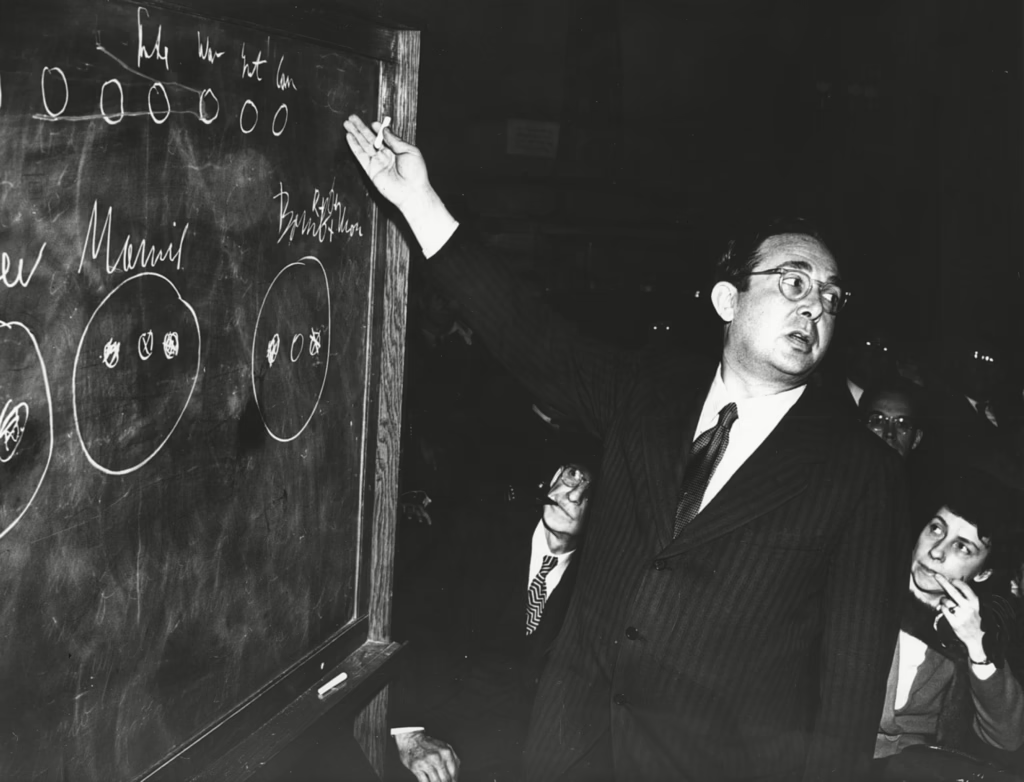
- Leo Szilard Lecture – Argonne National Laboratory – CC BY-NC-SA 2.0