
Table of Contents
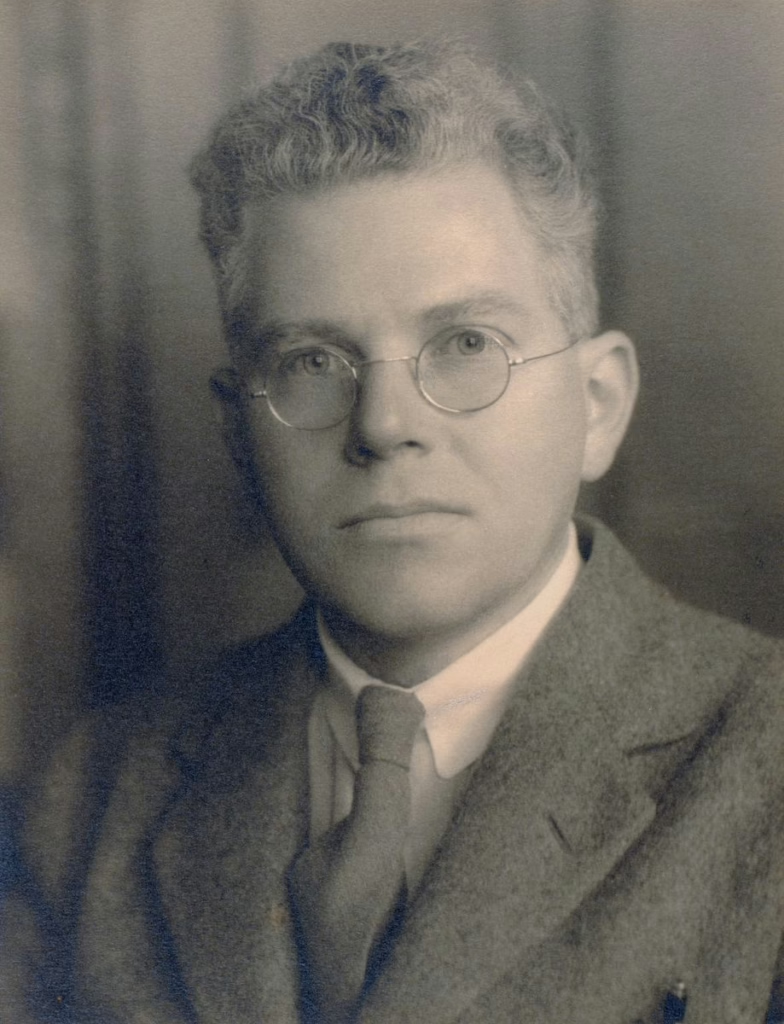
Mark Oliphant's Life
Life and Work
Born in Adelaide in 1901, Mark Oliphant grew up in a family that encouraged learning and hands‑on experimentation. As a boy, he built models and repaired household items, early signs of the practical ingenuity that would define his scientific career. After excelling in school, he studied at the University of Adelaide, where a lecture by Ernest Rutherford inspired him to pursue nuclear physics.
Oliphant moved to Cambridge’s Cavendish Laboratory in 1927 to work under Rutherford, contributing to ground-breaking research on heavy hydrogen reactions. His work helped lead to the discovery of tritium, helium‑3, and the first experimental demonstration of nuclear fusion. He later held positions at major research institutions, including the University of Birmingham and the Australian National University. During World War II, Oliphant played a pivotal role in urging the United States to develop the atomic bomb program, though he later became a vocal critic of nuclear weapons and an advocate for peaceful uses of atomic energy.
Beyond science, Oliphant was deeply engaged in public life. He served as the 27th Governor of South Australia from 1971 to 1976 and remained active in humanitarian causes, consistently speaking out against war and nuclear proliferation. His later years were marked by continued public service and scientific leadership. Oliphant died in Canberra in 2000 at the age of 98, leaving behind a legacy of scientific innovation, moral conviction, and civic dedication.
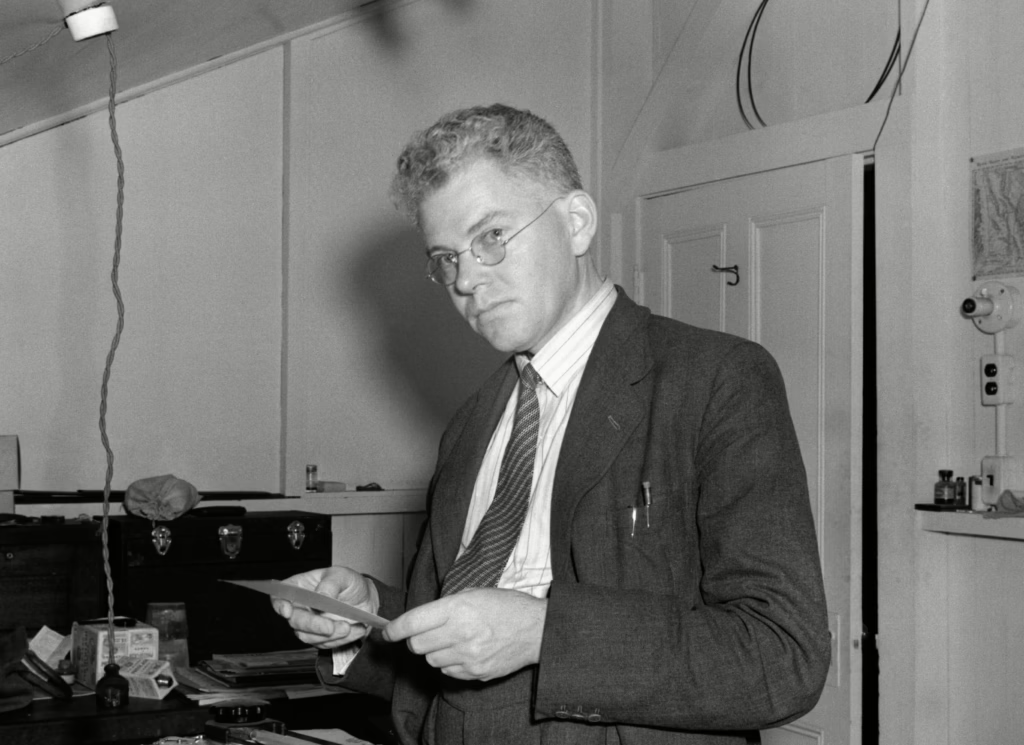
Mark Oliphant's Work
Foundational Nuclear Physics Research
Oliphant’s early career at the Cavendish Laboratory under Ernest Rutherford placed him at the centre of pioneering nuclear physics. Working with heavy hydrogen, he helped achieve the first experimental demonstration of nuclear fusion, a milestone that revealed how light nuclei could combine to release vast amounts of energy. His experiments also led to the co‑discovery of tritium and helium‑3, two isotopes that became essential to later nuclear research and fusion studies.
Microwave Radar Development
During the late 1930s and early 1940s, Oliphant shifted part of his focus to applied physics, contributing significantly to the development of microwave radar. This technology became crucial during World War II, enabling more accurate detection of aircraft and ships. His work helped refine cavity magnetron technology, which allowed radar systems to operate at shorter wavelengths and with greater precision.
Influence on the Manhattan Project
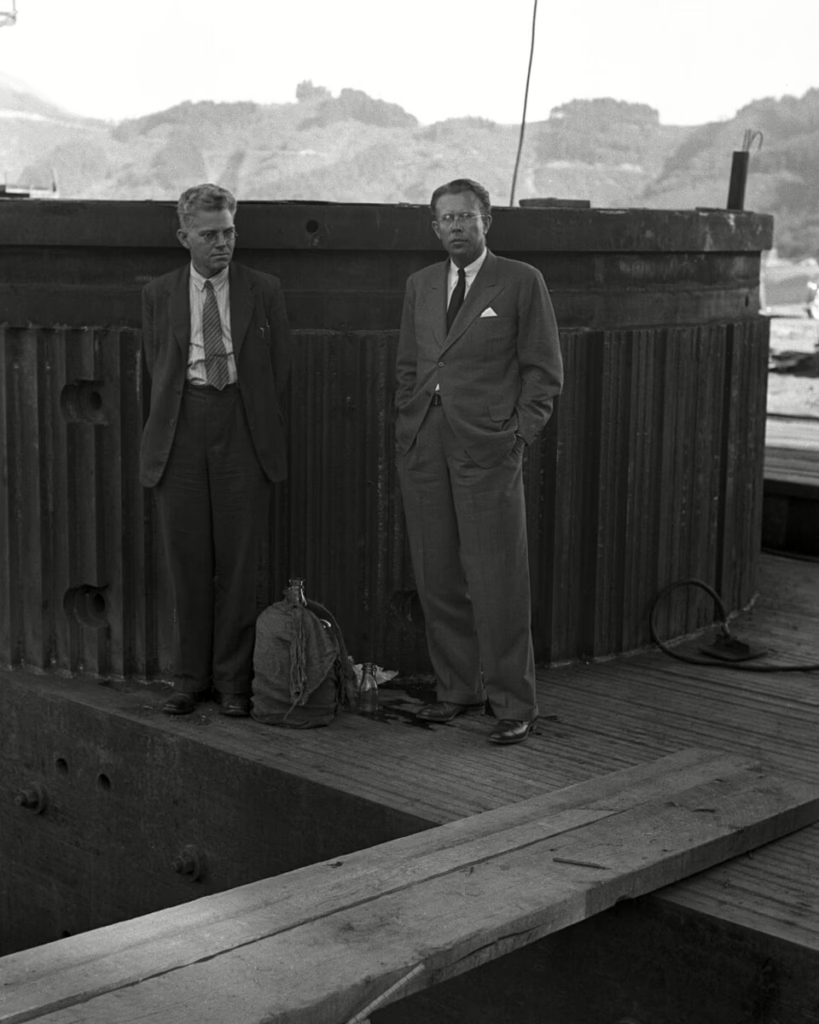
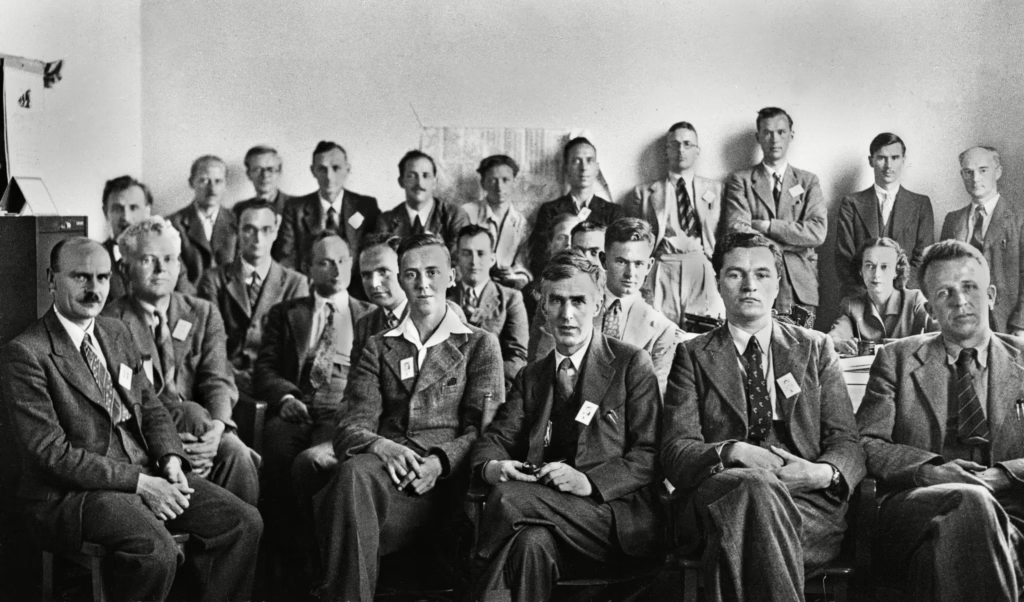
Oliphant played a pivotal political and scientific role in the early stages of the Manhattan Project. Alarmed by the slow pace of British–American collaboration on nuclear weapons, he personally travelled to the United States to urge American officials to accelerate their atomic bomb program. His advocacy helped catalyse the large‑scale mobilisation of scientific and industrial resources that became the Manhattan Project.
Academic Leadership and Institution Building
After the war, Oliphant became a central figure in shaping physics research in both the UK and Australia. At the University of Birmingham, he built a major school of experimental physics, mentoring students who would go on to become influential scientists. Later, at the Australian National University, he helped establish major research facilities and promoted Australia’s role in global scientific collaboration.
Public Advocacy and Legacy
Oliphant’s scientific authority made him a prominent public voice. He consistently argued for the peaceful use of atomic energy and condemned nuclear arms as incompatible with moral responsibility. His later career blended science, public service, and humanitarian advocacy, culminating in his appointment as Governor of South Australia.
Mark Oliphant's Legacy
Major Awards and Honours
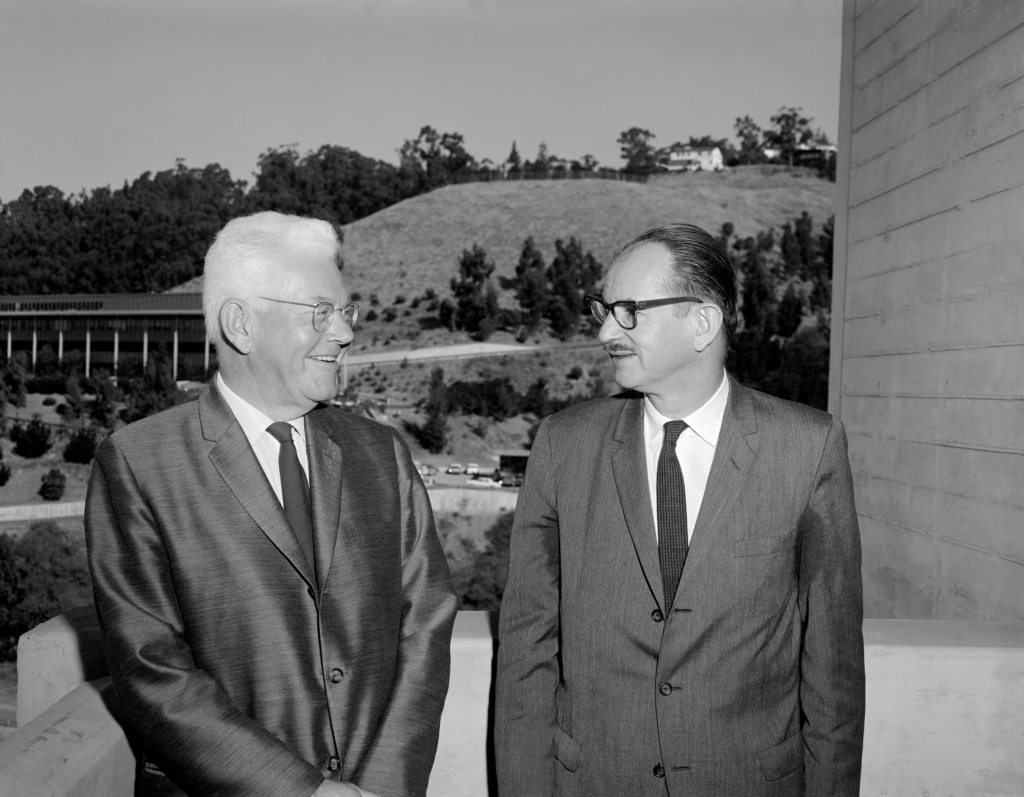
Oliphant received significant recognition throughout his career for his contributions to nuclear physics and public service. He was elected a Fellow of the Royal Society (FRS) in 1937, one of the highest honours in British science, acknowledging his pivotal work on nuclear reactions and isotopes. In 1959, he was knighted as a Knight Commander of the Order of the British Empire (KBE), reflecting both his scientific achievements and his leadership in academia.
He also received numerous honorary doctorates from universities in Australia and abroad, recognising his role in shaping modern physics and advancing scientific research infrastructure. His contributions to radar development and wartime research earned him additional commendations from the British government.
Legacy and Lasting Impact
Oliphant’s legacy spans scientific innovation, ethical leadership, and institution building. His discoveries remain embedded in the foundations of nuclear physics, while his contributions to radar technology continue to influence modern engineering.
His moral stance against nuclear weapons set an example for scientists grappling with the societal implications of their work. In Australia, his role in shaping research institutions has had a lasting impact on the country’s scientific identity. Numerous buildings, scholarships, and research programs bear his name, reflecting the enduring respect he commands.
Explore Further
Continue learning about the lives of the people that shaped nuclear history.
Rudolf Peierls – The Physicist Who Made the Atomic Bomb Possible
Andrei Sakharov – Scientist, Dissident, Icon
Chien-Shiung Wu – The First Lady of Physics
J. Robert Oppenheimer – Father of the Atomic Bomb
Did you know? Explore Nuclear also offers great careers information and learning resources.
Below you can find references to the information and images used on this page.
Content References
- Mark Oliphant – Nuclear Museum
- Mark Oliphant: How an Australian Physicist Helped Spark the Atomic Age — ROLAND PERRY
- Biography – Sir Marcus Laurence (Mark) Oliphant – Australian Dictionary of Biography
- Marcus Laurence Elwin Oliphant 1901-2000 | Australian Academy of Science
- Mark Oliphant – Wikipedia
- Mark Oliphant Biography – life, name, death, wife, school, mother, young, son, born
Image References
- Sir Mark Oliphant – Bassano Ltd – Public Domain
- Sir Mark L. Oliphant, Sept 1941 – Donald Cooksey, Lawrence Berkeley National Laboratory – Public Domain
- Sir Mark L. Oliphant and Ernest Orlando Lawrence and 184-inch cyclotron pole at construction site – Donald Cooksey, Lawrence Berkeley National Laboratory – Public Domain
- Mark Oliphant Group of the Manhattan Project – Donald Cooksey – Public Domain
- Sir Mark Oliphant with Edwin McMillan – Donald Cooksey, Lawrence Berkeley National Laboratory – Public Domain