
Table of Contents
Leslie Groves' Life
Life and Work
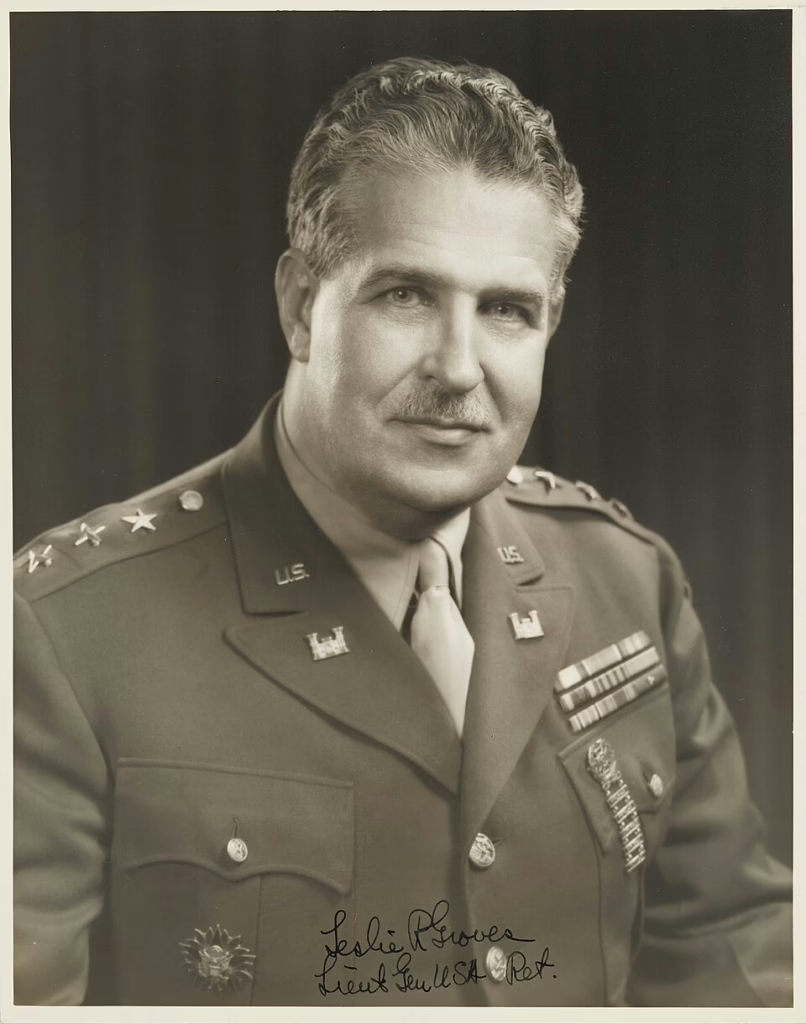
Born in 1896, Leslie Richard Groves Jr. grew up in a strict household shaped by his father’s work as an Army chaplain. That early exposure to military life set him on a path to West Point, where he graduated near the top of his class. His early career in the U.S. Army Corps of Engineers was defined by large‑scale construction projects, including dams, airfields, and the Pentagon. These assignments honed his reputation as a demanding but highly effective manager who could deliver enormous projects under pressure.
His defining role came in 1942, when he was appointed to lead the Manhattan Project. Groves oversaw every aspect of the programme: securing vast budgets, building secret research sites across the United States, and managing the complex personalities of scientists such as J. Robert Oppenheimer. His leadership style was famously tough, sometimes abrasive, but undeniably effective. Under his direction, the project achieved its goal of producing the first atomic weapons, which were used against Japan in 1945 and reshaped global politics.
After the war, Groves continued to work on nuclear policy and military research, though his influence gradually waned as civilian agencies took control of atomic energy. He retired from the Army in 1948 with the rank of lieutenant general and later worked in private industry. He died in 1970, leaving behind a legacy that remains deeply intertwined with both the triumphs and moral complexities of the nuclear age.
Leslie Groves' Work
Early Engineering and Construction Career
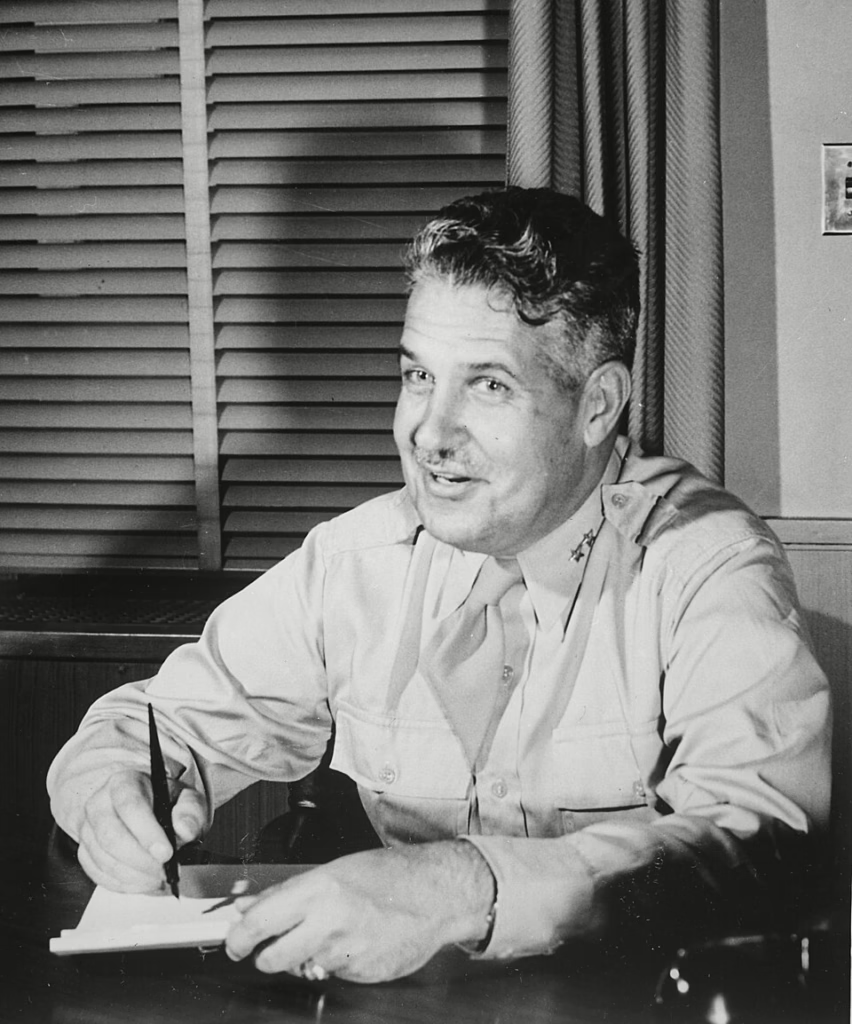
Leslie Groves began his professional life in the U.S. Army Corps of Engineers, where he quickly built a reputation for efficiency, discipline, and an almost relentless work ethic. His early assignments involved infrastructure projects across the United States, giving him experience in logistics, planning, and large‑scale coordination. These roles laid the groundwork for his later leadership of far more complex undertakings.
One of his most notable pre‑war achievements was overseeing the construction of the Pentagon. Groves pushed the project forward at extraordinary speed, managing thousands of workers and navigating political pressures. The success of this massive effort cemented his status as one of the Army’s most capable project managers.
Leadership of the Manhattan Project
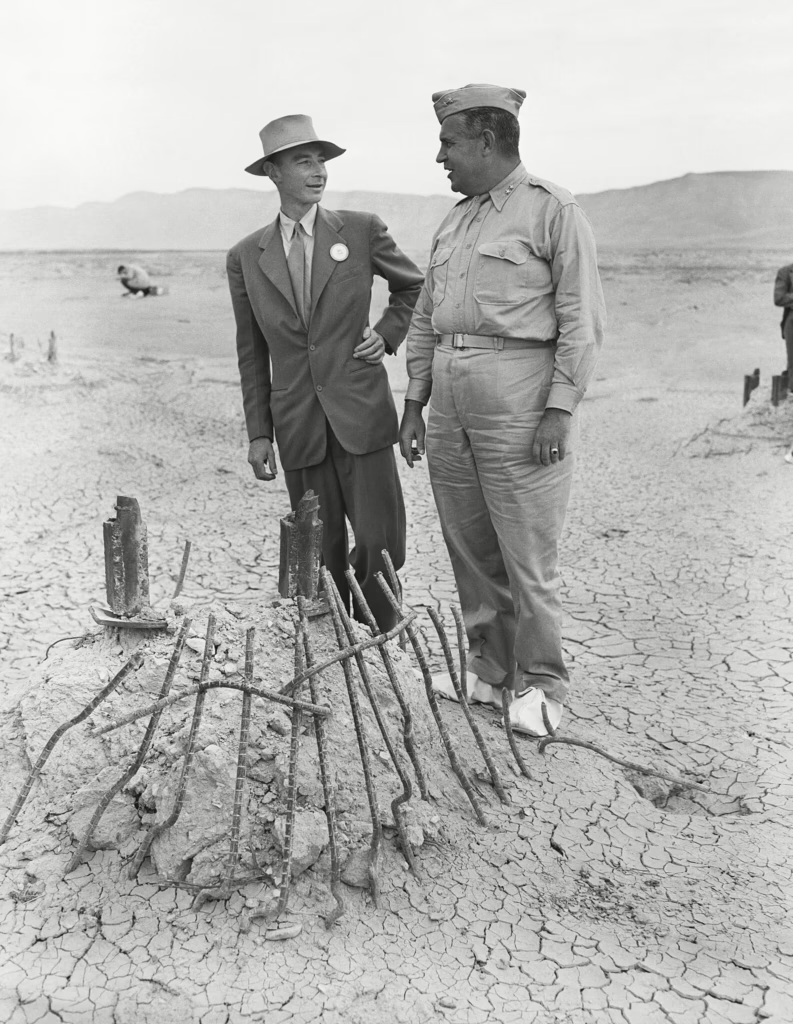
Groves’ most consequential work began in 1942, when he was appointed director of the Manhattan Project. His responsibilities spanned every dimension of the programme: securing funding, selecting sites, coordinating military and civilian personnel, and maintaining strict secrecy. He chose J. Robert Oppenheimer as scientific director, a decision that proved pivotal to the project’s success.
Under Groves’ direction, the project built research and production facilities at Los Alamos, Oak Ridge, and Hanford. He managed the scientific, industrial, and logistical challenges of developing the world’s first atomic weapons, ensuring rapid progress despite unprecedented technical complexity. His authoritative, demanding, and intensely focused leadership style was central to meeting the project’s wartime deadlines.
Post‑War Nuclear Policy and Military Research
After the Second World War, Groves continued to oversee nuclear weapons development as the military’s senior figure in atomic research. He played a key role in the transition from wartime control to the newly created Atomic Energy Commission, though his influence diminished as civilian oversight increased.
Groves remained involved in defence research and strategic planning until his retirement from the Army in 1948. His post‑military career included work in private industry, where he applied his organisational skills to corporate management.
Leslie Groves' Legacy
Awards and Honours
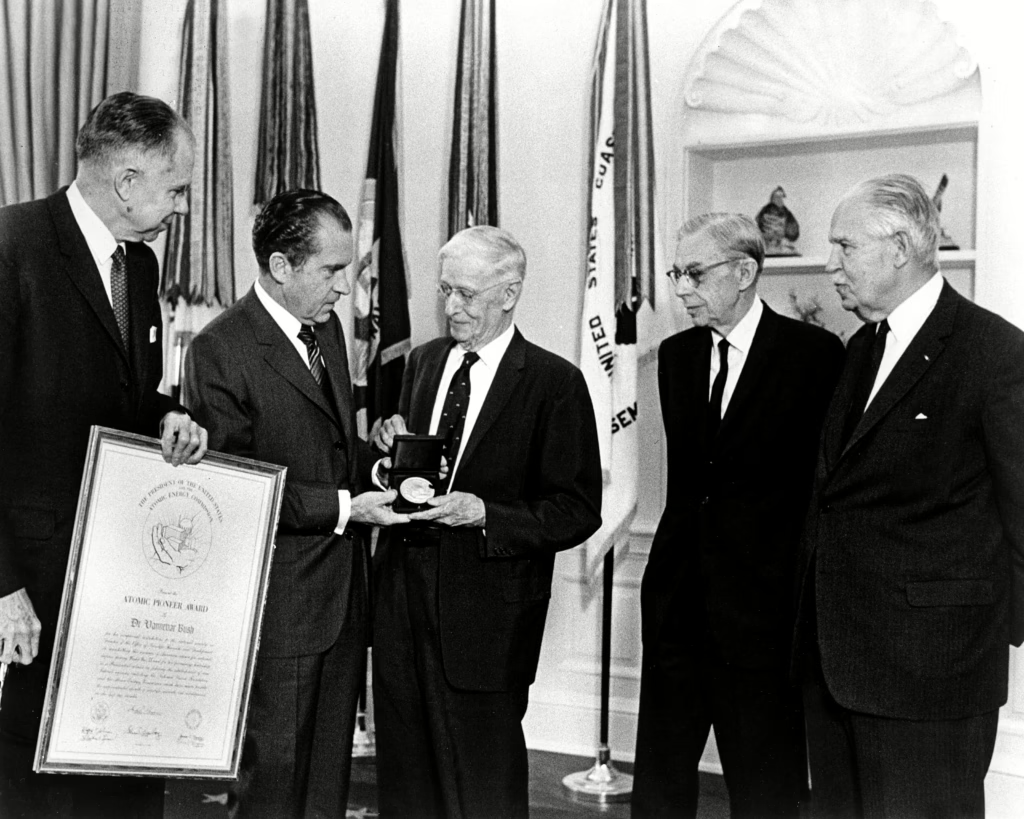
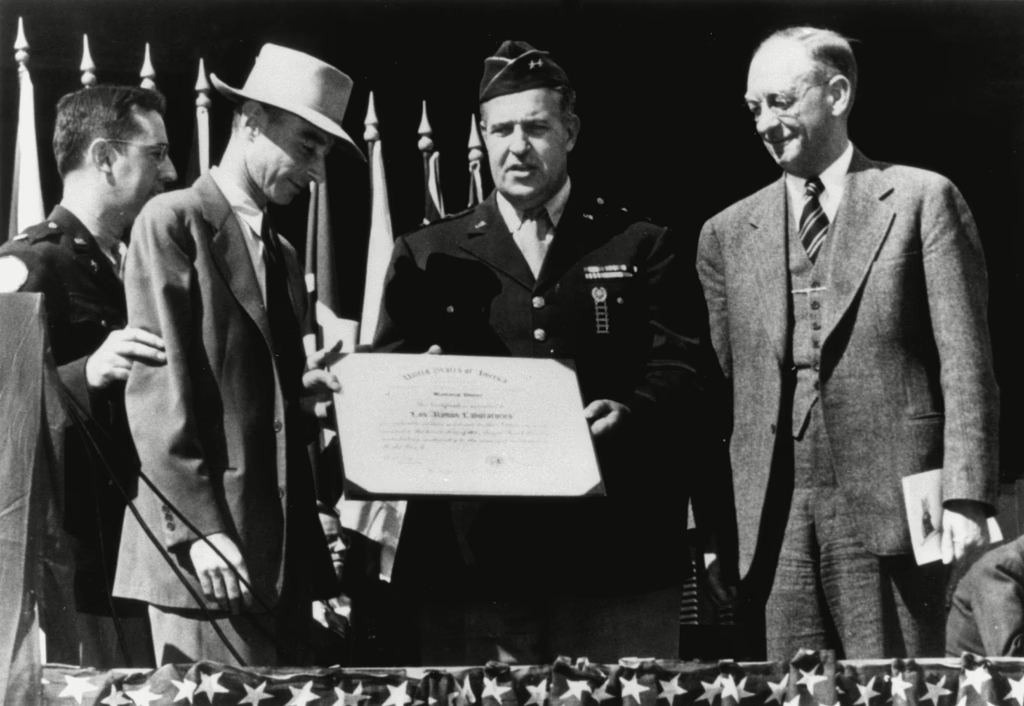
Leslie Groves received significant recognition for his military and organisational achievements, particularly for his leadership of the Manhattan Project. He was awarded the Distinguished Service Medal, one of the U.S. Army’s highest honours, for his exceptional management of the atomic bomb programme. He also received the Legion of Merit and various commendations for earlier engineering work.
Internationally, Groves was honoured by allied nations for his wartime contributions. These included decorations from the United Kingdom and France, reflecting the global impact of the Manhattan Project and his role in coordinating scientific and military cooperation.
Legacy in the Nuclear Age
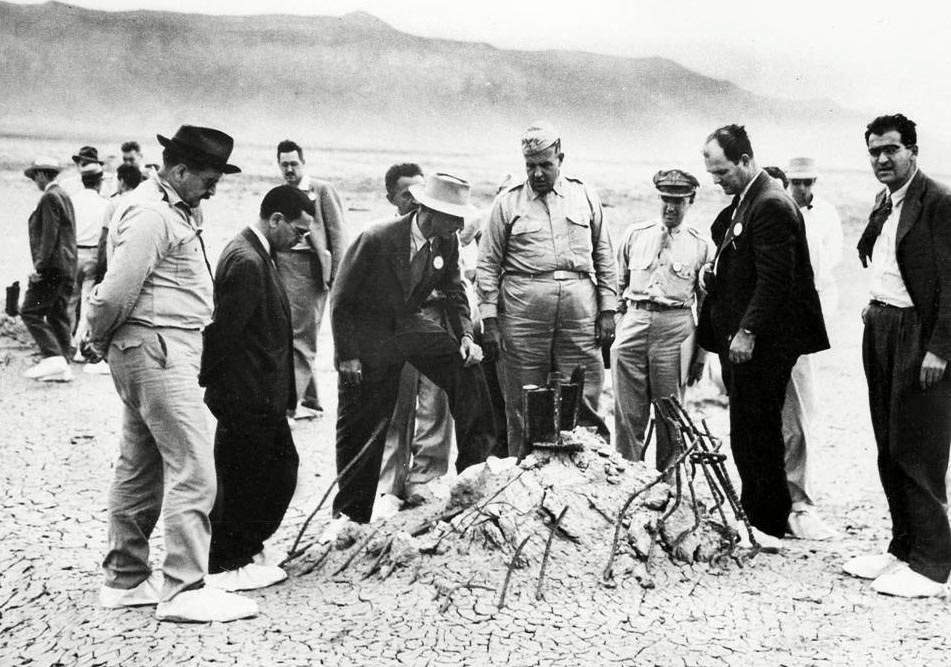
Groves’ legacy is inseparable from the Manhattan Project. His leadership enabled the United States to develop nuclear weapons at unprecedented speed, altering the course of the Second World War and shaping the geopolitical landscape of the Cold War. While his work is often viewed through the lens of its moral and strategic consequences, historians consistently recognise his organisational brilliance.
He also played a key role in the early structure of U.S. nuclear governance, helping to shape the transition from military to civilian control under the Atomic Energy Commission. His influence can be seen in the systems of oversight, secrecy, and scientific‑military collaboration that defined early nuclear policy.
Other Notable Achievements
Leslie Groves wrote an influential memoir, ‘Now It Can Be Told’, which offered one of the earliest insider accounts of the Manhattan Project. The book helped shape public understanding of the project and remains a key historical source.
Explore Further
Continue learning about the lives of the people that shaped nuclear history.
Emilio Segrè – A Journey Through Atoms, Antimatter, and History
Alvin M. Weinberg – The Visionary Behind America’s Early Reactors
Ernest Lawrence – The Physicist Who Built Big Science
Henri Becquerel – The Dawn of Atomic Discovery
Did you know? Explore Nuclear also offers great careers information and learning resources.
Below you can find references to the information and images used on this page.
Content References
Image References
- LTG Leslie R. Groves (cropped) – U.S. Army – Public Domain
- Leslie Groves 1942 – An Office of War Information photographer – Public Domain
- Trinity Test – Oppenheimer and Groves at Ground Zero 002 – U.S. Army Corps of Engineers – Public Domain
- Trinity Test – Oppenheimer and Groves at Ground Zero 001 – U.S. Army Corps of Engineers – Public Domain
- HD.3C.013 (10542886803) – ENERGY.GOV – Public Domain
- HD.4G.018 (10409960483) – ENERGY.GOV – Public Domain